Want to be in the loop?
subscribe to
our notification
Business News
JAPANESE INVESTORS CATCH THE EYE IN REAL ESTATE SECTOR
Many domestic real estate developers are expecting to cooperate with Japanese investors as strategic partners to receive capital and share the management capacity.
In mid-December, CEO Group, GP Invest, and Sovico Group participated in a business matching event with a delegation of Japanese companies to discuss collaboration opportunities.
The Japanese delegation combined 10 real estate developers and smart solution providers, including Daiwa House Industry, Daibiru Corporation, Creed Corporation, and Tekko Building. These companies are looking for domestic partners to develop projects, such as complex facilities, detached houses for the high-end and middle classes, condominiums for the high-end and middle classes, and also houses and apartments for the low and middle classes, among others.
In recent times, real estate companies have said they are facing difficulties in accessing capital following the tightening of loan regulations.
Nguyen Quoc Hiep, chairman of GP Invest said even at present, when the lending rate is at a low level, property firms are reserved in approaching loans from banks because the low lending rate is applied for short-term loans.
“Meanwhile, property projects need middle-term and long-term loans, at which they just enjoy the low lending rate for the first year. Thus, we see that mobilising foreign capital is an effective solution,” Hiep said. His company has just done so for four ventures.
“The Japanese parties expressed their intention to cooperate with GP Invest in single projects initially. If everything goes smoothly, they may become our strategic partners, who are not only the capital sponsors but also join the management board. Cooperating with Japanese partners will help GP Invest to improve management and operations,” Hiep added.
The representatives of CEO Group and Sovico also expect to gain new partners thanks to the meeting.
Nishimura Naoki, deputy director of the International Affairs Office at City Bureau, the office is under Japan’s Ministry of Land, Infrastructure, Transport and Tourism, told VIR, “Japanese companies see the potential of the Vietnamese real estate market. They have the advantage in capital, technology, and management skills. Meanwhile, Vietnamese real estate developers have advantages in land funds and flexibility in completing the administrative procedures. Making use of the advantages of the two parties will create high-quality products with competitive prices.”
For the past year, many Japanese investors have co-ordinated with Vietnamese counterparts to develop property projects in the country.
North Hanoi Smart City Development Investment Company, a consortium between Sumitomo and BRG Group, started construction of a $4.2 billion smart city in Hanoi in November. The project is expected to take nine years to complete in five phases. The first four phases involve planting trees and building homes, schools, parking lots, and other structures. The last phase, to be completed from 2030 to 2032, will involve the construction of certain highlight structures, including a mall and a 108-story financial centre.
Elsewhere, Mitsubishi has cooperated with ¬Vietnamese property developer Bitexco to create 240 low-rise housing units and two high-rise condominiums out of a proposed total of more than 1,000 low-rises and 17 high-rises at The Manor Central Park project, also located in the capital.
One analyst told VIR that, in the upcoming time, the capital inflow from the Japanese into the real estate sector may increase thanks to the weakening Japanese yen. The country’s real estate lending conditions are relatively easy, while the loan-to-value ratio of real estate is at 70 per cent and interest costs only fluctuate around 1 per cent. Thus, Japanese real estate developers can take advantage of low lending rates to get loans to foster their investment abroad, including in Vietnam, he said.
Source: VIR
Related News
INFRASTRUCTURE / CONSTRUCTION / LOGISTIC / PORT
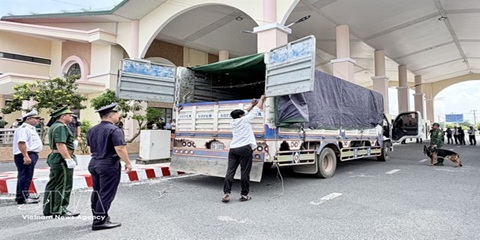
VIỆT NAM-CAMBODIA TRADE GATHERS PACE TOWARDS $20 BILLION TARGET
Trade between Việt Nam and Cambodia continues to grow, remaining a bright spot and a key pillar of bilateral cooperation as the two countries aim to raise two-way trade to US$20 billion in the coming years. After setting a record of more than $11.3 billion last year, bilateral trade reached about $8.7 billion in the first eight months of this year, up 8.3 per cent year on year.
TECHNOLOGY
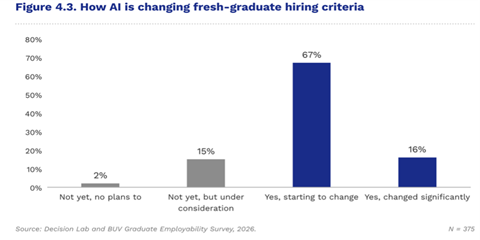
AI BEGINNING TO RESHAPE RECRUITMENT CRITERIA
Digital literacy is the only capability area in which fresh graduates meet employers’ expectations, according to a new report. Yet, it is also the standard rising fastest, as businesses increasingly expect new hires to use AI effectively in the workplace. Some 83 per cent of employers say AI has changed, or is beginning to change, their hiring criteria, while 94 per cent report higher expectations for digital and AI capabilities than they had two to three years ago.
INFRASTRUCTURE / CONSTRUCTION / LOGISTIC / PORT
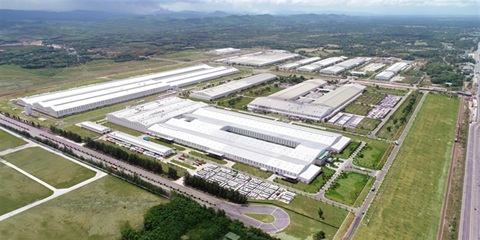
ĐÀ NẴNG GREEN-LIGHTS US$105 MILLION THAI DEVELOPMENT DEAL
The central city has approved an investment proposal by Thailand’s WHA Group to develop infrastructure for the 400ha WHA Đà Nẵng Industrial Park project on two communes of Thăng Bình and Đồng Dương, with an investment of more than VNĐ2.7 trillion (US$105 million). The city said it approved WHA Industrial Development International's status as an investor in the project, which is expected to take place between 2027 and 2034.
VIETNAM ECONOMY INVESTMENT
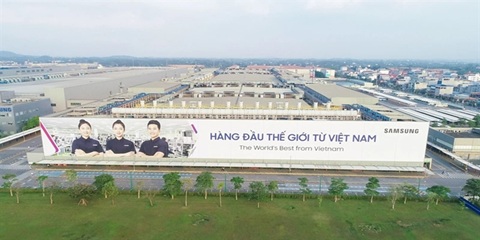
MOBILE PHONE EXPORTS RISE 20% TO $51.8 BILLION IN FIRST NINE MONTHS
Exports of mobile phones and components rose 20 per cent year-on-year to nearly US$51.8 billion in the first nine months of 2026, with China, the US and Republic of Korea accounting for more than half of the total. Shipments to the three markets reached a combined $26.18 billion, or 50.6 per cent of total exports of the product group during the period, according to data from the Vietnam Department of Customs under the Ministry of Finance.
VIETNAM ECONOMY INVESTMENT
FRUIT AND VEGETABLE EXPORTS POISED TO HIT $10 BILLION IN 2026
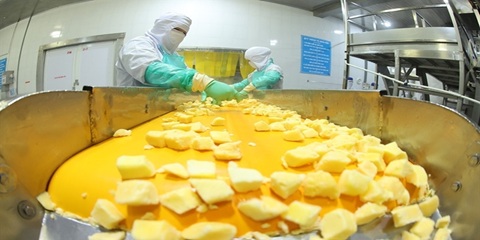
Fruit and vegetable exports are on track to reach nearly US$10 billion in 2026, after rising 19.9 per cent year on year to nearly US$7.4 billion in the first nine months, driven by strong seasonal demand and abundant tropical fruit supplies. The Ministry of Agriculture and Environment said the growth reflected stronger international demand for fresh produce and processed agricultural products.
GARMENT / TEXTILE
TEXTILE EXPORTS FACE DUAL CHALLENGES OF SUSTAINING ORDERS AND BOOSTING EFFICIENCY AMID GROWING COMPETITION
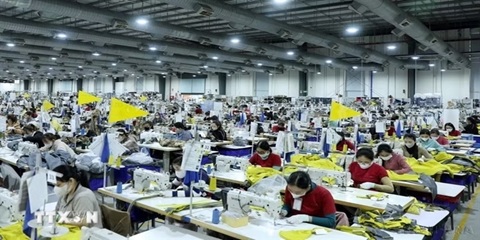
Data shows that the textile and garment sector maintained its growth momentum in the first nine months of this year. The industry's total export turnover reached an estimated US$35.721 billion in the first nine months of this year, up 3.3 per cent year-on-year. Despite posting encouraging export figures, Vietnamese textile and garment enterprises continue to navigate unpredictable market variables.
Events Sponsors






















