Want to be in the loop?
subscribe to
our notification
Business News
LEGAL FRAMEWORK ESSENTIAL TO PROTECT PERSONAL DATA, DRIVE DIGITAL ECONOMY: EXPERTS
Việt Nam must establish a robust legal framework to manage and protect personal data in order to drive its digital economic growth while ensuring the privacy and rights of its citizens, experts said.
Speaking at the “Personal data in the flow of Việt Nam’s digital economy” conference last week in HCM City, Dr. Phạm Khánh Nam, vice principal of HCM City University of Economics, said data management had emerged as a critical factor in driving economic growth.
"Personal data is a productive resource in the data-based economy, and protecting personal data is crucial for promoting digital economic development," he said.
“Data is a valuable asset in the digital economy, and if properly exploited and processed, can bring numerous benefits to investors and the economy.”
Việt Nam ranked third in Southeast Asia in digital economic development and achieved a growth rate of 16 per cent per year, according to a Ministry of Information and Communications report.
"However, data breaches have become increasingly common, and it is vital to effectively manage and protect personal information," Nam said.
“The vulnerability of personal data has come to the forefront in recent years, with several major data breaches highlighting the potential risks,” he noted.
One of the problems is that large technology corporations often unintentionally control individuals’ behaviour by packaging personal and business information, according to Nam.
This has posed a challenge to policymakers who must establish a policy framework that is fair and beneficial to all parties involved.
Nguyễn Thanh Hòa, head of the Electronic Information Department under the HCM City Department of Information and Communications, said countries such as Singapore, Japan, and South Korea had achieved strong economies by effectively controlling the flow of data.
However, Việt Nam had yet to succeed in ensuring the security of personal data, leaving existing vulnerabilities unaddressed, Hòa said.
In addition, the advancement of digital technology, especially artificial intelligence, required the processing of a massive amount of personal data, which posed challenges to individuals, as it limited their freedom to make decisions regarding their personal information.
Nguyễn Quang Đồng, director of the Institute for Policy Research and Media Development (IPS), said regulations surrounding personal data must be established in the context of Việt Nam’s digital ecosystem and its roadmap of technological development.
As the digital space is global and data flows freely across borders, legal regulations must be adjusted in a global context to ensure equality and protect the rights of all parties involved, he added.
The event was organised by the Institute for Policy Research and Media Development and the College of Economics, Law, and Government of HCM City University of Economics.
Source: VNS
Related News

MEMBER CORNER / PROMOTIONS
KNIC ENGAGES WITH GOVERNMENT AND HIGH-TECH BUSINESS COMMUNITIES IN CHINA
From Beijing to Shandong, KN Holdings and KN Industrial City are continuing to expand their engagement with government authorities, trade promotion organizations, and high-tech business communities in China. In Beijing, the delegation met with the Center for International Economic and Technological Cooperation under the Ministry of Industry and Information Technology (MIIT), exchanging perspectives on industrial and technology cooperation between the two markets.

VIETNAM ECONOMY INVESTMENT
VIETNAM’S TRADE TOPS $825 BILLION BY MID-SEPTEMBER
Figures released on September 21 showed goods trade reached nearly $55 billion in the first 15 days of September alone, bringing cumulative turnover since the beginning of the year to more than $825 billion. The strong growth reflects robust trade flows, with demand for consumer goods and production inputs remaining high.

TECHNOLOGY
VIỆT NAM'S BUSINESSES MOVE TOWARDS AI AGENTS
Việt Nam’s AI landscape is entering a new phase as businesses move beyond generative AI (GenAI) tools designed to assist human users towards autonomous AI, agentic AI and AI agents that can take action with limited supervision, experts have said. The shift comes as Việt Nam seeks to accelerate science and technology, innovation and digital transformation under Politburo Resolution 57-NQ/TW, issued on December 22, 2024.
GARMENT / TEXTILE
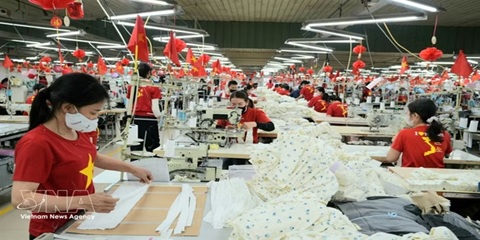
VIỆT NAM TARGETS $48 BILLION IN TEXTILE-GARMENT EXPORTS
Việt Nam’s textile and garment industry is facing both opportunities and challenges amid complex and unpredictable developments in the global market, prompting businesses to improve growth quality, optimise production costs and enhance adaptability in pursuit of an export turnover of about $48 billion this year. The target is considered an important milestone that requires concerted efforts from management agencies and the business community.

INFRASTRUCTURE / CONSTRUCTION / LOGISTIC / PORT
CUTTING LOGISTICS COSTS KEY TO BOOSTING EXPORTS
Reducing costs has become an increasingly urgent priority for import-export activities, particularly logistics costs, a conference in Hà Nội was told on Tuesday. According to Deputy General Director of the Ministry of Industry and Trade's Agency for Foreign Trade, Trần Thanh Hải, import-export activities has remained a bright spot for the economy in recent years, playing an important role and helping drive macroeconomic growth.
LEGAL UPDATE / POLICY
FLEXIBLE FISCAL POLICY HELPS DRIVE ECONOMIC GROWTH
Việt Nam’s fiscal policy has been implemented in a targeted expansionary manner since early 2026, helping maintain macroeconomic stability and supporting the country’s goal of achieving double-digit economic growth. According to the Ministry of Finance, State budget revenue in the first eight months of 2026 was estimated at VNĐ2.02 quadrillion (US$77.7 billion), equivalent to 80 per cent of the annual estimate and up 16 per cent year-on-year.
Events Sponsors






















