Want to be in the loop?
subscribe to
our notification
Business News
LESS RISKS WON'T HARM PROPERTY MARKET: SBV
He made the statement to reassure real estate insiders amidst fears that the new regulations would have negative impacts on the real estate market which has seen signs of recovery.
In a draft document from the central bank circulated for public opinions, the risk index of receivable lending for real estate and securities would be raised from 150 per cent (the lowest level) as stipulated in Circular No 36 to 250 per cent.
The maximum ratio of short- term funds used for medium and long term loans would be reduced from 60 per cent to 40 per cent.
Chairman of the Viet Nam Real Estate Association Nguyen Tran Nam said that since Circular No 36 had come into effect a year ago, the number of transactions in the housing market increased, proving that there was considerable demand for houses.
Outstanding loans in the housing sector were still under control, Nam added, and suggested that the circular be unchanged at the moment.
Pham Duc Toan, general director of the EZ Viet Nam Real Estate Development and Investment Company, said that the amendments would make it difficult for property investors and traders to get loans, which could increase house prices.
Good sentiments
Contrary to the opinions of real estate developers, the amendments received praise from experts and commercial banks.
Nguyen Thi Kim Thanh, member of the Board of Director of the Bank for Investment and Development of Viet Nam (BIDV) and former head of the SBV's Monetary Policy Department, said that the new policy was an indirect method that the SBV could apply to prevent a bubble in the real estate market.
"I think that the market now is over supplied as too many projects are underway while people who have real demand for a house can not afford one due to their low income.
"Housing enterprises must find ways to adapt themselves to new economic and policy conditions," Thanh said.
HSBC Viet Nam General Director Pham Hong Hai said to Thoi bao Kinh te Viet Nam (Vietnam Economic Times) that this was a signal to housing enterprises that they should be more cautious.
"The change in risk index of receivable lending for real estate (250 per cent) is suitable, because a large amount of capital has been poured in the real estate sector."
Enterprises should look at both the supply and demand sides of the market to ensure efficient performance, Hai added.
Good decision
Chau Dinh Linh, a lecturer at the Banking University of HCM City, said that implementing the amendments would be a good decision.
"The new regulations would help not only prevent risks from the property market but also redirect the capital flow in the financial market. We have relied too much on the monetary market as a capital supplying channel while the capital market including bonds and securities is underdeveloped.
"The country's economic development does not depend only on the real estate sector, but on the real production and consumption," Linh said.
"If real estate developers want to have sustainable businesses, they should not count on short-term capital sources to do medium- and long-term investment projects," he added.
Anh said that the amendments were drafted to ensure the banking system's health. If the banking system was not exposed to excessive risks, then enterprises would find it easier to access loans, he explained.
Fire rekindled
According to Anh, monetary policy was not the only way to boost the real estate market's development. He said that the market had got out of the worst situation and real estate companies should not count on bank capital.
Banks have completed their role in "rekindling the fire" and it is necessary to have policies to lure capital from other sources such as foreign investment or remittances into this sector.
A long-term and stable property market needed the consistent implementation of many policies such as fiscal, tax and land.
The SBV official said that they had predicted the response of stakeholders when issuing the draft amendments. However, the SBV would do further research before a final decision and draw a roadmap for the market to have time to adapt, Anh stressed.
Source: VIR
Related News

INFRASTRUCTURE / CONSTRUCTION / LOGISTIC / PORT
VIỆT NAM-CAMBODIA TRADE GATHERS PACE TOWARDS $20 BILLION TARGET
Trade between Việt Nam and Cambodia continues to grow, remaining a bright spot and a key pillar of bilateral cooperation as the two countries aim to raise two-way trade to US$20 billion in the coming years. After setting a record of more than $11.3 billion last year, bilateral trade reached about $8.7 billion in the first eight months of this year, up 8.3 per cent year on year.
TECHNOLOGY
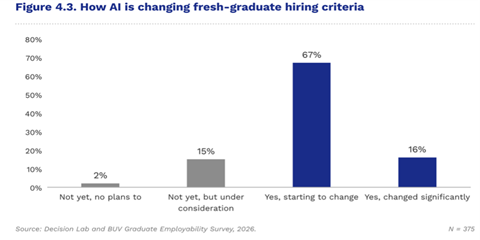
AI BEGINNING TO RESHAPE RECRUITMENT CRITERIA
Digital literacy is the only capability area in which fresh graduates meet employers’ expectations, according to a new report. Yet, it is also the standard rising fastest, as businesses increasingly expect new hires to use AI effectively in the workplace. Some 83 per cent of employers say AI has changed, or is beginning to change, their hiring criteria, while 94 per cent report higher expectations for digital and AI capabilities than they had two to three years ago.

INFRASTRUCTURE / CONSTRUCTION / LOGISTIC / PORT
ĐÀ NẴNG GREEN-LIGHTS US$105 MILLION THAI DEVELOPMENT DEAL
The central city has approved an investment proposal by Thailand’s WHA Group to develop infrastructure for the 400ha WHA Đà Nẵng Industrial Park project on two communes of Thăng Bình and Đồng Dương, with an investment of more than VNĐ2.7 trillion (US$105 million). The city said it approved WHA Industrial Development International's status as an investor in the project, which is expected to take place between 2027 and 2034.

VIETNAM ECONOMY INVESTMENT
MOBILE PHONE EXPORTS RISE 20% TO $51.8 BILLION IN FIRST NINE MONTHS
Exports of mobile phones and components rose 20 per cent year-on-year to nearly US$51.8 billion in the first nine months of 2026, with China, the US and Republic of Korea accounting for more than half of the total. Shipments to the three markets reached a combined $26.18 billion, or 50.6 per cent of total exports of the product group during the period, according to data from the Vietnam Department of Customs under the Ministry of Finance.

VIETNAM ECONOMY INVESTMENT
FRUIT AND VEGETABLE EXPORTS POISED TO HIT $10 BILLION IN 2026
Fruit and vegetable exports are on track to reach nearly US$10 billion in 2026, after rising 19.9 per cent year on year to nearly US$7.4 billion in the first nine months, driven by strong seasonal demand and abundant tropical fruit supplies. The Ministry of Agriculture and Environment said the growth reflected stronger international demand for fresh produce and processed agricultural products.
GARMENT / TEXTILE
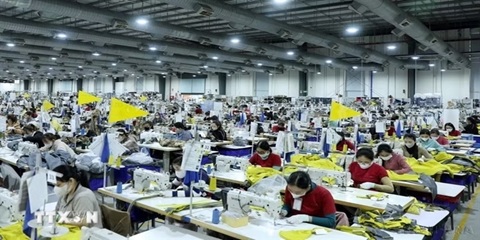
TEXTILE EXPORTS FACE DUAL CHALLENGES OF SUSTAINING ORDERS AND BOOSTING EFFICIENCY AMID GROWING COMPETITION
Data shows that the textile and garment sector maintained its growth momentum in the first nine months of this year. The industry's total export turnover reached an estimated US$35.721 billion in the first nine months of this year, up 3.3 per cent year-on-year. Despite posting encouraging export figures, Vietnamese textile and garment enterprises continue to navigate unpredictable market variables.
Events Sponsors






















