Want to be in the loop?
subscribe to
our notification
Business News
LIÊN CHIỂU PORT TO PLAY KEY ROLE FOR A SUSTAINABLE ĐÀ NẴNG
Speeding up the construction of the new Liên Chiểu Cargo Port would help promote Đà Nẵng as a key international logistics centre, and allow the existing Tiên Sa Port to be reserved for cruise ships only.
Former general director of Tiên Sa Port, Nguyễn Hữu Sia, made the statement at a recent workshop held to discuss changes to the city's Master Plan proposed by Sakae Holdings and Subarna Jurong Consultants from Singapore.
Sia said the proposal to build Liên Chiểu Port and a logistics centre was planned with support from the Japanese International Co-operation Agency (JICA) in 2005, and construction for the first stage was scheduled for 2025.
He said Tiên Sa Port, which was built in 1965, could only handle 12 million tonnes of cargo per year, and any expansion to it would trigger more serious traffic congestion and accidents on the main road linking the port as well as hit tourism in Sơn Trà and Ngũ Hành Sơn districts.
He said Liên Chiểu Port would be more convenient as it would connect National Highway 1A, Đà Nẵng-Quảng Ngãi Expressway, Industrial Zones and Hi-tech Parks and Đà Nẵng International Airport.
Liên Chiểu would provide a cargo link with Chân Mây Port in Thừa Thiên-Huế, 40km away, and Chu Lai Port and airport 70km from the Đà Nẵng-Quảng Ngãi Expressway and Dung Quất in Quảng Ngãi, he added.
No new port
The latest proposals from the Singaporean firms involve expanding Tiên Sa Port for both cargo ships and cruise liners, with no new Liên Chiểu Port included.
Vũ Thị Tuấn Anh from Sakae Holdings said the development of Liên Chiểu Port would pollute Đà Nẵng Bay – an ideal site for luxury tourism development.
“We've said Đà Nẵng should not build Liên Chiểu Port in our proposal. Luxury tourism services including healthcare tours, smart tourism and vacations will create major revenue for the city’s coffers,” Anh said.
She said the plan would help Đà Nẵng become a global financial centre and hi-end tourism hub, while the city’s logistics services could be linked to the ports of Chân Mây, Dung Quất and Chu Lai.
‘Green’ Tiên Sa Port
Nguyễn Tấn Đạt, a shipping company representative, disagreed with the plan, saying the expansion of Tiên Sa Port to 28 million tonnes of cargo per year would take up docks reserved for the Navy, petrol storage facilities, the fisheries industry and Sơn Trà Nature Reserve.
Commenting on the proposals, Olivier Soquet from De-So urban design firm, said Đà Nẵng should share links with the neighbouring airports of Phú Bài in Huế City and Chu Lai in Quảng Nam by rail and expressways instead of expanding the port.
He said Tiên Sa Port should not be enlarged because a bypass system linking the port and the logistics centre would damage the city’s architecture.
He also disagreed with a development plan in the mountainous area to the west of the city, while saying farming areas in the inner city must be reserved for urban farming development.
Eco-urban
Mayso Prasha from creative firm Callison RTKM said the Master Plan would take up alleys which were home to millions of family businesses and traditional markets.
He said Đà Nẵng has a unique landscape ranging from the sea, rivers, the delta and mountains, but a tourist attraction on the river had yet to be proposed.
Mayso agreed with the Singaporean consultants on urban development outside the current city centre, but warned that sky-rises should not be built in the new urban and more ‘green’ spaces were needed.
He suggested an eco-district reserved for pedestrians and non-engine vehicles could be built in Đà Nẵng, maybe on the Sơn Trà Peninsula.
Matsumura Shigeru from Nikkei Sekkei said sustainable and ecological development must be the top priority in the urban expansion plan, and it should include a ‘green’ living area and a 50 per cent reduction of motorbikes and 35 per cent increase in public buses.
Vice-chairman of the central city’s People’s Committee Đặng Việt Dũng asked the consultancy companies from Singapore to adjust the 2030-45 Master Plan before submitting it to the Prime Minister for approval.
Dũng said Đà Nẵng had been designed for future sustainable development on the basis of key elements – tourism, hi-tech industries, logistics and marine economy – with an average growth of 10.1 per cent and per capita income of US$8,700 by 2045.
“We plan a smart city with a population of 2.5 million in 2045. Tourism and services and hi-tech agriculture will be included in the Master Plan, as well as underground transport solutions with seaports and logistics services,” he said.
Liên Chiểu Port would handle cargo ships and a main logistics centre for the north-south railway and road network, connecting the East-West Economic Corridor No 2 with Thailand, Myanmar and Laos, he added. — VNS
Source: VNS
Related News
MEMBER CORNER / PROMOTIONS
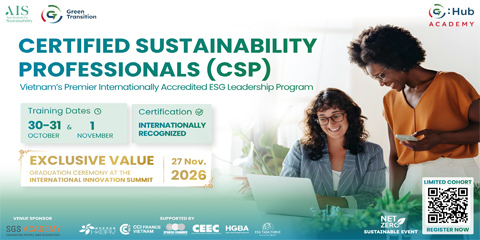
HCMC | CERTIFIED SUSTAINABILITY PROFESSIONAL (CSP) TRAINING | REGISTRATION OPEN
As sustainability becomes deeply embedded in corporate strategy and supply-chain operations across Vietnam, Hong Kong Business Association Vietnam is pleased to endorse the upcoming Certified Sustainability Professional (CSP) training program by the Asia Institute for Sustainability (AIS) - a premier internationally recognized ESG credential in Vietnam.
VIETNAM ECONOMY INVESTMENT
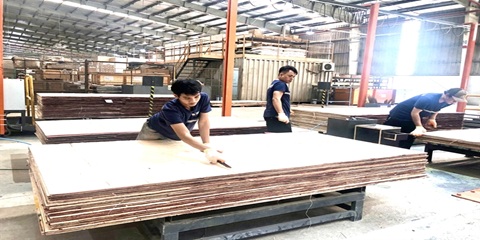
HCM CITY SAYS HOW IT PLANS TO ACHIEVE 10-11% ANNUAL EXPORT GROWTH FOR REST OF DECADE
The southern economic hub aims to strengthen its role as the country’s largest import-export centre while developing into a regional transhipment centre in Southeast Asia, supported by green and digital transformation and a circular economy. HCM City has outlined measures to expand production capacity, cut logistics costs, diversify export markets, and help businesses meet increasingly stringent international standards as it targets average annual export growth of 10-11 per cent through 2030.
VIETNAM ECONOMY INVESTMENT
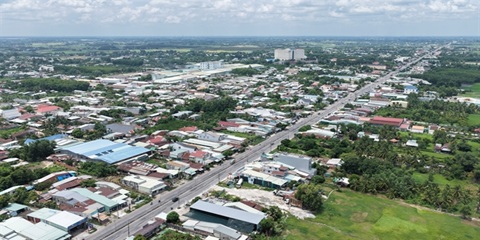
HCM CITY LEADS ECONOMIC RESTRUCTURING IN SOUTHEAST REGION
According to Associate Professor, Dr Vũ Tuấn Hưng, director of the Institute of Social Sciences of the Southern Region, the Southeast is a strategically important socio-economic space in Việt Nam’s development given its advantages in location, industry, trade, services, logistics, science and technology, urbanisation and human resources.
TECHNOLOGY
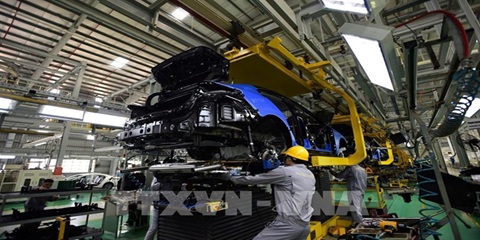
DIGITAL TRANSFORMATION TURNED INTO PRACTICAL TOOLS FOR PEOPLE, BUSINESSES
Việt Nam is moving its digital transformation agenda beyond policy frameworks and individual technology platforms towards practical applications that address everyday needs, as authorities seek measurable outcomes from science, technology and innovation. Under Politburo Resolution No. 57-NQ/TW issued on December 22, 2024, the implementation is increasingly shifting from simply completing assigned tasks towards developing concrete products and services for citizens and businesses.
TECHNOLOGY
APPLYING TECHNOLOGY FOR ECONOMIC TRANSFORMATION
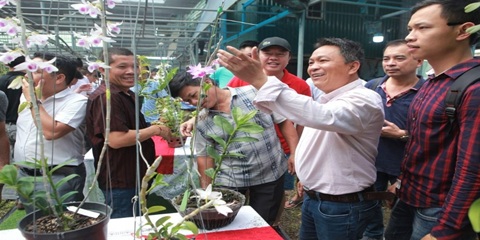
Having completed its new rural development program, Hanoi is shifting its focus toward improving development quality and building smart, sustainable rural areas. The transformation of Dong La orchid-growing village in An Khanh, a western commune of Hanoi, shows how digital technology is becoming a driver of production, market expansion, and higher incomes for local residents.

MEMBER CORNER / PROMOTIONS
VIGLACERA HONORED AS THE "LEADING GREEN INDUSTRIAL REAL ESTATE DEVELOPER 2026"
Organized by the Vietnam Investment Review, this prestigious awards program recognizes industry pioneers advancing eco-industrial parks, clean energy transition, and rigorous ESG standards. Outperforming competitors through a rigorous evaluation, Viglacera Corporation – JSC proudly ranked among the Top 5 highest-positioned enterprises in the Leading Green Industrial Real Estate Developers 2026 category, reinforcing its premier position in Vietnam’s industrial real estate sector.
Events Sponsors






















