Want to be in the loop?
subscribe to
our notification
Business News
LOCAL REAL ESTATE SECTOR ALLURES FOREIGN INVESTORS
Notable projects include Samsung’s $300 million 21-storey building in Hanoi, a $300 real estate complex project in Hanoi of TNR Holdings and a Russian partner, and Singapore-backed SynGience’s $18 million investment in DepotMetro Tower – Tham Luong.
According to Marc Townsend, managing director of CBRE Vietnam, the FDI flow into real estate has mostly been on the essential demand of accommodation such as housing and apartments, instead of hospitalities, golf courses and retail as previously.
Especially, Vietnam’s real estate sector is attracting interest from Japan and a range of projects are being developed through the co-operation between Vietnamese and Japanese investors in mid-end housing development instead of high-end and luxury segments.
Foreign investment flow has also been seen through a range of merger & acquisition cases. In many cases, the seller of one had become the buyer of another. “This means that the M&A activity was asset transactions for benefit, but not showing the evidence of less attractive real estate to foreign investors,” Marc commented.
CBRE also cited that international developers are becoming much more careful before deciding to pour their investment into Vietnam’s real estate market.
Sigrid Zialcita, executive director of the research division at Cushman & Wakefield in Asia Pacific said that Circular 06/2016/TT-NHNN dated May 27, 2016, which tightens the use of short-term capital sources for medium and long term lending, would bring more foreign investment into this sector.
“With a higher risk weightage attached to real estate loans, one way around it is to raise a company’s equity base. The need for capital injections is an opportunity for foreign investments to gain exposure to Vietnam,” Zialcita said in her recent visit to Vietnam.
“The recent relaxation of the 49 per cent cap in Vietnamese public companies will also be conducive to an increased level of foreign capital into the country. But this means that companies will have to be more transparent as generally, some due diligence would be required,” she cited.
Zialcita took the example of two real estate developers that have so far decided to extend foreign ownership to 60 per cent. One of them, Hoang Quan Consulting, Trading and Real Estate Services, had seen strong interest from investors in Asia, and wanted to become more transparent. Meanwhile Thu Duc Housing Development Corp., will divest from non-core businesses such as cargo handling because the legal foreign ownership limit for these sectors remain around 50 per cent.
According to Zialcita, in order to attract more FDI, Vietnam’s property market needs more transparency, a better legal framework which will result in a more liquid market and thus, more efficient prices which better reflect value. Real estate developments also need to be better aligned to overall economic objectives as well as urban planning guidelines.
In a study carried out by Financial Times data division FDI Intelligence, Vietnam ranks among the top in terms of greenfield FDI into Asia.
Its demographic profile, rapid urbanisation, growing middle class, rising incomes, status as a manufacturing hub, infrastructure developments and stable political climate are attractive fundamentals.
The potential upside, from a higher level of economic integration, is also compelling.
Source: VIR
Related News

INFRASTRUCTURE / CONSTRUCTION / LOGISTIC / PORT
VIỆT NAM-CAMBODIA TRADE GATHERS PACE TOWARDS $20 BILLION TARGET
Trade between Việt Nam and Cambodia continues to grow, remaining a bright spot and a key pillar of bilateral cooperation as the two countries aim to raise two-way trade to US$20 billion in the coming years. After setting a record of more than $11.3 billion last year, bilateral trade reached about $8.7 billion in the first eight months of this year, up 8.3 per cent year on year.
TECHNOLOGY
AI BEGINNING TO RESHAPE RECRUITMENT CRITERIA
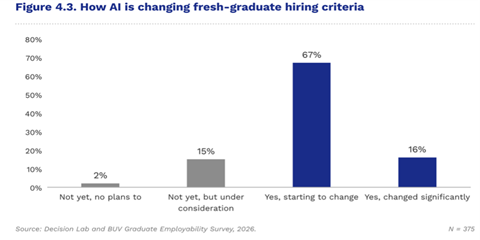
Digital literacy is the only capability area in which fresh graduates meet employers’ expectations, according to a new report. Yet, it is also the standard rising fastest, as businesses increasingly expect new hires to use AI effectively in the workplace. Some 83 per cent of employers say AI has changed, or is beginning to change, their hiring criteria, while 94 per cent report higher expectations for digital and AI capabilities than they had two to three years ago.

INFRASTRUCTURE / CONSTRUCTION / LOGISTIC / PORT
ĐÀ NẴNG GREEN-LIGHTS US$105 MILLION THAI DEVELOPMENT DEAL
The central city has approved an investment proposal by Thailand’s WHA Group to develop infrastructure for the 400ha WHA Đà Nẵng Industrial Park project on two communes of Thăng Bình and Đồng Dương, with an investment of more than VNĐ2.7 trillion (US$105 million). The city said it approved WHA Industrial Development International's status as an investor in the project, which is expected to take place between 2027 and 2034.

VIETNAM ECONOMY INVESTMENT
MOBILE PHONE EXPORTS RISE 20% TO $51.8 BILLION IN FIRST NINE MONTHS
Exports of mobile phones and components rose 20 per cent year-on-year to nearly US$51.8 billion in the first nine months of 2026, with China, the US and Republic of Korea accounting for more than half of the total. Shipments to the three markets reached a combined $26.18 billion, or 50.6 per cent of total exports of the product group during the period, according to data from the Vietnam Department of Customs under the Ministry of Finance.

VIETNAM ECONOMY INVESTMENT
FRUIT AND VEGETABLE EXPORTS POISED TO HIT $10 BILLION IN 2026
Fruit and vegetable exports are on track to reach nearly US$10 billion in 2026, after rising 19.9 per cent year on year to nearly US$7.4 billion in the first nine months, driven by strong seasonal demand and abundant tropical fruit supplies. The Ministry of Agriculture and Environment said the growth reflected stronger international demand for fresh produce and processed agricultural products.
GARMENT / TEXTILE
TEXTILE EXPORTS FACE DUAL CHALLENGES OF SUSTAINING ORDERS AND BOOSTING EFFICIENCY AMID GROWING COMPETITION
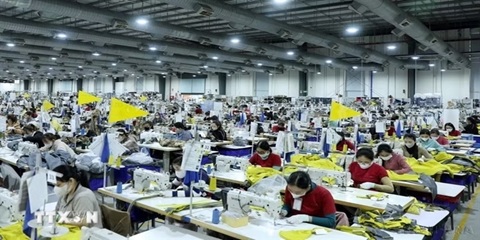
Data shows that the textile and garment sector maintained its growth momentum in the first nine months of this year. The industry's total export turnover reached an estimated US$35.721 billion in the first nine months of this year, up 3.3 per cent year-on-year. Despite posting encouraging export figures, Vietnamese textile and garment enterprises continue to navigate unpredictable market variables.
Events Sponsors






















