Want to be in the loop?
subscribe to
our notification
Business News
LOGISTICS SOLUTIONS PAVE THE WAY FOR EXPORTERS AMID TARIFF PRESSURES
Vietnamese authorities and international partners have emphasised strategic logistics reforms and enhanced cooperation as essential measures for exporters to overcome tariff pressures and build resilient, sustainable supply chains.
At a seminar on seeking logistics solutions for import-export businesses facing US tariff barriers in Hanoi on June 19, Bui Quang Hung, deputy director general of the Vietnam Trade Promotion Agency (Vietrade), noted that 2025 marks a pivotal year for Vietnam’s logistics industry.
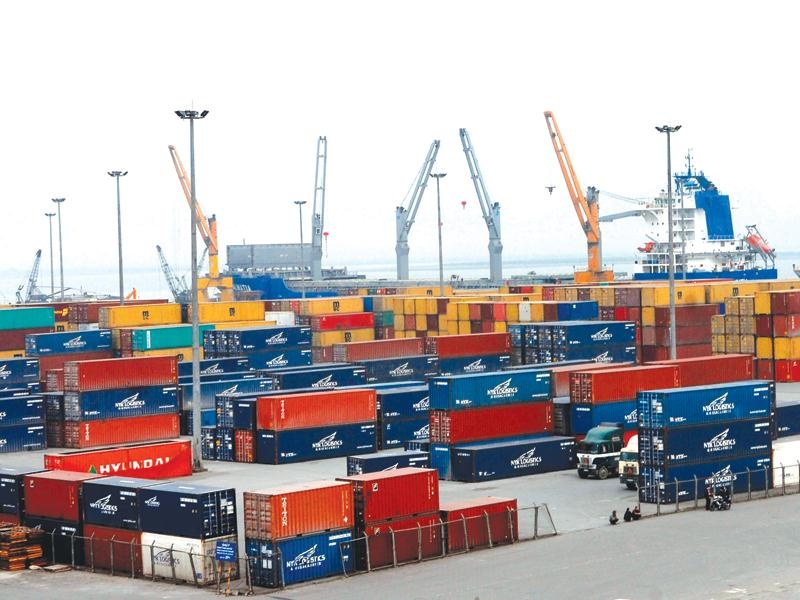
The country is set to capitalise on the global supply chain shift, but must also navigate complex US retaliatory tariff policies.
“Connecting logistics providers with manufacturers and exporters is essential to maintaining seamless supply chains,” Hung said.
The seminar was co-hosted by Vietrade, the Agency for Foreign Trade (AFT), Super Cargo Service Co., Ltd,, and US-based firm Cargotrans.
According to Hung, the Ministry of Industry and Trade is actively supporting industry associations and localities to develop logistics services, expand provider networks, and facilitate connections between Vietnamese businesses and international partners.
Looking ahead to the potential impacts of US tariff measures on the competitiveness of Vietnamese goods, foreign direct investment (FDI) flows, and export markets, Tran Thanh Hai, deputy director general of AFT, outlined a series of challenges facing Vietnam’s logistics sector.
These include a potential drop in logistics demand due to falling exports, rising service costs, market instability that hampers long-term investment planning, reduced FDI limiting the formation of high-value supply chains, and fierce competition from countries with similar production models.
In response, Hai suggested several short- and long-term strategies.
In the near term, Vietnam must adjust its economic policies to match shifting trade realities while pursuing bilateral negotiations with the US.
He called for faster disbursement of public investment, infrastructure upgrades, regulatory reforms, and continued support for businesses through access to credit, loan guarantees, market intelligence, and trade promotion efforts.
Over the long term, Hai stressed the importance of signing more free trade agreements (FTAs) to diversify export markets, increasing the rate of domestic content and value-added production, building sustainable supply chains, and reforming institutions to enhance transparency in trade and investment.
“Cultivating a dynamic pro-business ecosystem and fostering domestic pioneers in the export and logistics fields are key goals,” said Hai.
A representative from Cargotrans noted that US trade policy is shifting from free trade to fair trade.
“Vietnamese companies must adapt quickly or risk falling behind. One major barrier is Section 301 of the 1974 Trade Act, which allows tariffs on imports from countries deemed to practice unfair trade,” said the representative.
Industry experts assume that local exporters are facing three key risks: high logistics costs, documentation errors leading to penalties, and strict standards enforced by US customs authorities.
In this highly competitive global environment, investing in modern logistics is no longer just a short-term fix, it has become a long-term strategic necessity. Enterprises must develop well-structured strategies for sustainable trade operations.
Vietnam’s robust import-export activities continue to drive growth in the logistics sector.
As of the end of May, the country’s total trade value exceeded $355 billion, up 15.7 per cent on-year. Exports alone reached over $180 billion, up 14 per cent. The US remained Vietnam’s largest export market, accounting for $57.2 billion.
Sectors such as logistics, green industry, and high technology are drawing strong interest from investors in the US, Singapore, South Korea, Japan, China, and beyond.
This trend presents significant opportunities for Vietnamese firms to collaborate with global partners, harness new technologies, and secure investment to upgrade logistics infrastructure.
Vietnam’s logistics industry is valued at approximately $42 billion, with annual growth of 14-16 per cent. However, as tariffs reduce trade volume and logistics costs soar, container shipping rates to the US West Coast jumped from $1,850 to $2,950, while East Coast rates rose from $2,000 to close to $5,000 per container in the first five months of this year.
While these developments pose considerable challenges, they also provide momentum for Vietnam to prepare more strategically in logistics, positioning itself to seize the opportunities of supply chain shifts from China to ASEAN.
Source: VIR
Related News
MEMBER CORNER / PROMOTIONS
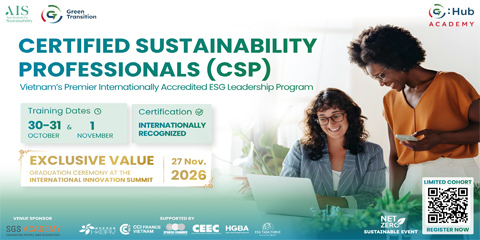
HCMC | CERTIFIED SUSTAINABILITY PROFESSIONAL (CSP) TRAINING | REGISTRATION OPEN
As sustainability becomes deeply embedded in corporate strategy and supply-chain operations across Vietnam, Hong Kong Business Association Vietnam is pleased to endorse the upcoming Certified Sustainability Professional (CSP) training program by the Asia Institute for Sustainability (AIS) - a premier internationally recognized ESG credential in Vietnam.
VIETNAM ECONOMY INVESTMENT
HCM CITY SAYS HOW IT PLANS TO ACHIEVE 10-11% ANNUAL EXPORT GROWTH FOR REST OF DECADE
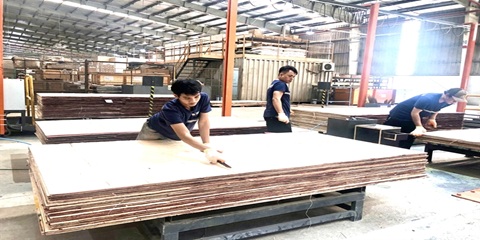
The southern economic hub aims to strengthen its role as the country’s largest import-export centre while developing into a regional transhipment centre in Southeast Asia, supported by green and digital transformation and a circular economy. HCM City has outlined measures to expand production capacity, cut logistics costs, diversify export markets, and help businesses meet increasingly stringent international standards as it targets average annual export growth of 10-11 per cent through 2030.
VIETNAM ECONOMY INVESTMENT
HCM CITY LEADS ECONOMIC RESTRUCTURING IN SOUTHEAST REGION
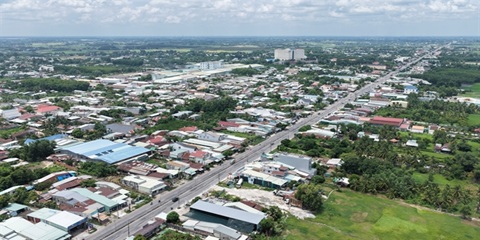
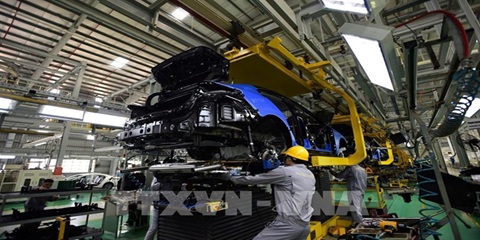
According to Associate Professor, Dr Vũ Tuấn Hưng, director of the Institute of Social Sciences of the Southern Region, the Southeast is a strategically important socio-economic space in Việt Nam’s development given its advantages in location, industry, trade, services, logistics, science and technology, urbanisation and human resources.
TECHNOLOGY
DIGITAL TRANSFORMATION TURNED INTO PRACTICAL TOOLS FOR PEOPLE, BUSINESSES
Việt Nam is moving its digital transformation agenda beyond policy frameworks and individual technology platforms towards practical applications that address everyday needs, as authorities seek measurable outcomes from science, technology and innovation. Under Politburo Resolution No. 57-NQ/TW issued on December 22, 2024, the implementation is increasingly shifting from simply completing assigned tasks towards developing concrete products and services for citizens and businesses.
TECHNOLOGY
APPLYING TECHNOLOGY FOR ECONOMIC TRANSFORMATION
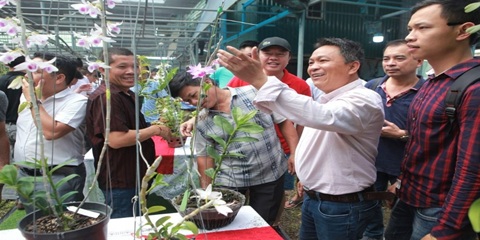
Having completed its new rural development program, Hanoi is shifting its focus toward improving development quality and building smart, sustainable rural areas. The transformation of Dong La orchid-growing village in An Khanh, a western commune of Hanoi, shows how digital technology is becoming a driver of production, market expansion, and higher incomes for local residents.
MEMBER CORNER / PROMOTIONS
VIGLACERA HONORED AS THE "LEADING GREEN INDUSTRIAL REAL ESTATE DEVELOPER 2026"
Organized by the Vietnam Investment Review, this prestigious awards program recognizes industry pioneers advancing eco-industrial parks, clean energy transition, and rigorous ESG standards. Outperforming competitors through a rigorous evaluation, Viglacera Corporation – JSC proudly ranked among the Top 5 highest-positioned enterprises in the Leading Green Industrial Real Estate Developers 2026 category, reinforcing its premier position in Vietnam’s industrial real estate sector.
Events Sponsors






















