Want to be in the loop?
subscribe to
our notification
Business News
MANUFACTURERS MAY PAY MORE THAN $259 MILLION PER YEAR IN RECYCLING COSTS
Industry leaders are concerned that an all-time high and disproportionate level of recycling costs will negatively impact the ability to run a profitable business.
Dau Anh Tuan, deputy secretary general of the Vietnam Chamber of Commerce and Industry (VCCI), spoke at a meeting on July 28 regarding recycling costs and extended liabilities in Vietnam, saying "It is not feasible for manufacturers and importers to carry out their responsibilities efficiently without proper recycling cost norms."
The draft on recycling cost norms, which was drafted on the basis of Article 54 of the 2020 Law on Environmental Protection, proposed by the National Extended Producer Responsibility (EPR) Council specifies, "The norm of recycling costs for a unit volume of product, packaging, and administrative costs for management, supports the implementation of product and packaging recycling responsibilities and the responsibility of manufacturers and importers for waste collection and treatment."
Phan Tuan Hung, director of the Legal Department under the Ministry of Natural Resources and Environment, and permanent member of the National EPR Council, stated, "The oversight of recycling duties and extended responsibilities for manufacturers and exports will motivate enterprises to manufacture and export products of higher quality, reducing emissions of single-use materials, and lead to the execution of the government's commitments to minimise emissions."
Currently, the Vietnam Beer, Wine, and Beverage Association, the Vietnam Plastic Association (VPA), and the Food and Foodstuff Association Ho Chi Minh City, are extremely concerned about the recycling cost coefficient in their respective industries. The belief is that the draft remains excessive and unreasonable, as the coefficient is greater than that of countries in Western Europe, with aluminium 1.26 times higher and glass 2.12 times higher.
According to the calculations of these associations, businesses will be required to pay an estimated $259 million per year in recycling fees, excluding fees for the three primary categories of packaging, namely paper, plastic, and metal. This is a tremendous expense that will cause a great deal of difficulty for businesses and increase product prices, particularly given the current economic climate.
The general secretary of the VPA, Huynh Thi My, stated that Vietnam's plastic recycling industry has just entered its infancy and is confronting many challenges. In 2022, Vietnam consumed 9.2 million tonnes of plastic materials, 38 per cent of which was used for packaging.
According to My, the plastic packaging industry is a processing industry with basic and straightforward technology, resulting in the very low profit margin of approximately 5 per cent. "Under the proposed recycling cost standards, the recycling contribution will account for nearly 40 per cent of the company's profits. Low interest rates and significant contributions will cause a recession in the plastics industry," she said.
Source: VIR
Related News

MEMBER CORNER / PROMOTIONS
KNIC ENGAGES WITH GOVERNMENT AND HIGH-TECH BUSINESS COMMUNITIES IN CHINA
From Beijing to Shandong, KN Holdings and KN Industrial City are continuing to expand their engagement with government authorities, trade promotion organizations, and high-tech business communities in China. In Beijing, the delegation met with the Center for International Economic and Technological Cooperation under the Ministry of Industry and Information Technology (MIIT), exchanging perspectives on industrial and technology cooperation between the two markets.

VIETNAM ECONOMY INVESTMENT
VIETNAM’S TRADE TOPS $825 BILLION BY MID-SEPTEMBER
Figures released on September 21 showed goods trade reached nearly $55 billion in the first 15 days of September alone, bringing cumulative turnover since the beginning of the year to more than $825 billion. The strong growth reflects robust trade flows, with demand for consumer goods and production inputs remaining high.

TECHNOLOGY
VIỆT NAM'S BUSINESSES MOVE TOWARDS AI AGENTS
Việt Nam’s AI landscape is entering a new phase as businesses move beyond generative AI (GenAI) tools designed to assist human users towards autonomous AI, agentic AI and AI agents that can take action with limited supervision, experts have said. The shift comes as Việt Nam seeks to accelerate science and technology, innovation and digital transformation under Politburo Resolution 57-NQ/TW, issued on December 22, 2024.
GARMENT / TEXTILE
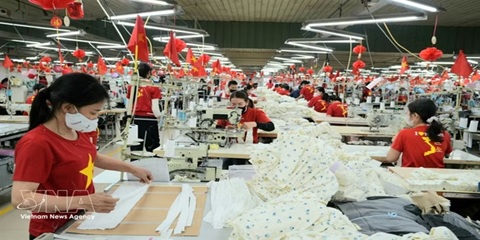
VIỆT NAM TARGETS $48 BILLION IN TEXTILE-GARMENT EXPORTS
Việt Nam’s textile and garment industry is facing both opportunities and challenges amid complex and unpredictable developments in the global market, prompting businesses to improve growth quality, optimise production costs and enhance adaptability in pursuit of an export turnover of about $48 billion this year. The target is considered an important milestone that requires concerted efforts from management agencies and the business community.
INFRASTRUCTURE / CONSTRUCTION / LOGISTIC / PORT
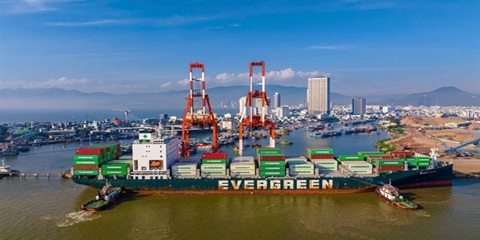
CUTTING LOGISTICS COSTS KEY TO BOOSTING EXPORTS
Reducing costs has become an increasingly urgent priority for import-export activities, particularly logistics costs, a conference in Hà Nội was told on Tuesday. According to Deputy General Director of the Ministry of Industry and Trade's Agency for Foreign Trade, Trần Thanh Hải, import-export activities has remained a bright spot for the economy in recent years, playing an important role and helping drive macroeconomic growth.
LEGAL UPDATE / POLICY
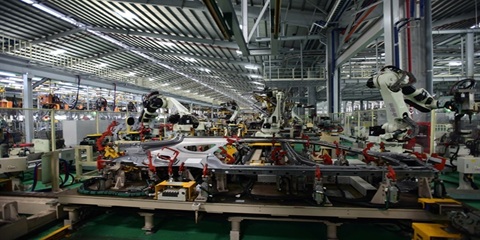
FLEXIBLE FISCAL POLICY HELPS DRIVE ECONOMIC GROWTH
Việt Nam’s fiscal policy has been implemented in a targeted expansionary manner since early 2026, helping maintain macroeconomic stability and supporting the country’s goal of achieving double-digit economic growth. According to the Ministry of Finance, State budget revenue in the first eight months of 2026 was estimated at VNĐ2.02 quadrillion (US$77.7 billion), equivalent to 80 per cent of the annual estimate and up 16 per cent year-on-year.
Events Sponsors






















