Want to be in the loop?
subscribe to
our notification
Business News
MANUFACTURING BOOSTED BY FDI, EXPORT RECOVERY AND PUBLIC INVESTMENT
Vietnam's industrial sector remained a key growth engine in the first half of 2026, supported by robust manufacturing, recovering export orders, stronger foreign investment and more public investment.

The National Statistics Office in Hanoi on July 3 releases economic statistics for the first six months. Photo: Nguyen Thu
Data released by the National Statistics Office (NSO) under the Ministry of Finance on July 3 showed that the industrial and construction sector maintained solid momentum during the first six months of the year, while the services sector continued to benefit from recovering domestic consumption, tourism, and trade.
Industrial value-added expanded by 9.86 per cent on-year during the period, contributing 40.35 per cent to Vietnam's overall economic growth.
Manufacturing remained the largest growth driver, posting growth of 10.23 per cent and accounting for 33.07 per cent of GDP growth. Electricity production and distribution rose 9.34 per cent, contributing 5.14 per cent, while mining expanded 6.67 per cent, contributing 1.60 per cent. Water supply, waste management, and wastewater treatment increased 7.72 per cent, contributing 0.54 per cent. Meanwhile, the construction sector grew 9.51 per cent, contributing 6.85 per cent.
Phi Thu Nga, director of the Industry and Construction Statistics Department under the NSO, said industrial production delivered encouraging results during the first half of the year, with manufacturing continuing to underpin economic expansion.
"Industrial production recorded positive growth in the first six months of the year, particularly manufacturing, which has continued to affirm its role as one of the economy's key growth drivers," Nga said.
According to Nga, the sector's performance has been supported by three major factors.
The first is the continued expansion of foreign direct investment (FDI) into manufacturing. She said an increasing number of foreign-led projects licensed in recent years have now entered production, adding new manufacturing capacity and creating additional growth momentum for the second half of the year.
The figures support this trend. Realised FDI reached an estimated $13.03 billion in the first six months of 2026, up 11.2 per cent on-year and the highest level recorded for the first half of any year over the past five years.
Manufacturing attracted the largest share of realised FDI at $10.76 billion, accounting for 82.6 per cent of the total. Real estate business activities followed with $965.2 million, representing 7.4 per cent, while electricity, gas, steam, and air conditioning supply attracted $479.2 million, equivalent to 3.7 per cent.
The second growth driver has been the recovery of export orders since the second quarter.
Nga noted that electronics and computer manufacturers in Vietnam have expanded production as they enter new production cycles and launch new product lines. At the same time, garments and textiles producers, together with footwear manufacturers, have maintained stable production despite continued uncertainties in global markets.
Public investment has become the third major growth catalyst.
Accelerating disbursement of major infrastructure projects has supported construction activity directly but also generated spillover effects across industries producing construction materials, machinery, equipment, and supporting industrial products.
Business sentiment also points to improvement. According to the NSO's quarterly business tendency survey, 36.3 per cent of manufacturing enterprises reported better business conditions in the second quarter compared to the previous. Looking ahead, 39.4 per cent expect business performance to improve in the third quarter.
Beyond industry, services continued to provide an important pillar of economic growth, driven by stronger domestic demand.
Retail sales of goods and consumer services maintained healthy growth during the first half of the year, while tourism continued to recover as both international and domestic visitor numbers increased. Transport, accommodation, food services, and other consumer-related activities also posted positive growth, supporting the broader services sector.
Despite the positive outlook, Nga cautioned that manufacturers will continue to face challenges during the second half of the year.
She noted that businesses remain under pressure from narrowing profit margins as production costs rise, while the international trade environment continues to present uncertainties.
"To sustain industrial growth, it is important to maintain lending rates at appropriate levels while ensuring stable supplies of production materials, so businesses can confidently expand operations," Nga said.
The NSO believes that with manufacturing maintaining its momentum, export orders continuing to recover, foreign-invested projects expanding production, and public investment generating stronger spillover effects, industry and services will remain Vietnam's two principal growth drivers throughout the remainder of 2026.
Source: VIR
Related News

INFRASTRUCTURE / CONSTRUCTION / LOGISTIC / PORT
VIỆT NAM-CAMBODIA TRADE GATHERS PACE TOWARDS $20 BILLION TARGET
Trade between Việt Nam and Cambodia continues to grow, remaining a bright spot and a key pillar of bilateral cooperation as the two countries aim to raise two-way trade to US$20 billion in the coming years. After setting a record of more than $11.3 billion last year, bilateral trade reached about $8.7 billion in the first eight months of this year, up 8.3 per cent year on year.
TECHNOLOGY
AI BEGINNING TO RESHAPE RECRUITMENT CRITERIA
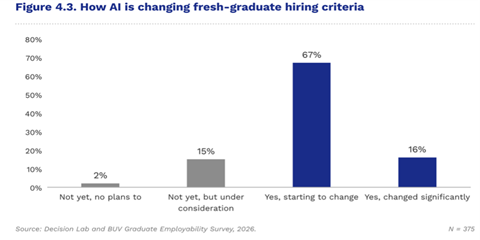
Digital literacy is the only capability area in which fresh graduates meet employers’ expectations, according to a new report. Yet, it is also the standard rising fastest, as businesses increasingly expect new hires to use AI effectively in the workplace. Some 83 per cent of employers say AI has changed, or is beginning to change, their hiring criteria, while 94 per cent report higher expectations for digital and AI capabilities than they had two to three years ago.
INFRASTRUCTURE / CONSTRUCTION / LOGISTIC / PORT
ĐÀ NẴNG GREEN-LIGHTS US$105 MILLION THAI DEVELOPMENT DEAL
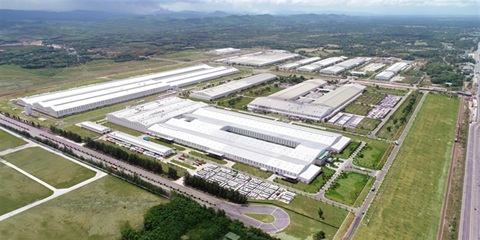
The central city has approved an investment proposal by Thailand’s WHA Group to develop infrastructure for the 400ha WHA Đà Nẵng Industrial Park project on two communes of Thăng Bình and Đồng Dương, with an investment of more than VNĐ2.7 trillion (US$105 million). The city said it approved WHA Industrial Development International's status as an investor in the project, which is expected to take place between 2027 and 2034.
VIETNAM ECONOMY INVESTMENT
MOBILE PHONE EXPORTS RISE 20% TO $51.8 BILLION IN FIRST NINE MONTHS
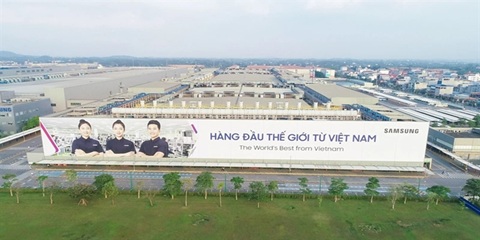
Exports of mobile phones and components rose 20 per cent year-on-year to nearly US$51.8 billion in the first nine months of 2026, with China, the US and Republic of Korea accounting for more than half of the total. Shipments to the three markets reached a combined $26.18 billion, or 50.6 per cent of total exports of the product group during the period, according to data from the Vietnam Department of Customs under the Ministry of Finance.
VIETNAM ECONOMY INVESTMENT
FRUIT AND VEGETABLE EXPORTS POISED TO HIT $10 BILLION IN 2026
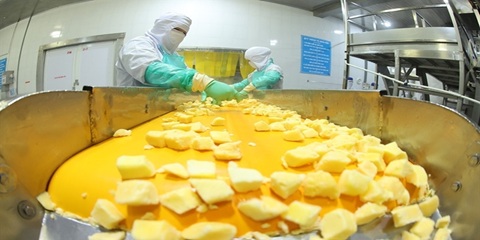
Fruit and vegetable exports are on track to reach nearly US$10 billion in 2026, after rising 19.9 per cent year on year to nearly US$7.4 billion in the first nine months, driven by strong seasonal demand and abundant tropical fruit supplies. The Ministry of Agriculture and Environment said the growth reflected stronger international demand for fresh produce and processed agricultural products.
GARMENT / TEXTILE
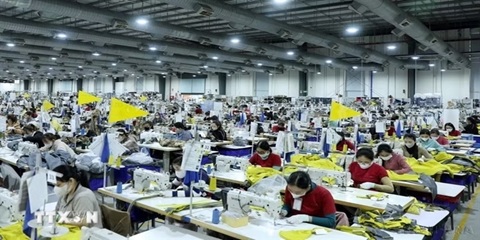
TEXTILE EXPORTS FACE DUAL CHALLENGES OF SUSTAINING ORDERS AND BOOSTING EFFICIENCY AMID GROWING COMPETITION
Data shows that the textile and garment sector maintained its growth momentum in the first nine months of this year. The industry's total export turnover reached an estimated US$35.721 billion in the first nine months of this year, up 3.3 per cent year-on-year. Despite posting encouraging export figures, Vietnamese textile and garment enterprises continue to navigate unpredictable market variables.
Events Sponsors






















