Want to be in the loop?
subscribe to
our notification
Business News
MARITIME ADMINISTRATION TO INSPECT SHIPPING RATES HIKE
The Vietnam Maritime Administration (VMA) plans to set up a working group to inspect the hike in freight rates among shipping companies that have routes to Europe and America.
In a recent interview with Vietnam News Agency, deputy head of the VMA Hoàng Hồng Giang said the move aimed to remove difficulties for export activities and ensure transparency in the listing of freight prices.
Giang attributed the price hike to the strict border controls and limited trade activities during the prolonged COVID-19 pandemic.
“Many seaports, especially in Europe and America, are in a state of stagnation due to a lack of manpower. This results in millions of congested containers at ports or borders, causing a shortage of empty containers for packing,” Giang said.
“Some seaports applying isolation measures also leads to longer ship turnaround times than before.”
Another reason was the increase in import demand of America and Europe for goods from China and Asia, Giang said.
The increased demand led to an imbalance between the volume of goods exported and imported from October 2020. In 2020, the volume of export containers increased, up 13 per cent over the same period last year, reaching 7.38 million twenty-foot equivalent units (TEUs), while the volume of imported goods increased 8 per cent, reaching 7.27 million TEUS.
During the last three months, freight rates had soared to US$8,000, even to $10,000 in certain cases, from less than $1,000 at the beginning of 2020. It has sharply driven up expenses for exporters and raised concerns over a lack of transparency and inadequate price management of containers, he said.
Besides rising freight rates, many businesses couldn’t occupy room on ships due to the lack of empty containers, goods ready for export thus couldn’t be transported, leading to rising inventories, he said.
As many as 90 per cent of Vietnamese enterprises inked import contracts with the CIF (cost, insurance and freight) condition, and export contracts with the FOB (free on board) condition. Under these contracts, foreign partners were mainly responsible for shipping phases. However, due to the increased rates, the foreign partners required Vietnamese enterprises to share the added cost, he said.
"The continuous increase in freight rates and surcharges has caused many difficulties for businesses, increasing transportation and storage costs, affecting production and distribution of goods.
“It is now the peak season for exported goods such as agricultural and aquatic products, but goods are not delivered on time. Therefore, the contracts were cancelled by foreign partners. The materials imported to Việt Nam to serve production were also delivered late, causing the production lines to be interrupted. If this situation continues, some businesses will even have to shut down production,” Giang said.
In order to remove difficulties for shipping, VMA had directed the port authorities to co-ordinate with State management agencies at seaports to speed up the procedures for ships entering and leaving ports, facilitating large-tonnage ships to enter and exit, requiring seaport enterprises to increase their operational efficiency, make the most of their resources to release ships quickly and prevent delays in the cargo handling process.
Regarding the listing of prices, VMA had issued a document requiring shipping companies to strictly list their charge rates publicly and transparently, increasing prices in accordance with the provisions of law.
So far, shipping lines had not strictly followed the regulations, Giang added.
VMA had proposed the Ministry of Transport to co-ordinate with the Ministry of Industry and Trade and the Ministry of Finance to set up a working group to inspect the increase in freight rates and surcharges of shipping lines that have routes to Europe and America.
It also sent a petition to the Ministry of Transport, urging it to consult the Ministry of Finance to direct the customs forces at ports to speed up the clearance of backlogged containers so that enterprises have empty containers for transportation.
According to a report by the VMA, the volume of container cargo through the local seaports in 2020 reached 14.65 million TEUs, up 10.6 per cent compared to 2019, in which the export container volume was 7.38 million TEUs, up 13 per cent year-on-year, imported ones were 7.27 million TEUs, up 8 per cent compared to 2019.
Despite the impact of the COVID-19 pandemic, the volume of goods exported and imported overseas still saw stable growth. However, in the last months of 2020, import-export businesses faced many difficulties due to rising sea freight rates and a lack of empty containers.
Regarding the volume of empty containers, as of mid-January this year, the total number of empty containers stored at seaports reached 40,946, of which 40-feet containers account for 70 per cent. Such an amount was just enough to meet the average export volume over 3 to 4 days, Giang said.
Source: VNS
Related News

MEMBER CORNER / PROMOTIONS
HCMC | CERTIFIED SUSTAINABILITY PROFESSIONAL (CSP) TRAINING | REGISTRATION OPEN
As sustainability becomes deeply embedded in corporate strategy and supply-chain operations across Vietnam, Hong Kong Business Association Vietnam is pleased to endorse the upcoming Certified Sustainability Professional (CSP) training program by the Asia Institute for Sustainability (AIS) - a premier internationally recognized ESG credential in Vietnam.
VIETNAM ECONOMY INVESTMENT
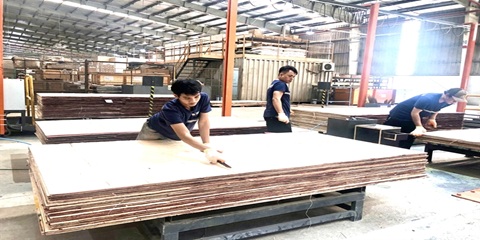
HCM CITY SAYS HOW IT PLANS TO ACHIEVE 10-11% ANNUAL EXPORT GROWTH FOR REST OF DECADE
The southern economic hub aims to strengthen its role as the country’s largest import-export centre while developing into a regional transhipment centre in Southeast Asia, supported by green and digital transformation and a circular economy. HCM City has outlined measures to expand production capacity, cut logistics costs, diversify export markets, and help businesses meet increasingly stringent international standards as it targets average annual export growth of 10-11 per cent through 2030.
VIETNAM ECONOMY INVESTMENT
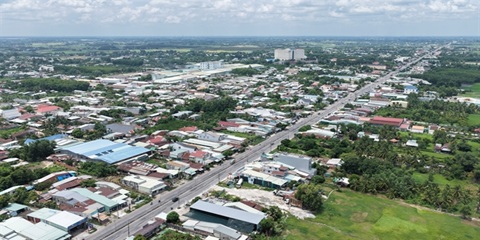
HCM CITY LEADS ECONOMIC RESTRUCTURING IN SOUTHEAST REGION
According to Associate Professor, Dr Vũ Tuấn Hưng, director of the Institute of Social Sciences of the Southern Region, the Southeast is a strategically important socio-economic space in Việt Nam’s development given its advantages in location, industry, trade, services, logistics, science and technology, urbanisation and human resources.
TECHNOLOGY
DIGITAL TRANSFORMATION TURNED INTO PRACTICAL TOOLS FOR PEOPLE, BUSINESSES
Việt Nam is moving its digital transformation agenda beyond policy frameworks and individual technology platforms towards practical applications that address everyday needs, as authorities seek measurable outcomes from science, technology and innovation. Under Politburo Resolution No. 57-NQ/TW issued on December 22, 2024, the implementation is increasingly shifting from simply completing assigned tasks towards developing concrete products and services for citizens and businesses.

TECHNOLOGY
APPLYING TECHNOLOGY FOR ECONOMIC TRANSFORMATION
Having completed its new rural development program, Hanoi is shifting its focus toward improving development quality and building smart, sustainable rural areas. The transformation of Dong La orchid-growing village in An Khanh, a western commune of Hanoi, shows how digital technology is becoming a driver of production, market expansion, and higher incomes for local residents.

MEMBER CORNER / PROMOTIONS
VIGLACERA HONORED AS THE "LEADING GREEN INDUSTRIAL REAL ESTATE DEVELOPER 2026"
Organized by the Vietnam Investment Review, this prestigious awards program recognizes industry pioneers advancing eco-industrial parks, clean energy transition, and rigorous ESG standards. Outperforming competitors through a rigorous evaluation, Viglacera Corporation – JSC proudly ranked among the Top 5 highest-positioned enterprises in the Leading Green Industrial Real Estate Developers 2026 category, reinforcing its premier position in Vietnam’s industrial real estate sector.
Events Sponsors






















