Want to be in the loop?
subscribe to
our notification
Business News
MINISTRY PROPOSES DEVELOPING GREEN E-COMMERCE LAW
The MoIT has drafted proposals to develop the Law on E-commerce which will be included in the National Assembly's law and ordinance development programme in 2025 and submitted to the NA for consideration and comments in October.
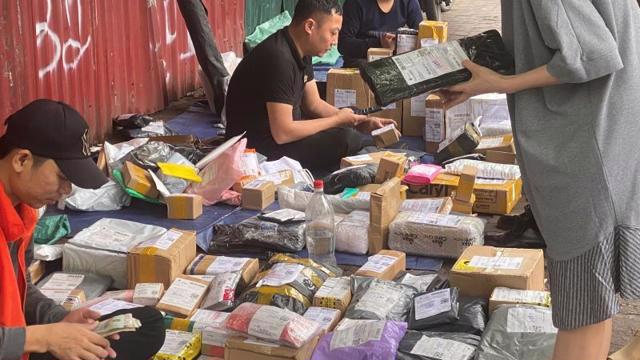
The Vietnamese online shopping and food delivery sector used about 160,000 cardboard boxes and 171,000 tonnes of plastic, mainly single-use plastic, in 2024. Photo vneconomy.vn
HÀ NỘI — The Ministry of Industry and Trade (MoIT) has proposed a new green e-commerce law amid concerns over 800,000 tonnes of plastic waste in 2030.
According to a survey of the Vietnam E-commerce Association (VECOM) announced in 2024, the rapid development of Việt Nam's e-commerce industry has caused many environmental problems, especially waste from packaging, order fulfillment and online food deliveries.
The MoIT's draft proposals to develop the Law on E-commerce will be included in the National Assembly's law and ordinance development programme in 2025 and will be presented to the NA for consideration and comments in October 2025, before being approved at a NA meeting in May 2026.
According to the MoIT, e-commerce is currently regulated in Decree 52/2013/NĐ-CP dated May 16, 2013 and Decree 85/2021/NĐ-CP dated September 25, 2021. The decrees provide the basic legal framework for the operation models of e-commerce, but the current regulations need to be adjusted towards sustainable e-commerce development to maintain long-term development.
Statistics show that the Vietnamese online shopping and food delivery markets in 2024 reached US$22 billion and $1 billion, respectively. The sector used about 160,000 cardboard boxes and 171,000 tonnes of plastic, mainly single-use, according to the World Wildlife Fund (WWF).
The e-commerce industry alone threw away more than 7,600 tonnes of plastic to sell $1 billion worth of goods, while food delivery released nearly 18,600 tonnes of plastic.
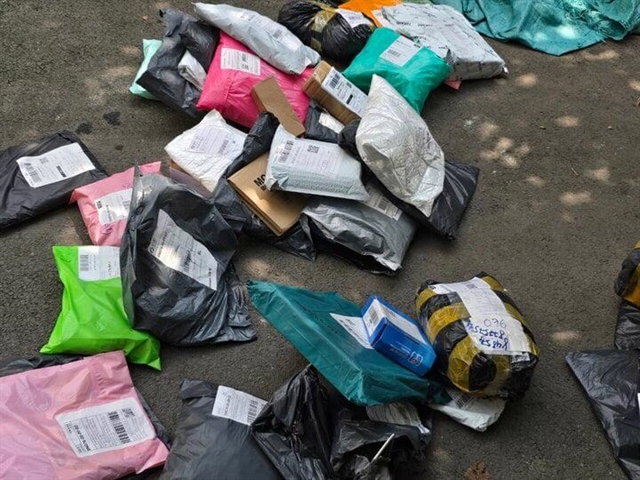
The amount of plastic waste from e-commerce might be up to 800,000 tonnes in 2030. Photo vneconomy.vn
According to VECOM, Việt Nam’s e-commerce market in 2024 is estimated to reach about $31 billion, of which online retail sales account for more than $20 billion. VECOM predicts that e-commerce will reach nearly $40 billion in 2025 and about $100 billion in 2030.
However, since 2019, Vietnam's e-commerce has revealed unsustainable factors. In particular, the boom of e-commerce during the COVID-19 pandemic has clearly revealed negative impacts on the environment, typically the wide scale use of packaging and plastic materials.
It shows that there is a significant increase in waste from packaging and transportation, putting great pressure on the environment. The amount of plastic waste from e-commerce might be up to 800,000 tonnes in 2030.
Green standards and sustainable development responsibilities are becoming common requirements in global e-commerce activities, requiring businesses to integrate emission reduction solutions, use environmentally friendly materials and build green supply chains.
Therefore, the MoIT believes the development of e-commerce needs to emphasise the development of environmentally friendly e-commerce infrastructure, encourage businesses to apply green technology and increase consumer awareness of sustainable consumption. These steps not only help protect the environment but also enhance the competitiveness of Việt Nam's e-commerce, contributing to the creation of a sustainable digital economy. The MoIT proposes that the new law will focus on green and sustainable e-commerce development.
According to the MoIT, in terms of economic impact, the State needs to allocate resources from the central to local levels to participate in promoting sustainable e-commerce development.
For businesses, it is necessary to invest more in technology and innovate business processes to meet new standards, especially regarding green e-commerce.
For people, product prices may increase due to the cost of applying environmental standards and improving infrastructure.
However, from the analysis, the MoIT believes that the policy on developing e-commerce in a green and sustainable direction has mostly positive impacts, and will help achieve the best economic benefits and social impacts. Therefore, the MoIT proposes to choose this option for the development of the Law on E-commerce. — VNS
Source: VNS
Related News

CHARITY / EXHIBITION / OTHER EVENTS
INVESTMENT OPPORTUNITIES IN CA MAU PROVINCE: 96 PROJECTS AND 20 STRATEGIC PROJECTS
We are pleased to share with you information on investment projects currently seeking investors in Ca Mau Province. Should your esteemed company or association be interested, we kindly invite you to review the project information and complete the registration form via the links provided. The Ho Chi Minh City Investment and Trade Promotion Centre (ITPC) will consolidate the expressions of interest and facilitate connections with the leadership of Ca Mau Province at a meeting tentatively scheduled for 13 November 2026 in Ho Chi Minh City.

MEMBER CORNER / PROMOTIONS
BẰNG KIỀU LIVESHOW - A SYMPHONY OF LOVE UNDER THE GOLDEN GLOW
A masterclass in live music that takes the audience on a soulful journey through immortal love songs, guided by the peerless artistry and emotive storytelling of renowned singer Bằng Kiều. The highlight of the night is his seamless musical chemistry with special guest Triệu Hồng Ngọc, promising passionate and deeply resonant duets inside the magnificent Grand Ballroom.

INFRASTRUCTURE / CONSTRUCTION / LOGISTIC / PORT
ĐÀ NẴNG GREEN-LIGHTS US$105 MILLION THAI DEVELOPMENT DEAL
The central city has approved an investment proposal by Thailand’s WHA Group to develop infrastructure for the 400ha WHA Đà Nẵng Industrial Park project on two communes of Thăng Bình and Đồng Dương, with an investment of more than VNĐ2.7 trillion (US$105 million). The city said it approved WHA Industrial Development International's status as an investor in the project, which is expected to take place between 2027 and 2034.

VIETNAM ECONOMY INVESTMENT
MOBILE PHONE EXPORTS RISE 20% TO $51.8 BILLION IN FIRST NINE MONTHS
Exports of mobile phones and components rose 20 per cent year-on-year to nearly US$51.8 billion in the first nine months of 2026, with China, the US and Republic of Korea accounting for more than half of the total. Shipments to the three markets reached a combined $26.18 billion, or 50.6 per cent of total exports of the product group during the period, according to data from the Vietnam Department of Customs under the Ministry of Finance.

INFRASTRUCTURE / CONSTRUCTION / LOGISTIC / PORT
VIỆT NAM-CAMBODIA TRADE GATHERS PACE TOWARDS $20 BILLION TARGET
Trade between Việt Nam and Cambodia continues to grow, remaining a bright spot and a key pillar of bilateral cooperation as the two countries aim to raise two-way trade to US$20 billion in the coming years. After setting a record of more than $11.3 billion last year, bilateral trade reached about $8.7 billion in the first eight months of this year, up 8.3 per cent year on year.

VIETNAM ECONOMY INVESTMENT
FRUIT AND VEGETABLE EXPORTS POISED TO HIT $10 BILLION IN 2026
Fruit and vegetable exports are on track to reach nearly US$10 billion in 2026, after rising 19.9 per cent year on year to nearly US$7.4 billion in the first nine months, driven by strong seasonal demand and abundant tropical fruit supplies. The Ministry of Agriculture and Environment said the growth reflected stronger international demand for fresh produce and processed agricultural products.
Events Sponsors






















