Want to be in the loop?
subscribe to
our notification
Business News
MONETARY POLICY SUPPORTS ECONOMIC GROWTH
[14-11-2016] A flexible monetary policy supported stability in Viet Nam’s financial market and fostered economic growth this year, a National Financial Supervisory Commission (NFSC) official said in Ha Noi last week.
NFSC Vice Chairman Truong Van Phuoc said M2, which is broadly known as a measure of the nation’s money supply, including cash, checking deposits, savings deposits, money market securities, mutual funds and other time deposits, increased some 13 per cent this year.
This was a “necessary increase” compared to a 10 per cent rise last year, he said.
Lending interest rates in the country averaged 8.5 per cent and tended to decline in the final months of 2016 following Government directives and efforts of the banking sector, although deposit rates remained high in the context of rising inflation.
Phuoc said the country also succeeded in operating the foreign exchange market, as it controlled hikes in the dollar/dong exchange rate within a 1 per cent band, while reaching some US$40 billion in the national foreign reserve this year.
In 2016, the banks returned 78 per cent of their capital resources to the economy, compared to 73 per cent in 2015. Capital mobilising from enterprises and citizens grew by 3 per cent this year.
Phuoc said overall credit growth, expected at 18-19 per cent this year, would be significant, but capital distribution should be more suitable.
Although property credit increased only 12 per cent this year against last year’s 28 per cent, consumer credit expanded by up to 40 per cent in 2016, with half of the consumer lending involved in the purchases of homes.
“Generally, capital distribution for production and business activities is positive, but we must spend capital on real estate in a careful manner to avoid repeating the ‘realty bubbles’ that occurred several years ago,” Phuoc said.
Phuoc noted that the country will handle some VND100 trillion ($4.44 billion) in bad debts in the banking system this year. The Viet Nam Asset Management Company will process 20 per cent of the amount and let banks settle the remaining amounts themselves.
Banks were expected to retain about VND40 trillion in combined after-tax profits after establishing provisional funds worth VND70 trillion to cover the risks of bad debts this year, he said.
An NFSC report added that slowing global economic growth, especially lower trade growth and declining oil and farm produce prices, negatively affected Viet Nam this year.
Natural calamities and climate change also hit the domestic economy in 2016.
Progress in the national finance system assisted economic growth, while keeping inflation stable. This also supported business development and consolidated investors’ confidence in the local market.
The stock market posted growth of nearly 20 per cent, with a capitalisation value reaching 38 per cent of the country’s gross domestic product (GDP) in 2016, compared to 32.4 per cent in 2015.
The report forecast that Viet Nam’s economic growth would improve next year, as institutional reforms were likely to better the investment climate and stimulate the private sector, allowing energy and farm produce prices to recover.
However, the domestic economy would also face significant challenges in 2017 as global economic conditions remained uncertain, with prices of major commodities fluctuating unexpectedly.
Additionally, non-traditional monetary policies of large economies might lead to unpredictable moves in foreign investment flows, the report said.
Source: VIR
Related News
VIETNAM ECONOMY INVESTMENT
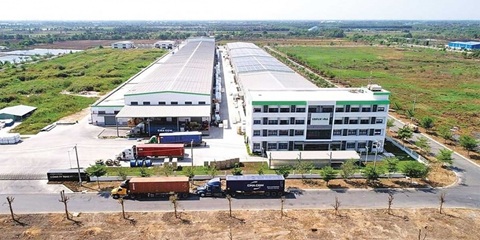
FOREIGN INVESTORS SEEKING A SYNCHRONISED MANUFACTURING ECOSYSTEM
Instead of focusing only on land costs and incentives as usual, foreign investors are seeking a synchronised manufacturing ecosystem, from stable power supply and logistics to shared infrastructure and the convenience of completing residence procedures for experts to serve their long-term investment in the country.
INFRASTRUCTURE / CONSTRUCTION / LOGISTIC / PORT
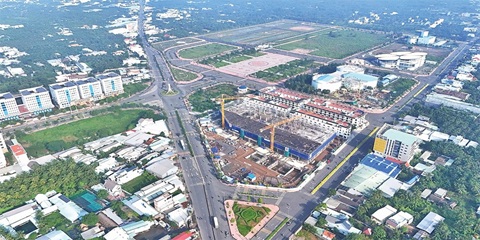
DONG THAP PROVINCE STEPS UP INDUSTRIAL EXPANSION AND INFRASTRUCTURE CONNECTIVITY
Accelerating public investment, strengthening inter-regional connectivity, and expanding industrial land are helping Dong Thap efficiently bolster competitiveness and drive economic growth. Following the 2025 merger of the former Dong Thap and Tien Giang provinces, the expanded Dong Thap province in the Mekong Delta faces mounting pressure to accelerate infrastructure development and strengthen connectivity among local economic zones, urban areas, industrial parks (IPs), and production centres.
PROPERTY / INDUSTRIAL ZONE
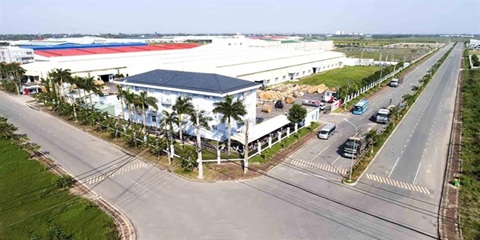
HCM CITY ATTRACTS US$5.7 BILLION INTO EXPORT PROCESSING AND INDUSTRIAL ZONES
HCM City attracted US$5.7 billion in domestic and foreign investment into its export processing and industrial zones during the first nine months of 2026. The figure exceeded the city's full-year target by 31 per cent, highlighting strong momentum in high-quality industrial investment under Resolution No.10-NQ/TW. Total investment reached 131 per cent of the 2026 target of $4.25 billion and represented a 29 per cent increase compared with the same period in 2025, according to the city's Export Processing and Industrial Zones Authority (HEPZA).
BANKING / FINANCE / INSURANCE / TAX
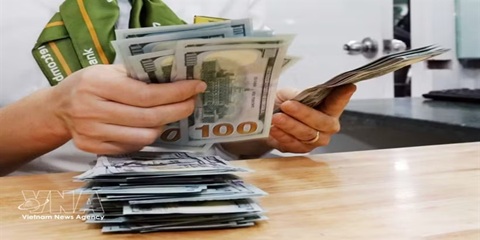
REMITTANCES TO HCM CITY RISE NEARLY 40% IN Q3
Remittances to HCM City reached more than US$2.83 billion in the third quarter of this year, up 39.5 per cent from the previous quarter and 3.6 per cent year-on-year. This was the first quarter showing positive annual growth this year, helping narrow the decline in remittance inflows over the first nine months. According to the State Bank of Vietnam (SBV)’s Regional Branch 2, remittances transferred to HCM City through credit institutions and economic organisations totalled $2.835 billion in Q3, an increase of more than $802 million from the previous quarter.
VIETNAM ECONOMY INVESTMENT
LOCALITIES REPORT BREAKTHROUGH RESULTS IN FDI IN FIRST NINE MONTHS
In Ho Chi Minh City, total registered capital reached $17.2 billion in the first nine months, up 4.2 times from the same period last year. The figure included more than $9.35 billion in newly registered capital and over $4.9 billion in additional capital for existing projects. Foreign investors also registered more than $2.9 billion through capital contributions and share purchases.

TECHNOLOGY
TECH SECTOR GROWTH OPENS UP OPPORTUNITIES FOR VIỆT NAM TO GO GLOBAL
The growth of the electronics, semiconductor and high-tech sectors worldwide is opening up a variety of opportunities for Vietnamese enterprises to integrate more deeply into the global supply chain. However, to become suppliers for these corporations, domestic enterprises must meet rigorous standards regarding quality, technology, productivity and order fulfilment capabilities.
Events Sponsors






















