Want to be in the loop?
subscribe to
our notification
Business News
NECESSARILY IMPROVING INSTITUTIONS AND POLICIES FOR CREATIVE ECONOMY ADVANCEMENT
Despite remarkable strides in socioeconomic development, including economic growth, Vietnam continues to grapple with issues pertaining to the quality and sustainability of this growth. The country’s economic expansion is still heavily dependent on the augmentation of input resources and industries that are labor and resource-intensive. The influence of elements directly associated with enhancing quality, labor productivity, competitiveness, and innovation has not met anticipated standards.
Dr. Tran Thi Hong Minh, President of the Central Institute for Economic Management (CIEM), said that Vietnam is advancing with the vision of becoming an upper-middle income developing country by 2030 and a high-income state by 2045. To realize this vision and development goal, maintaining high economic growth is a prerequisite. Nevertheless, Vietnam has faced major challenges with the traditional growth model based on increasing capital, unskilled labor, land, and natural resources which have reached their limits.
“In that context, we must constantly make better changes, specifically in thinking, methods and models to “create” new spaces for economic growth,” she added.
According to a CIEM report, Vietnam’s strengths in creative economic development are rich and diverse cultural heritages; young, dynamic and technologically proficient workforce; and positive policy changes towards new economic models. Its weaknesses in this process are mainly funding resources, especially in traditional creative fields; insufficient skills for the creative economy in many creative groups (especially middle-aged and elderly people, women and poor localities; and inadequacies in "hard" and "soft" infrastructure for creative economic development.
Vietnam has important opportunities for creative economic development, thanks to digital transformation, strong tourism recovery and growth, a relatively large domestic market, and intensive international cooperation. The adoption of new technologies in the Fourth Industrial Revolution has opened up many new opportunities for the creative economy, many new ways to produce, distribute and generate income from contents. Disruptive technologies have made creative industries investable choices in many emerging markets. Digitalization can also have a positive impact on the protection of creative assets. Vietnam has made efforts to access creative industries and services.
According to a CIEM research, Vietnam has initially had a policy framework for creative economic development. Existing policy groups include both general policies and specific policies for some sectors. The scope of existing policies is relatively wide, from tax incentives, science and technology policies to competition policies and intellectual property protection.
However, policies for the creative economy are only specific in some industries, not adjusted in time to match the new context of those industries while many creative activities still lack regulatory frameworks and laws.
Through local surveys, the knowledge of the creative economy is different from locality to locality, with some even likening the creative economy as innovations and creativity, said Dr. Minh.
Vietnam needs to learn experiences in creative economic development from both developed and developing countries, like approaching creative economic development based on the insightful knowledge of this economic model, building and perfecting institutions and policies for the creative economy, promoting good examples, completing theoretical knowledge and information on measuring the creative economy, attracting talents and developing the education and training system for the creative economy and developing creative industrial networks and clusters.
“More importantly, we need to focus on realizing our ideas and creativity and protecting intellectual property from creative work and the creative economy that has shown immense potential, even unlimited,” she noted.
To develop the creative economy in Vietnam in the coming time, according to CIEM, Vietnam needs to complete a solid policy framework to nurture the creative economy while creating space, motivation and composure for creative actors. At the same time, the country is necessary to increase investment in digital infrastructure and technology, enhance education and skills training development, and boost cooperation and connection.
In particular, Vietnam needs to continue to develop domestic and international markets for creative products and strengthen sustainability and social responsibility in creative businesses.
Source: VCCI
Related News

CHARITY / EXHIBITION / OTHER EVENTS
INVESTMENT OPPORTUNITIES IN CA MAU PROVINCE: 96 PROJECTS AND 20 STRATEGIC PROJECTS
We are pleased to share with you information on investment projects currently seeking investors in Ca Mau Province. Should your esteemed company or association be interested, we kindly invite you to review the project information and complete the registration form via the links provided. The Ho Chi Minh City Investment and Trade Promotion Centre (ITPC) will consolidate the expressions of interest and facilitate connections with the leadership of Ca Mau Province at a meeting tentatively scheduled for 13 November 2026 in Ho Chi Minh City.
MEMBER CORNER / PROMOTIONS
BẰNG KIỀU LIVESHOW - A SYMPHONY OF LOVE UNDER THE GOLDEN GLOW
A masterclass in live music that takes the audience on a soulful journey through immortal love songs, guided by the peerless artistry and emotive storytelling of renowned singer Bằng Kiều. The highlight of the night is his seamless musical chemistry with special guest Triệu Hồng Ngọc, promising passionate and deeply resonant duets inside the magnificent Grand Ballroom.
INFRASTRUCTURE / CONSTRUCTION / LOGISTIC / PORT
ĐÀ NẴNG GREEN-LIGHTS US$105 MILLION THAI DEVELOPMENT DEAL
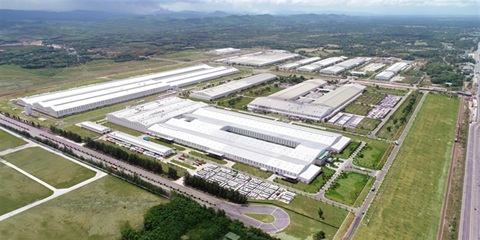
The central city has approved an investment proposal by Thailand’s WHA Group to develop infrastructure for the 400ha WHA Đà Nẵng Industrial Park project on two communes of Thăng Bình and Đồng Dương, with an investment of more than VNĐ2.7 trillion (US$105 million). The city said it approved WHA Industrial Development International's status as an investor in the project, which is expected to take place between 2027 and 2034.
VIETNAM ECONOMY INVESTMENT
MOBILE PHONE EXPORTS RISE 20% TO $51.8 BILLION IN FIRST NINE MONTHS
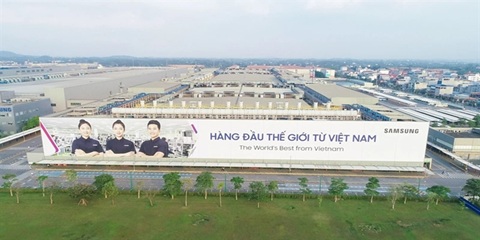
Exports of mobile phones and components rose 20 per cent year-on-year to nearly US$51.8 billion in the first nine months of 2026, with China, the US and Republic of Korea accounting for more than half of the total. Shipments to the three markets reached a combined $26.18 billion, or 50.6 per cent of total exports of the product group during the period, according to data from the Vietnam Department of Customs under the Ministry of Finance.
INFRASTRUCTURE / CONSTRUCTION / LOGISTIC / PORT
VIỆT NAM-CAMBODIA TRADE GATHERS PACE TOWARDS $20 BILLION TARGET
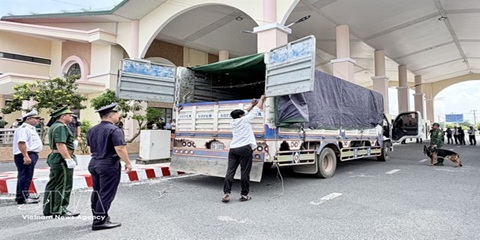
Trade between Việt Nam and Cambodia continues to grow, remaining a bright spot and a key pillar of bilateral cooperation as the two countries aim to raise two-way trade to US$20 billion in the coming years. After setting a record of more than $11.3 billion last year, bilateral trade reached about $8.7 billion in the first eight months of this year, up 8.3 per cent year on year.
VIETNAM ECONOMY INVESTMENT
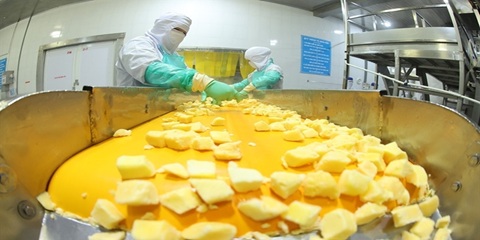
FRUIT AND VEGETABLE EXPORTS POISED TO HIT $10 BILLION IN 2026
Fruit and vegetable exports are on track to reach nearly US$10 billion in 2026, after rising 19.9 per cent year on year to nearly US$7.4 billion in the first nine months, driven by strong seasonal demand and abundant tropical fruit supplies. The Ministry of Agriculture and Environment said the growth reflected stronger international demand for fresh produce and processed agricultural products.
Events Sponsors






















