Want to be in the loop?
subscribe to
our notification
Business News
NEW ERA OF SUSTAINABLE FUEL IN AVIATION BUILDS MOMENTUM
With the adoption of sustainable fuel for planes in Vietnam, new doors are opening up for both domestic and international suppliers.
On October 17, Vietjet became the second airline in Vietnam to use sustainable aviation fuel (SAF), operating flights from Vietnam to Melbourne and Seoul.
Dinh Viet Phuong, CEO of Vietjet, emphasised the importance of these flights, describing them as “green flights” that contribute to the greening of the aviation sector. “As a pioneer in the research, development, and use of SAF, Vietjet is committed to reducing carbon emissions and supporting the sustainable development of the aviation industry,” he said.
SAF, produced from renewable and sustainably sourced raw materials such as used cooking oil, agricultural by-products, wood biomass, and urban waste, offers significant environmental benefits. It can reduce carbon emissions by up to 80 per cent compared to traditional jet fuels. SAF meets strict international aviation standards and is safe for use in commercial operations.
Despite its higher costs, Vietnamese airlines are making strides in adopting SAF. In May, Vietnam Airlines became the first carrier in the country to use it, deploying on a flight from Singapore to Hanoi. Bamboo Airways is also exploring SAF adoption.
SAF in Vietnam is currently supplied by Petrolimex, while international companies such as Boeing are exploring the potential for broader supply in the country.
Pham Van Thanh, chairman of Petrolimex, hailed the use of SAF for Vietjet’s international flights as an important step forward. “This milestone is not just for Petrolimex Aviation but for the entire group as we move towards becoming a green, clean, and environmentally friendly energy group by 2030,” Thanh said.
Petrolimex Aviation, Vietjet, and Vietnam Airlines are also collaborating with international partners to advance the use of SAF in Vietnam, aligning with the country’s commitment to achieving net-zero carbon emissions. For example, Vietnam Airlines’ SAF refuelling in May was handled by oil refining company Neste.
Carrie Song, senior vice president of commercial operations at Neste, expressed her enthusiasm for the partnership with Vietnam Airlines.
“The aviation industry is committed to ambitious climate targets, and SAF plays a crucial role in reaching those goals. We are excited to support Vietnam Airlines on its decarbonisation journey,” Song said.
Boeing is also looking to scale up SAF production globally and has been working with local partners and governments to research raw material sources that can support SAF production.
Sharmine Tan, Boeing’s regional sustainability lead for Southeast Asia, highlighted the potential in the region. “With regional governments and industries working together, Southeast Asia has an exciting opportunity to shape a more sustainable future of flight while protecting the environment and growing the economy,” Tan said.
The adoption of SAF by Vietjet and Vietnam Airlines comes as the EU intensifies its push for carbon neutrality by 2050. It mandates that in 2025, 2 per cent of the aviation fuel used at EU airports must be SAF, increasing to 70 per cent by 2050.
According to the Civil Aviation Authority of Vietnam, these regulations will significantly impact airlines operating between the EU and ASEAN. The cost of SAF is currently 2-3 times higher than traditional fossil fuels, and in some cases, it has been as much as six times higher. This price disparity presents a challenge for airlines, which will likely face increased operational costs and ticket prices.
Recognising these challenges, the Vietnamese government has tasked the Ministry of Transport and the Ministry of Industry and Trade with studying the potential impacts of the EU regulations. The aim is to develop solutions that will enhance the competitiveness of Vietnamese airlines while ensuring compliance with international sustainability standards.
Aviation expert Ngo Nguyen stressed the importance of a strategic approach to SAF. “Airlines need to ensure operational efficiency while managing rising costs, and they also need government support to adapt to new regulations. Developing local SAF production could be a crucial step in reducing fuel prices,” Ngo said.
Vietnam is considered to have significant potential for SAF production, with raw materials such as rice husks and rice straw being viable options. It is estimated that the country generates around 7.5 million tonnes of rice husks annually, of which only three million tonnes are currently used, mainly for animal feed and fertiliser.
Globally, many airlines are advancing their efforts. British airline Virgin Atlantic successfully completed the world’s first 100 per cent SAF flight last year, while Air France uses a 50 per cent blend of SAF on its flights. Singapore has been using SAF since 2017 and continues to incorporate it into its aviation fuel mix.
According to the International Air Transport Association, which represents 320 airlines accounting for over 80 per cent of global air traffic, the aviation industry is firmly committed to reducing emissions to zero. However, despite this commitment, SAF still accounts for only 0.2 per cent of total aviation fuel consumption due to supply limitations and high production costs.
Source: VIR
Related News

CHARITY / EXHIBITION / OTHER EVENTS
INVESTMENT OPPORTUNITIES IN CA MAU PROVINCE: 96 PROJECTS AND 20 STRATEGIC PROJECTS
We are pleased to share with you information on investment projects currently seeking investors in Ca Mau Province. Should your esteemed company or association be interested, we kindly invite you to review the project information and complete the registration form via the links provided. The Ho Chi Minh City Investment and Trade Promotion Centre (ITPC) will consolidate the expressions of interest and facilitate connections with the leadership of Ca Mau Province at a meeting tentatively scheduled for 13 November 2026 in Ho Chi Minh City.

MEMBER CORNER / PROMOTIONS
BẰNG KIỀU LIVESHOW - A SYMPHONY OF LOVE UNDER THE GOLDEN GLOW
A masterclass in live music that takes the audience on a soulful journey through immortal love songs, guided by the peerless artistry and emotive storytelling of renowned singer Bằng Kiều. The highlight of the night is his seamless musical chemistry with special guest Triệu Hồng Ngọc, promising passionate and deeply resonant duets inside the magnificent Grand Ballroom.
INFRASTRUCTURE / CONSTRUCTION / LOGISTIC / PORT
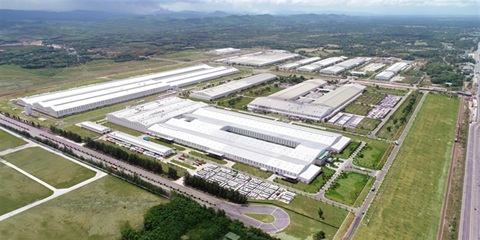
ĐÀ NẴNG GREEN-LIGHTS US$105 MILLION THAI DEVELOPMENT DEAL
The central city has approved an investment proposal by Thailand’s WHA Group to develop infrastructure for the 400ha WHA Đà Nẵng Industrial Park project on two communes of Thăng Bình and Đồng Dương, with an investment of more than VNĐ2.7 trillion (US$105 million). The city said it approved WHA Industrial Development International's status as an investor in the project, which is expected to take place between 2027 and 2034.
VIETNAM ECONOMY INVESTMENT
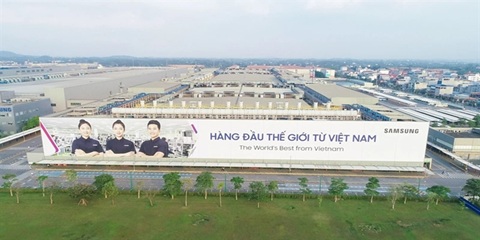
MOBILE PHONE EXPORTS RISE 20% TO $51.8 BILLION IN FIRST NINE MONTHS
Exports of mobile phones and components rose 20 per cent year-on-year to nearly US$51.8 billion in the first nine months of 2026, with China, the US and Republic of Korea accounting for more than half of the total. Shipments to the three markets reached a combined $26.18 billion, or 50.6 per cent of total exports of the product group during the period, according to data from the Vietnam Department of Customs under the Ministry of Finance.
INFRASTRUCTURE / CONSTRUCTION / LOGISTIC / PORT
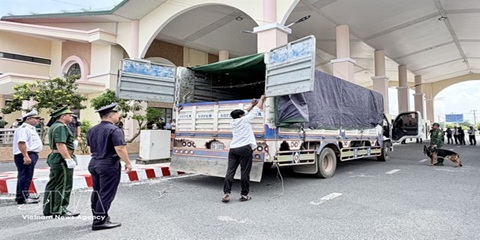
VIỆT NAM-CAMBODIA TRADE GATHERS PACE TOWARDS $20 BILLION TARGET
Trade between Việt Nam and Cambodia continues to grow, remaining a bright spot and a key pillar of bilateral cooperation as the two countries aim to raise two-way trade to US$20 billion in the coming years. After setting a record of more than $11.3 billion last year, bilateral trade reached about $8.7 billion in the first eight months of this year, up 8.3 per cent year on year.
VIETNAM ECONOMY INVESTMENT
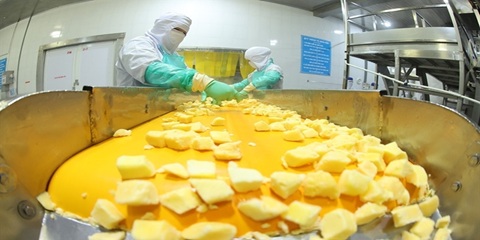
FRUIT AND VEGETABLE EXPORTS POISED TO HIT $10 BILLION IN 2026
Fruit and vegetable exports are on track to reach nearly US$10 billion in 2026, after rising 19.9 per cent year on year to nearly US$7.4 billion in the first nine months, driven by strong seasonal demand and abundant tropical fruit supplies. The Ministry of Agriculture and Environment said the growth reflected stronger international demand for fresh produce and processed agricultural products.
Events Sponsors






















