Want to be in the loop?
subscribe to
our notification
Business News
NEW POLICY ON TIGHTENING USE OF SHORT-TERM CAPITAL FOR LONG-TERM LOANS TAKES EFFECT
From this week, the State Bank of Vietnam (SBV)'s regulation requires commercial banks to decrease the ratio of short-term capital used for medium- and long-term loans from 34 per cent to 30 per cent has come into effect.
As stipulated in Circular 08/2020/TT-NHNN, both Vietnamese banks and foreign bank branches in Việt Nam are required to reduce the maximum ratio of short-term capital for medium and long-term loans to 30 per cent as of October 1, 2023.
Experts view the change as necessary to ensure liquidity and stabilise the banking system, as the implementation of the new regulation aims to prevent liquidity risks, stabilise banking operations and drive sustainable economic growth.
According to finance expert Đinh Trọng Thịnh, this move is to ensure capital safety at commercial banks and ensure lending conditions in accordance with international practices.
Utilising short-term capital for medium and long-term loans presents numerous risks. When short-term capital matures but the long-term loan hasn't been on due date, it can strain the bank's liquidity and adversely impact the operations of the banking system, according to Thịnh's analysis.
Thịnh said that there's a need to incrementally lessen the economy's reliance on commercial banks' medium- and long-term capital. Instead, it should explore other avenues in the capital market, such as bonds.
Data from the SBV showed 88 per cent of capital at banks comes from deposits with tenors of less than 12 months. Meanwhile, 52 per cent of the banking system’s outstanding loans are mid- and long-term loans.
However, there are also concerns that the new circular will increase pressure on the operations of the banking system and firms with large capital needs.
The HCM City Real Estate Association (HOREA) has recently sent an urgent proposal on extending the new policy for 12 months to the Prime Minister and the SBV. HOREA expects the extension will create conditions for banks to appropriately use short-term mobilised capital for medium- and long-term loans.
Lê Hoàng Châu, chairman of HOREA, stated that both the economy and the real estate market are grappling with challenges due to various headwinds. Many companies across different sectors have had to reduce their production and business activities, thus reducing their need for bank credit. On the other hand, numerous real estate companies still require bank loans, yet accessing such capital has been challenging for them. A primary reason for this is that many real estate and commercial housing projects are encountering legal issues.
Châu explained that while real estate companies have procured and planned land for development projects, they haven't yet received the Government's nod for detailed planning of these projects. Banks, on the other hand, are only willing to finance projects that possess detailed planning.
Therefore, HOREA expects banks to lend to real estate firms whose investment projects are feasible or whose secured assets are land use right certificates.
Commenting on the new circular, in a recent analysis report, KB Securities Vietnam Company (KBSV) said the reduction of banks' ratios will have certain effects on banks.
According to KBSV's analysts, in the short term, lowering the ratio of short-term capital for medium and long-term loans will slow down the process of reducing long-term lending interest rates of banks in the context that the country is needing support for economic growth. At the same time, the new circular will also partly put pressure on banks' long-term mobilisation needs, increasing banks' capital costs, causing pressure to narrow net interest margins (NIM).
However, in the long term, the analysts believe with the policy of healthy credit activities and ensuring liquidity for the banking system, the application of new regulations is expected to help banks better control liquidity risks and stabilise operations in the face of changes at home and abroad, while promoting sustainable economic development.
KBSV commented that the new circular is part of the motivation for banks to buy back bonds before maturity and focus on issuing long-term bonds in the near future, in addition to the motivation coming from the reduced interest rate level.
The latest data from the SBV showed as of July 2023, the ratio of short-term capital used to make medium- and long-term loans of the entire banking system was 26.14 per cent, of which the ratio of State-run commercial banks and joint-stock commercial banks was 24.97 and 33.66 per cent, respectively.
Notably, a few banks, such as Vietcombank and HDBank, have a ratio below 10 per cent, so they are not affected by this new policy.
Source: VNS
Related News

MEMBER CORNER / PROMOTIONS
KNIC ENGAGES WITH GOVERNMENT AND HIGH-TECH BUSINESS COMMUNITIES IN CHINA
From Beijing to Shandong, KN Holdings and KN Industrial City are continuing to expand their engagement with government authorities, trade promotion organizations, and high-tech business communities in China. In Beijing, the delegation met with the Center for International Economic and Technological Cooperation under the Ministry of Industry and Information Technology (MIIT), exchanging perspectives on industrial and technology cooperation between the two markets.

VIETNAM ECONOMY INVESTMENT
VIETNAM’S TRADE TOPS $825 BILLION BY MID-SEPTEMBER
Figures released on September 21 showed goods trade reached nearly $55 billion in the first 15 days of September alone, bringing cumulative turnover since the beginning of the year to more than $825 billion. The strong growth reflects robust trade flows, with demand for consumer goods and production inputs remaining high.

TECHNOLOGY
VIỆT NAM'S BUSINESSES MOVE TOWARDS AI AGENTS
Việt Nam’s AI landscape is entering a new phase as businesses move beyond generative AI (GenAI) tools designed to assist human users towards autonomous AI, agentic AI and AI agents that can take action with limited supervision, experts have said. The shift comes as Việt Nam seeks to accelerate science and technology, innovation and digital transformation under Politburo Resolution 57-NQ/TW, issued on December 22, 2024.
GARMENT / TEXTILE
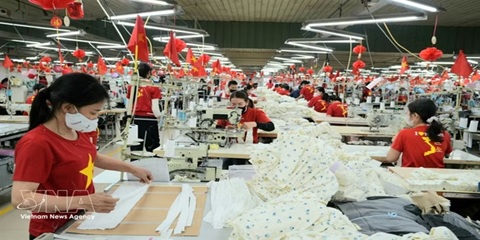
VIỆT NAM TARGETS $48 BILLION IN TEXTILE-GARMENT EXPORTS
Việt Nam’s textile and garment industry is facing both opportunities and challenges amid complex and unpredictable developments in the global market, prompting businesses to improve growth quality, optimise production costs and enhance adaptability in pursuit of an export turnover of about $48 billion this year. The target is considered an important milestone that requires concerted efforts from management agencies and the business community.
INFRASTRUCTURE / CONSTRUCTION / LOGISTIC / PORT
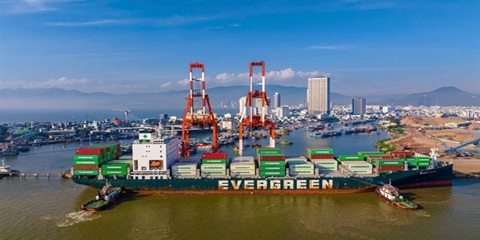
CUTTING LOGISTICS COSTS KEY TO BOOSTING EXPORTS
Reducing costs has become an increasingly urgent priority for import-export activities, particularly logistics costs, a conference in Hà Nội was told on Tuesday. According to Deputy General Director of the Ministry of Industry and Trade's Agency for Foreign Trade, Trần Thanh Hải, import-export activities has remained a bright spot for the economy in recent years, playing an important role and helping drive macroeconomic growth.
LEGAL UPDATE / POLICY
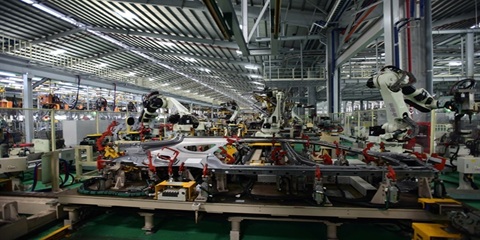
FLEXIBLE FISCAL POLICY HELPS DRIVE ECONOMIC GROWTH
Việt Nam’s fiscal policy has been implemented in a targeted expansionary manner since early 2026, helping maintain macroeconomic stability and supporting the country’s goal of achieving double-digit economic growth. According to the Ministry of Finance, State budget revenue in the first eight months of 2026 was estimated at VNĐ2.02 quadrillion (US$77.7 billion), equivalent to 80 per cent of the annual estimate and up 16 per cent year-on-year.
Events Sponsors






















