Want to be in the loop?
subscribe to
our notification
Business News
PHONE AND COMPONENT EXPORTS HIT $18.4 BILLION IN FIRST FOUR MONTHS
Phones and components were Vietnam's second most valuable export commodities in Q1, and the country has also risen to become the second largest supplier of these products globally.
According to the General Statistics Office, phone and component exports in April earned more than $4.2 billion, up 9.1 per cent on-year. For the first four months of the year, this figure reached more than $18.4 billion, an increase of 6.6 per cent on-year.
A report from HSBC said that since 2021, Vietnam's smartphone market share globally has increased significantly. Vietnam has won 13 per cent of the total export market share, surpassing India to become the world's second-largest smartphone exporter behind China.
In terms of markets, the United States has become Vietnam's largest customer instead of China (in the first quarter of last year). Specifically, in the first quarter of this year, the US spent more than $3.05 billion importing all types of phones and components from Vietnam, an increase of 30.4 per cent on-year. The Chinese market ranked second with more than $2.5 billion, down 28 per cent on-year.
Notably, the United Arab Emirates has risen to become Vietnam's third-largest customer with almost $898 million, a sharp increase of 55.3 per cent on year.
Vietnam has become attractive to phone manufacturers around the world. In April, Apple CEO Tim Cook arrived in Vietnam, opening up more potential between our country and the US technology giant. During a meeting with Prime Minister Pham Minh Chinh, the CEO also proposed promoting high-quality cooperation and investment, committing to buy more components produced by suppliers in Vietnam, supporting innovation activities, and increasing spending for suppliers in Vietnam.
Also in April, Samsung Electronics Vietnam Thai Nguyen (SEVT) - the largest export phone manufacturing factory in the world - achieved an important milestone of reaching one billion Galaxy smartphones. SEVT's key products are smartphones and tablets.
Samsung started investing heavily in Vietnam in 2008 with the Samsung Electronics Vietnam (SEV) factory in Bac Ninh province. To date, Samsung has surpassed the milestone of 2.13 billion smart devices in the Galaxy ecosystem manufactured in Vietnam.
According to Counterpoint Research, global smartphone shipments in 2024 are expected to increase by 3 per cent to 1.2 billion units. The high-end phone segment (priced at $600-799) is expected to maintain stable growth in 2024, increasing by 17 per cent on-year thanks to old high-end models and folding screen models.
This research firm expects AI-integrated smartphones and foldable phones to improve phone sales, especially in the second half of this year.
According to Statista Market Research Company, in 2024, the smartphone market in Vietnam is expected to reach $4 billion, a compound growth rate of 1.45 per cent from 2024-2028. In 2024, smartphone sales in Vietnam will reach 21.4 million units.
Soủce: VIR
Related News
VIETNAM ECONOMY INVESTMENT
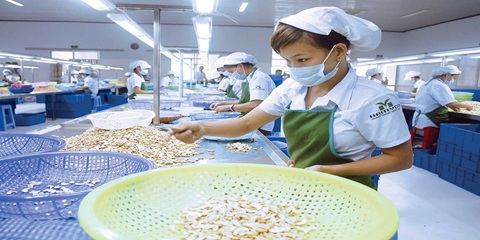
VIETNAMESE COMPANIES OPTIMISTIC ON INTERNATIONAL GROWTH
Vietnamese businesses are among the most confident about the outlook for international trade, according to HSBC’s Global Trade Pulse Survey 2026, released on November 16. The survey captures the views of 10,000 senior business leaders across 26 markets on trade, tariffs, supply chains, and technology. Findings show that 94 per cent of Vietnamese businesses expect their international trade to grow over the next two years. Vietnam ranks joint top in the survey with the Philippines, compared with 86 per cent globally.
TECHNOLOGY
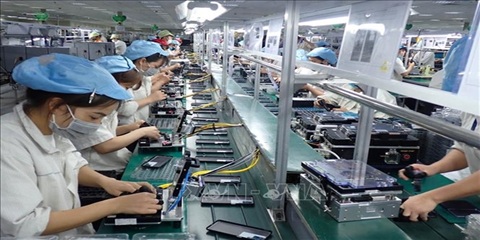
VIỆT NAM'S DIGITAL TECHNOLOGY INDUSTRY REVENUE SURGES 53% TO $254.6B
Việt Nam's digital technology industry generated an estimated US$254.6 billion in revenue in the first 10 months of 2026, up 53 per cent from a year earlier, while exports rose 46.2 per cent to $212 billion, the Ministry of Science and Technology said in its latest report. According to the report, hardware and electronics exports reached an estimated $30.681 billion in October, up 108 per cent from the same month last year.
CHARITY / EXHIBITION / OTHER EVENTS
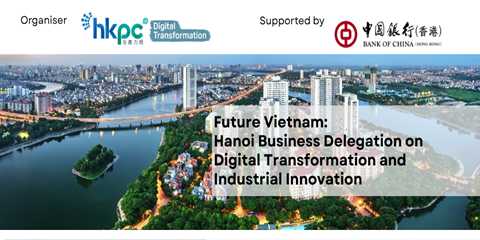
BOCHK ‧ HKPC FUTURE VIETNAM: HANOI BUSINESS DELEGATION ON DIGITAL TRANSFORMATION AND INDUSTRIAL INNOVATION
Interested in exploring Vietnam’s latest developments in digital transformation, technology adoption and industrial innovation? Organised by the Hong Kong Productivity Council (HKPC) and fully supported by Bank of China (Hong Kong) Limited, the "Future Vietnam: Hanoi Business Delegation on Digital Transformation and Industrial Innovation” will feature visits to leading high-tech enterprises across Vietnam and engage with local chambers of commerce, industry organisations and associations. Join us to expand your high-value business network and seize emerging opportunities in the ASEAN market!
GARMENT / TEXTILE
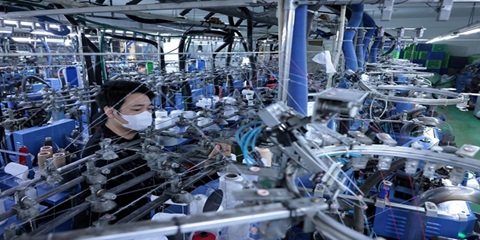
TEXTILE, GARMENT FIRMS REFORM TO MEET CPTPP ORIGIN RULES
Vietnamese textile and garment manufacturers are aggressively restructuring their supply chains and diversifying material sources to unlock untapped tariff benefits. To capitalise on the Comprehensive and Progressive Agreement for Trans-Pacific Partnership (CPTPP), companies are racing to align with the pact's strict "yarn-forward" rules — a task made difficult by a shortage of raw materials within the trade bloc.
TECHNOLOGY
ĐÀ NẴNG SEEKS TO BUILD HIGH-TECH AGRICULTURE, INTEGRATED VALUE CHAINS
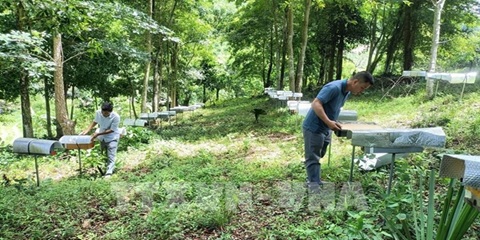
Đà Nẵng is seeking to transform its agricultural sector from a supplier of raw materials into a technology-driven, market-oriented economy, with investment opportunities spanning concentrated production areas, deep processing, logistics and agricultural product distribution. The city aims to shift from traditional agricultural production towards agricultural economic development, organising value chains and increasing the technological content and added value of products through closer links between production and processing.
INFRASTRUCTURE / CONSTRUCTION / LOGISTIC / PORT
HCM CITY ACCELERATES POWER INFRASTRUCTURE INVESTMENT TO ATTRACT HIGH-TECH CAPITAL
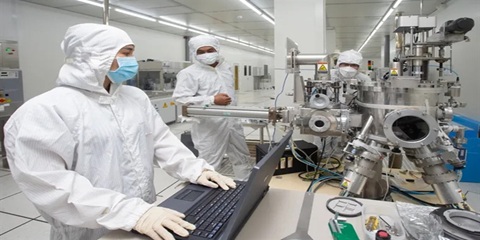
High-tech projects, particularly data centres, are not confined to SHTP but are also expanding into export processing zones and industrial parks across HCM City, driving up electricity demand. Proactively developing power infrastructure, diversifying energy supplies and expanding access to green energy are becoming essential for HCM City to maintain its competitive edge in attracting high-tech foreign direct investment (FDI).
Events Sponsors






















