Want to be in the loop?
subscribe to
our notification
Business News
PLANNING APPROVED FOR HAI DUONG PROVINCE IN 2021-2030 AND TO 2050
Deputy Prime Minister Tran Hong Ha ratified Decision 1639/QD-TTg on December 19, 2023, endorsing the planning for Hai Duong province for the period 2021-2030, with a vision extending to 2050. The planning scope encompasses the entire natural expanse of Hai Duong province, spanning an area of 1,668.28 km². This includes 12 district-level administrative divisions and 235 commune-level administrative units.
Effort to achieve status of a centrally administered city by 2050
With a vision for 2050, Hai Duong is striving to operate under the central government. The developmental objective is to transform Hai Duong into a modern industrial province and a driving industrial center of the Red River Delta region by 2030. It aims to establish itself as a large-scale economy in the country, with a comprehensive socio-economic infrastructure and a green, smart, and modern urban system. Hai Duong is set to meet the fundamental criteria of a centrally run city, with an anticipated average economic growth rate of approximately 9.5% per annum and a Gross Regional Domestic Product (GRDP) per capita exceeding VND180 million.
The province has set targets to achieve a contribution rate of Total Factor Productivity (TFP) of 50% and an average annual growth rate of social labor productivity of 8.5%. Additionally, it aims for the digital economy to constitute 35% of the GRDP. The province also plans to mobilize social investment resources amounting to approximately VND582 trillion for the entire period.
In terms of social development, Hai Duong province is projected to have a population of approximately 2.55 million, with an average annual population growth rate of about 2.9%. The proportion of trained workers is anticipated to reach 90%. The percentage of schools meeting national standards is expected to exceed 90% at the pre-school level, 100% at the primary school level, over 95% at the secondary school level, and over 90% at the high school level.
With respect to environmental protection, the forest coverage rate is projected to be maintained at 5.2%-5.6%. The plan aims to provide 100% of the population with access to clean and sanitary water.
In the realm of infrastructure investment, the planning prioritizes the development of synchronous and modern infrastructure, particularly transport networks, energy, water supply, and drainage systems. This is intended to enhance production and business capacity and ensure the daily life of the people. Hai Duong is set to concentrate on social infrastructure development.
The province aspires to meet the criteria of a centrally run city by 2050, evolving into a modern, green, smart, safe, and sustainable city. It aims to become an important driving force in the socio-economic development of the Red River Delta region.
The plan aims to foster the development of high-tech industry and high-quality services to serve production activities in the locality and the entire region. Additionally, it seeks to cultivate a multi-value agricultural economy to create stability for the economy.
Four primary pillars of industrial development
In terms of industrial development, Hai Duong is set to foster growth under four primary pillars: expanding and enhancing the value chain by leveraging regional linkages; building strategic competitiveness; restructuring industries with small production values; and transforming Hai Duong into a driving industrial center of the Red River Delta region, in association with a specialized economic zone and a modern industrial park.
For the mechanical engineering industry, the province aims to advance the production of high value-added and high-tech products such as high-quality metals, non-ferrous metals, engines, mechanical products, automobiles, construction machines, and electronics. The long-term vision includes transitioning toward the production of electric cars, high-tech machinery, and robots.
In the electrical and electronics industry, Hai Duong has set a target to attract foreign direct investment (FDI) in the household appliances and smart electronic equipment industries, with a future focus on the production of sensor products and electronic circuits.
For the supporting industries and high-tech industries, the province will concentrate on attracting investment from high-tech industrial enterprises globally, with a priority given to the mechanical, electrical, and electronic manufacturing industries. This strategy aims to capitalize on the existing regional linkages and the supply capacity of enterprises in the province.
Hai Duong province is committed to promoting industrial development in three key areas: a dynamic industrial area (central core) in Binh Giang district and Thanh Mien district; a supporting industrial area in Hai Duong city, Gia Loc district, and Cam Giang district; and a heavy industry, agricultural, forestry, fishery, and clean energy processing area in Chi Linh city, Kinh Mon town, Kim Thanh district, Nam Sach district, Thanh Ha district, Tu Ky district, and part of Ninh Giang district.
Developing agriculture across six key areas
Hai Duong has outlined a plan to develop agriculture across six key areas: Winter Vegetable Cultivation concentrated in Cam Giang district, Nam Sach district, and Kinh Mon town; Key Fruit Growing in Thanh Ha district and Chi Linh city; High-tech and Organic Agriculture in Ninh Giang district, Tu Ky district, and Gia Loc district; High-quality Concentrated Rice Growing in Thanh Mien district and Binh Giang district.
Main Livestock Farming: This will be promoted in Cam Giang district, Thanh Ha district, Gia Loc district, and Chi Linh city; Aquaculture in Tu Ky district, Thanh Mien district, Ninh Giang district, Kim Thanh district, Binh Giang district, Gia Loc district, Cam Giang district, Nam Sach district, Kinh Mon town, and Chi Linh city.
The province aims to restructure the agricultural sector toward concentrated commodity production, apply high technology to increase added value, and promote sustainable development, thereby transitioning towards multi-value agriculture. The plan strives to transform Hai Duong into a leading agricultural production and processing center in the Red River Delta, serving both domestic and export markets.
Developing the provincial urban system
In terms of urban development, Hai Duong is poised to cultivate its urban system, comprising 28 urban areas. This includes 14 existing urban areas and 14 newly proposed ones. The urban classification includes one Class I urban area (Hai Duong city), one Class II urban area (Chi Linh city), one Class III urban area (Kinh Mon town), seven Class IV urban areas, and eighteen Class V urban areas.
The province will prioritize the construction of technical infrastructure and rural social infrastructure in alignment with urban development, as well as fostering inter-commune and inter-district connectivity. The province has set a target to expand and modernize the district-level infrastructure system, with a particular focus on the supply-demand system for sustainable agricultural products.
The approved planning for Hai Duong province for the period 2021-2030, with a vision extending to 2050, serves as the foundation for establishing and adjusting urban and rural planning within the province.
Source: VCCI
Related News
MEMBER CORNER / PROMOTIONS
KNIC ENGAGES WITH GOVERNMENT AND HIGH-TECH BUSINESS COMMUNITIES IN CHINA
From Beijing to Shandong, KN Holdings and KN Industrial City are continuing to expand their engagement with government authorities, trade promotion organizations, and high-tech business communities in China. In Beijing, the delegation met with the Center for International Economic and Technological Cooperation under the Ministry of Industry and Information Technology (MIIT), exchanging perspectives on industrial and technology cooperation between the two markets.
VIETNAM ECONOMY INVESTMENT
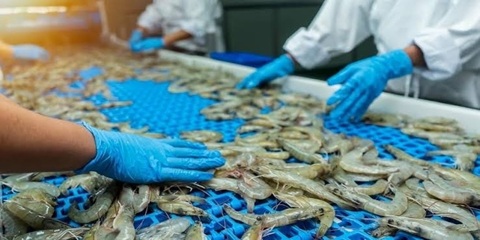
VIETNAM’S TRADE TOPS $825 BILLION BY MID-SEPTEMBER
Figures released on September 21 showed goods trade reached nearly $55 billion in the first 15 days of September alone, bringing cumulative turnover since the beginning of the year to more than $825 billion. The strong growth reflects robust trade flows, with demand for consumer goods and production inputs remaining high.

TECHNOLOGY
VIỆT NAM'S BUSINESSES MOVE TOWARDS AI AGENTS
Việt Nam’s AI landscape is entering a new phase as businesses move beyond generative AI (GenAI) tools designed to assist human users towards autonomous AI, agentic AI and AI agents that can take action with limited supervision, experts have said. The shift comes as Việt Nam seeks to accelerate science and technology, innovation and digital transformation under Politburo Resolution 57-NQ/TW, issued on December 22, 2024.
GARMENT / TEXTILE
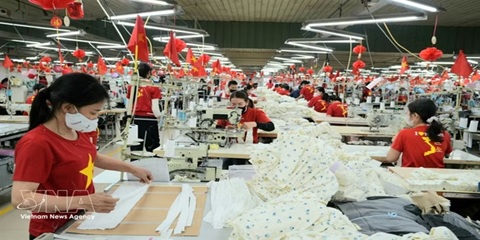
VIỆT NAM TARGETS $48 BILLION IN TEXTILE-GARMENT EXPORTS
Việt Nam’s textile and garment industry is facing both opportunities and challenges amid complex and unpredictable developments in the global market, prompting businesses to improve growth quality, optimise production costs and enhance adaptability in pursuit of an export turnover of about $48 billion this year. The target is considered an important milestone that requires concerted efforts from management agencies and the business community.
INFRASTRUCTURE / CONSTRUCTION / LOGISTIC / PORT
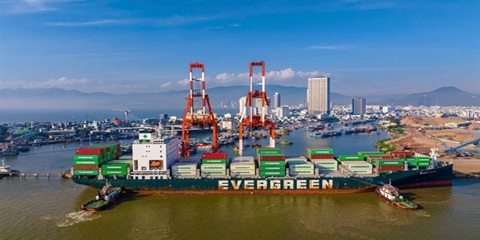
CUTTING LOGISTICS COSTS KEY TO BOOSTING EXPORTS
Reducing costs has become an increasingly urgent priority for import-export activities, particularly logistics costs, a conference in Hà Nội was told on Tuesday. According to Deputy General Director of the Ministry of Industry and Trade's Agency for Foreign Trade, Trần Thanh Hải, import-export activities has remained a bright spot for the economy in recent years, playing an important role and helping drive macroeconomic growth.
LEGAL UPDATE / POLICY
FLEXIBLE FISCAL POLICY HELPS DRIVE ECONOMIC GROWTH
Việt Nam’s fiscal policy has been implemented in a targeted expansionary manner since early 2026, helping maintain macroeconomic stability and supporting the country’s goal of achieving double-digit economic growth. According to the Ministry of Finance, State budget revenue in the first eight months of 2026 was estimated at VNĐ2.02 quadrillion (US$77.7 billion), equivalent to 80 per cent of the annual estimate and up 16 per cent year-on-year.
Events Sponsors






















