Want to be in the loop?
subscribe to
our notification
Business News
PLANS IN PLACE TO BOOST SHIPBUILDING INDUSTRY
Việt Nam's shipbuiding industry aims to capture 0.8 per cent to 0.9 per cent of global output by 2030, focusing on general cargo ships of up to 70,000 tonnes, container ships, LPG carriers, and other service vessels. Domestically, the industry is tasked with meeting the need to renew and expand the national fleet.

Pacific Shipbuilding JSC factory in Hải Phòng City. VNA/VNS Photo
HÀ NỘI — Việt Nam is setting its sights on strengthening shipbuilding by maximising the use of existing infrastructure and capitalising on its strategic geographical location, according to a new development plan.
The initiative is part of a broader project aimed at enhancing the capacity of domestic shipbuilding enterprises through 2030, with a long-term vision extending to 2050. The proposal has been submitted to the Prime Minister for approval, baodautu.vn reported.
The project builds upon prior planning efforts and is consistent with the policy on restructuring the Shipbuilding Industry Corporation (SBIC). It also aligns with strategies for sustainable marine economic development through 2045 and industrial development through 2035, the online newspaper cited Deputy Minister of Construction Nguyễn Xuân Sang as saying.
A key highlight of the plan is its detailed and phased targets for the shipbuilding industry over the next five to 10 years. By 2030, the SBIC restructuring project is expected to be largely completed, with formerly affiliated enterprises stabilising operations, rebuilding their brands and improving profitability and management capacity.
It also recommends allocating funding and implementing supportive mechanisms to enable defence industrial enterprises to participate in auctions or directly receive key SBIC shipyards located in areas critical to national defence and security, such as Cam Ranh, Hạ Long and Sông Hồng.
An SBIC representative emphasised the importance of drawing up a suitable support policy for domestic enterprises to receive and inherit facilities, assets and human resources from SBIC after bankruptcy.
That would certainly make the most of existing resources, limit the waste of assets, and at the same time maintain the important technical infrastructure foundation for the shipbuilding industry to grow stronger in the next five to 10 years, the representative said.
Clear targets for development
As per the project, Việt Nam's shipbuiding industry aims to capture 0.8 per cent to 0.9 per cent of global output by 2030, focusing on general cargo ships of up to 70,000 tonnes, container ships, LPG carriers and other service vessels. Domestically, the industry is tasked with meeting the need to renew and expand the national fleet.
On the export front, the goal is to produce one million tonnes of vessels for international markets, about 30 per cent of total new output.
Looking further ahead, the project aims to increase the localisation rate of shipbuilding products to 30-40 per cent by 2040, including 10 per cent in materials and equipment, boosting Việt Nam’s share of global shipbuilding output to 1 per cent.
By 2050, the localisation rate is projected to surpass 50 per cent, with 20 per cent in materials and equipment, and the industry is targeting to account for 2 per cent of global shipbuilding output.
As global and domestic demand for new vessels steadily increases, experts say Việt Nam’s shipbuilding industry is well-positioned for significant growth. Currently ranked seventh in the world, Việt Nam holds a 0.61 per cent share of the global shipbuilding market, surpassing established shipbuilders like Finland, which held 0.36 per cent.
With an annual domestic shipbuilding capacity of around 3.5 million tonnes, the country has both the industrial base and strategic geographic advantages to expand its presence on the international stage.
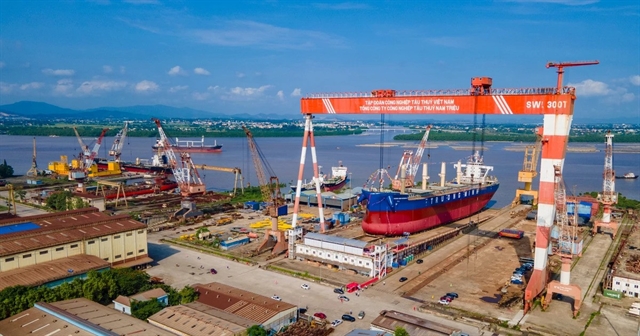
Việt Nam rises as a competitive force in global shipbuilding. Photo VietnamPlus
Industry snapshot: opportunities and challenges
Việt Nam currently has 88 shipbuilding enterprises and 411 inland waterway vessel production facilities. About 120 of these specialise in building and repairing vessels over 1,000 tonnes. The country’s total capacity for new cargo ship construction is approximately 3.5 million tonnes per year, including vessels over 5,000 DWT.
Beyond commercial ships, Việt Nam also produces tugboats, patrol boats, rescue ships, high-speed aluminum-hull vessels, and service ships for both domestic and export markets. With a current global market share of 0.61 per cent, Việt Nam ranks seventh in the world in shipbuilding.
However, challenges remain. The industry is under pressure to adapt to green energy transitions and carbon reduction mandates, insiders said.
Many shipyards lack the infrastructure and capital to produce environmentally friendly vessels, and there is a notable absence of tax incentives or financial support policies to facilitate this transformation.
They added that much of the shipbuilding sector has developed through basic assembly and processing, which limits its ability to create high-value products. Many shipyards operate with outdated infrastructure and technology, undermining their international competitiveness.
A lack of investment in technological upgrades and ship design capabilities has hindered the development of prototype vessels tailored to market demands. These constraints pose a major obstacle to Việt Nam's ambitions to move up the value chain and capture a larger share of the global shipbuilding market.
According to Hoàng Long, head of the Việt Nam Maritime Corporation's Transport Department, the shipbuilding industry is recognised as a priority sector for investment, with various tax and land-use incentives already outlined in national regulations.
Looking ahead, he emphasised the need to revisit and refine existing policies to better align with broader economic development strategies and maritime growth objectives. — VNS
Source: VNS
Related News

MEMBER CORNER / PROMOTIONS
HCMC | CERTIFIED SUSTAINABILITY PROFESSIONAL (CSP) TRAINING | REGISTRATION OPEN
As sustainability becomes deeply embedded in corporate strategy and supply-chain operations across Vietnam, Hong Kong Business Association Vietnam is pleased to endorse the upcoming Certified Sustainability Professional (CSP) training program by the Asia Institute for Sustainability (AIS) - a premier internationally recognized ESG credential in Vietnam.
VIETNAM ECONOMY INVESTMENT
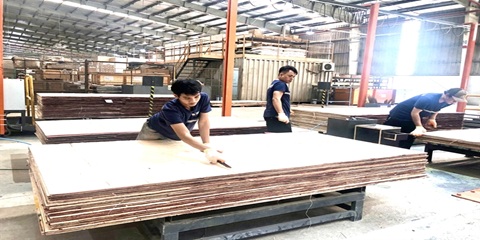
HCM CITY SAYS HOW IT PLANS TO ACHIEVE 10-11% ANNUAL EXPORT GROWTH FOR REST OF DECADE
The southern economic hub aims to strengthen its role as the country’s largest import-export centre while developing into a regional transhipment centre in Southeast Asia, supported by green and digital transformation and a circular economy. HCM City has outlined measures to expand production capacity, cut logistics costs, diversify export markets, and help businesses meet increasingly stringent international standards as it targets average annual export growth of 10-11 per cent through 2030.
VIETNAM ECONOMY INVESTMENT
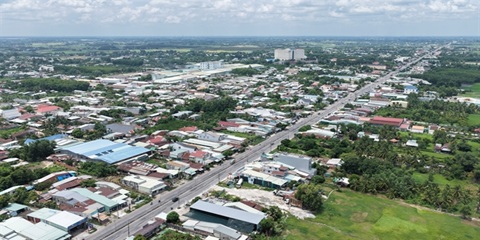
HCM CITY LEADS ECONOMIC RESTRUCTURING IN SOUTHEAST REGION
According to Associate Professor, Dr Vũ Tuấn Hưng, director of the Institute of Social Sciences of the Southern Region, the Southeast is a strategically important socio-economic space in Việt Nam’s development given its advantages in location, industry, trade, services, logistics, science and technology, urbanisation and human resources.
TECHNOLOGY
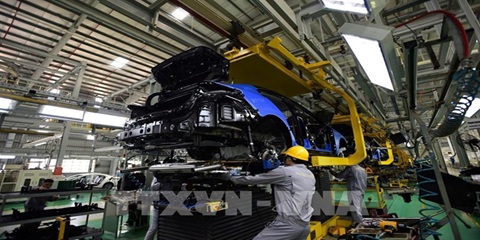
DIGITAL TRANSFORMATION TURNED INTO PRACTICAL TOOLS FOR PEOPLE, BUSINESSES
Việt Nam is moving its digital transformation agenda beyond policy frameworks and individual technology platforms towards practical applications that address everyday needs, as authorities seek measurable outcomes from science, technology and innovation. Under Politburo Resolution No. 57-NQ/TW issued on December 22, 2024, the implementation is increasingly shifting from simply completing assigned tasks towards developing concrete products and services for citizens and businesses.

TECHNOLOGY
APPLYING TECHNOLOGY FOR ECONOMIC TRANSFORMATION
Having completed its new rural development program, Hanoi is shifting its focus toward improving development quality and building smart, sustainable rural areas. The transformation of Dong La orchid-growing village in An Khanh, a western commune of Hanoi, shows how digital technology is becoming a driver of production, market expansion, and higher incomes for local residents.

MEMBER CORNER / PROMOTIONS
VIGLACERA HONORED AS THE "LEADING GREEN INDUSTRIAL REAL ESTATE DEVELOPER 2026"
Organized by the Vietnam Investment Review, this prestigious awards program recognizes industry pioneers advancing eco-industrial parks, clean energy transition, and rigorous ESG standards. Outperforming competitors through a rigorous evaluation, Viglacera Corporation – JSC proudly ranked among the Top 5 highest-positioned enterprises in the Leading Green Industrial Real Estate Developers 2026 category, reinforcing its premier position in Vietnam’s industrial real estate sector.
Events Sponsors






















