Want to be in the loop?
subscribe to
our notification
Business News
POLICIES COME INTO EFFECT IN DECEMBER
A string of fresh policies on holiday salary, pensions for female laborers, social insurance for foreign workers shall come into effect in December. Working duration serves as the basis for calculating severance allowance and redundancy pay The Government issued Decree No. 148/2018/ND-CP (“Decree 148”) on October 24, 2018 amending, supplementing certain guidelines of Decree No. 05/2015/ND-CP detailing the implementation of the Labor Code. Decree 148 shall become effective from December 15, 2018.
According to the current regulation, the working duration that is previously used by the employer as the basis to pay severance allowance (if any) to employee, is incorporated into the working duration for the purpose of calculating future severance allowance and redundancy pay. However, Decree 148 has amended this regulation. Accordingly, working duration that was already used as the basis to compute redundancy pay previously, will not be used to compute redundancy pay thereafter.
The basis for calculation of salary for annual leave, extra annual leave by seniority, public holiday, Tet holiday, paid leave is the salary indicated in labor contract of the preceding month. However, according to Decree 148, the basis for calculation has been changed to salary stated in labor contract.
Adjustment of pensions for female laborers
Decree 153/2018/ND-CP shall come into force on December 24. Decree 153 defines policy on adjustment of pensions for female laborers who start to receive pensions for the period from 2018 to 2021 and have paid social insurance premiums for full 20 years to 29 years and six months.
The Viet Nam Social Security reported that in the 2018-2021 period, the number of female laborers who paid social insurance from 20 to 29 years and six months will touch about 91,000 including 20,500 ones in 2018; 22,000 in 2019; 23,500 in 2020 and 25,100 in 2021.
More pupils eligible for exemption from tuition fees from academic year 2018-2019
Under Decree 145/2018/ND-CP, in addition to 15 cases specified in current regulations, from academic year 2018-2019 (September 1, 2018) children aged five entering kindergarten shall be entitled to exemption from tuition fees if they reside in areas with extremely poor conditions for socio-economic development whose parents or father or mother or guardian permanently reside in extremely poor towns, ethnic minority areas, mountainous areas and islands.
Foreign workers are required to pay 8pc of compulsory social insurance premium from 2022
Decree 143/2018/ND-CP came into force from December 1 stipulates that any foreign worker working in Viet Nam is a mandatory participant in social insurance if he/she is granted a work permit or practicing certificate or practicing license by a Vietnamese authority and enters into an indefinite-term labor contract or fixed-term labor contract with an employer in Viet Nam.
An employee shall contribute 8pc of monthly salary to the retirement and survivorship allowance fund (from December 01, 2018).
From December 01, 2018, contribution rate is 3pc of monthly salary for insurance premium payment to the sickness and maternity fund and 0.5pc to the occupational accident and occupational disease fund.
From January 01, 2022, contribution rate will be 14pc of monthly salary to the retirement and survivorship allowance fund.
Source: VIR
Related News

TECHNOLOGY
TECH SECTOR GROWTH OPENS UP OPPORTUNITIES FOR VIỆT NAM TO GO GLOBAL
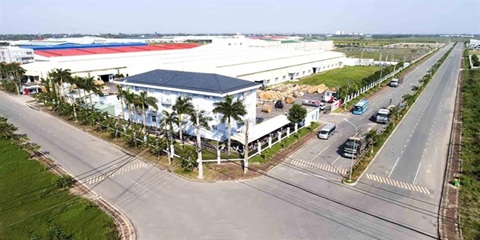
The growth of the electronics, semiconductor and high-tech sectors worldwide is opening up a variety of opportunities for Vietnamese enterprises to integrate more deeply into the global supply chain. However, to become suppliers for these corporations, domestic enterprises must meet rigorous standards regarding quality, technology, productivity and order fulfilment capabilities.
PROPERTY / INDUSTRIAL ZONE
HCM CITY ATTRACTS US$5.7 BILLION INTO EXPORT PROCESSING AND INDUSTRIAL ZONES
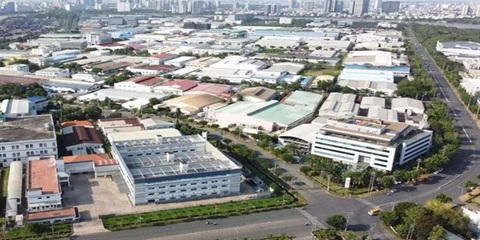
HCM City attracted US$5.7 billion in domestic and foreign investment into its export processing and industrial zones during the first nine months of 2026. The figure exceeded the city's full-year target by 31 per cent, highlighting strong momentum in high-quality industrial investment under Resolution No.10-NQ/TW. Total investment reached 131 per cent of the 2026 target of $4.25 billion and represented a 29 per cent increase compared with the same period in 2025, according to the city's Export Processing and Industrial Zones Authority (HEPZA).

BANKING / FINANCE / INSURANCE / TAX
REMITTANCES TO HCM CITY RISE NEARLY 40% IN Q3
Remittances to HCM City reached more than US$2.83 billion in the third quarter of this year, up 39.5 per cent from the previous quarter and 3.6 per cent year-on-year. This was the first quarter showing positive annual growth this year, helping narrow the decline in remittance inflows over the first nine months. According to the State Bank of Vietnam (SBV)’s Regional Branch 2, remittances transferred to HCM City through credit institutions and economic organisations totalled $2.835 billion in Q3, an increase of more than $802 million from the previous quarter.
VIETNAM ECONOMY INVESTMENT
HCM CITY ADDRESSES MANUFACTURING, LAND HURDLES FOR Q4 GROWTH PUSH
HCM City is adjusting growth scenarios for lagging sectors and removing key bottlenecks in manufacturing and industrial land pricing to achieve a 13.23 per cent expansion in the fourth quarter of 2026. This sharp fourth-quarter acceleration is required to secure the city's full-year double-digit targets, following a 9.06 per cent GRDP growth recorded in the first nine months.
VIETNAM ECONOMY INVESTMENT
MOF'S FIRMS REPORT STRONG GROWTH IN NINE-MONTH
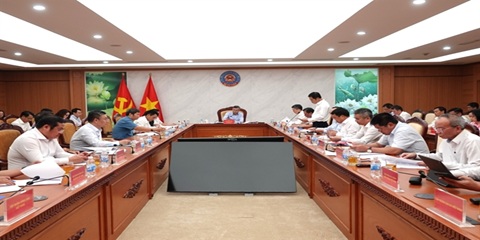
State-owned groups and corporations represented by the Ministry of Finance (MoF) recorded combined revenue of more than VNĐ2 quadrillion (US$79.5 billion) in the first nine months of 2026, up 28.7 per cent year-on-year, while consolidated profit before tax reached nearly VNĐ160 trillion, equivalent to 140.3 per cent of the full-year target.

VIETNAM ECONOMY INVESTMENT
SME REVENUE THRESHOLD PROPOSED TO BE RAISED TO $15.2 MILLION
The government has proposed raising the annual revenue threshold for classifying small- and medium-sized enterprises (SMEs) to VNĐ400 billion (US$15.2 million), from currently VNĐ300 billion, as part of a draft law on the development of SMEs. Minister of Finance Ngô Văn Tuấn presented the draft law, which is intended to replace the Law on Supporting SMEs 2017, to the National Assembly at a meeting late last week.
Events Sponsors






















