Want to be in the loop?
subscribe to
our notification
Business News
POTENTIAL ROADMAP FOR VIETNAM TO ACHIEVE NET ZERO BY 2050
At the United Nations Climate Change Conference (COP26) in Glasgow in 2021, Prime Minister Pham Minh Chinh pledged to phase out coal-fired power by 2040 and achieve net zero emissions by 2050.
In its National Strategy on Climate Change, Vietnam has set targets for emissions reduction. The country aims to cut greenhouse gas emissions by 43.5% by 2030, with practical and effective support from the international community. Additionally, Vietnam has established sector-specific emissions targets for both 2030 and 2050, along with qualitative proposals to achieve these goals.
Risks from climate change
According to research by McKinsey, one of the three largest strategic consulting companies in the world, Vietnam is more exposed to climate risks than any other country in the world and is in the top five countries most affected by climate change.
First, the physical risks created by climate change can have a huge impact on urban areas. For example, the scenario of a sea level rise of 1.8 meters could submerge 66% of Ho Chi Minh City, creating the risk of power outages and closing traffic routes.
Second, Vietnam has a high proportion of GDP from high-carbon sectors and the majority of its capital is tied to fossil fuel-based energy. Therefore, Vietnam has had difficulty attracting financial resources for coal-fired thermal power plants as planned. Therefore, emissions reduction is necessary for Vietnam to minimize physical and economic risks.
Dr. Luong Quang Huy, Head of the Department of Greenhouse Gas Emission Mitigation and Ozone Layer Protection, Department of Climate Change - Ministry of Natural Resources and Environment, said businesses had many advantages for green transformation. Positive customer perception and demand, along with international trade commitments in new-generation free trade agreements (FTAs), are driving the transformation. New markets are increasingly seeking environmentally friendly products with low emissions. However, businesses face challenges due to unsynchronized policies, ineffective production practices, and lack of support for environmental goods and services. Implementing a circular economy requires more resources, and awareness of greenhouse gas inventory and emission reduction remains limited.
Green transformation solutions
According to Mr. Nguyen Tien Huy, Director of the Business Office for Sustainable Development, one of the key priorities for the Vietnam Business Council for Sustainable Development (VBCSD - VCCI) is the establishment and operation of working groups focused on Green Transformation, ESG (Environmental, Social and Governance), and Green Finance. These working groups aim to further propagate sustainable business models and provide valuable policy recommendations to enhance the legal framework supporting sustainable business development.
Coca-Cola Vietnam is actively combating climate change through various initiatives. These include operating sustainable factory models, participating in natural and semi-natural projects (such as preserving Tram Chim National Park and restoring mangrove forests), and storing floodwater in the Mekong Delta. The company is committed to achieving a ‘world without waste’ by using 100% recyclable packaging by 2025, incorporating at least 50% recycled materials in packaging by 2030, and ensuring 100% collection and recycling of bottles and cans sold by 2030. Additionally, Coca-Cola coordinates training on greenhouse gas inventory and emission reduction for its value chain partners in Vietnam.
McKinsey's research also shows a suitable roadmap to eliminate coal-fired power by 2040 and achieve net zero carbon emissions by 2050 by taking advantage of opportunities in industries, especially electricity. Vietnam has a special advantage compared to other countries in ASEAN with the potential to produce renewable energy. To achieve the target of net zero, Vietnam will need to redirect most of its energy to wind and solar power, ensuring that by 2050 the installed wind power capacity reaches about 150 GW (mostly offshore wind power) and solar power about 70 GW. The remaining capacity needs to be largely converted to hydropower, and coal power will be eliminated by 2030.
To achieve the Net Zero target, the private sector must invest in emission-reducing solutions. Construction and real estate companies can leverage their expertise to develop renewable energy projects. Additionally, industries with high demand for green steel have seen the establishment of green steel factories by leading producers.
In particular, Vietnamese transportation companies have the opportunity to emulate pioneers in the industry, ranging from large enterprises like VinFast to nimble startups like Dat Bike. By doing so, they can actively engage in the electric vehicle value chain, spanning from battery exports to charging infrastructure development.
According to McKinsey's preliminary estimates based on a net-zero roadmap model, the total investment could be around US$30 billion per year. Regarding capital financing for energy transition projects, there will be a market worth US$1.5 billion for domestic banks, which Vietnam can exploit by issuing transition financing products.
Soure: VCCI
Related News

CHARITY / EXHIBITION / OTHER EVENTS
INVESTMENT OPPORTUNITIES IN CA MAU PROVINCE: 96 PROJECTS AND 20 STRATEGIC PROJECTS
We are pleased to share with you information on investment projects currently seeking investors in Ca Mau Province. Should your esteemed company or association be interested, we kindly invite you to review the project information and complete the registration form via the links provided. The Ho Chi Minh City Investment and Trade Promotion Centre (ITPC) will consolidate the expressions of interest and facilitate connections with the leadership of Ca Mau Province at a meeting tentatively scheduled for 13 November 2026 in Ho Chi Minh City.

MEMBER CORNER / PROMOTIONS
BẰNG KIỀU LIVESHOW - A SYMPHONY OF LOVE UNDER THE GOLDEN GLOW
A masterclass in live music that takes the audience on a soulful journey through immortal love songs, guided by the peerless artistry and emotive storytelling of renowned singer Bằng Kiều. The highlight of the night is his seamless musical chemistry with special guest Triệu Hồng Ngọc, promising passionate and deeply resonant duets inside the magnificent Grand Ballroom.
INFRASTRUCTURE / CONSTRUCTION / LOGISTIC / PORT
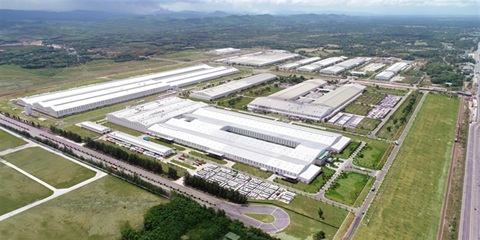
ĐÀ NẴNG GREEN-LIGHTS US$105 MILLION THAI DEVELOPMENT DEAL
The central city has approved an investment proposal by Thailand’s WHA Group to develop infrastructure for the 400ha WHA Đà Nẵng Industrial Park project on two communes of Thăng Bình and Đồng Dương, with an investment of more than VNĐ2.7 trillion (US$105 million). The city said it approved WHA Industrial Development International's status as an investor in the project, which is expected to take place between 2027 and 2034.
VIETNAM ECONOMY INVESTMENT
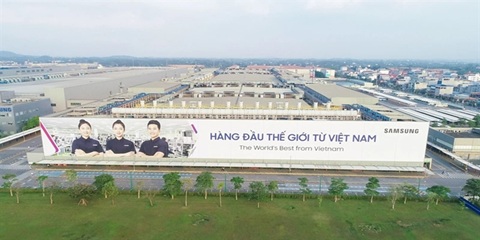
MOBILE PHONE EXPORTS RISE 20% TO $51.8 BILLION IN FIRST NINE MONTHS
Exports of mobile phones and components rose 20 per cent year-on-year to nearly US$51.8 billion in the first nine months of 2026, with China, the US and Republic of Korea accounting for more than half of the total. Shipments to the three markets reached a combined $26.18 billion, or 50.6 per cent of total exports of the product group during the period, according to data from the Vietnam Department of Customs under the Ministry of Finance.
INFRASTRUCTURE / CONSTRUCTION / LOGISTIC / PORT
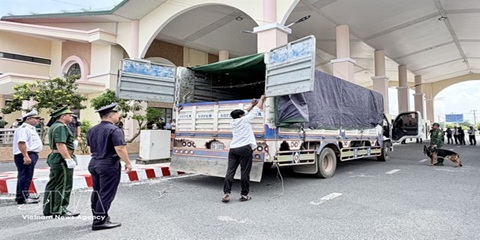
VIỆT NAM-CAMBODIA TRADE GATHERS PACE TOWARDS $20 BILLION TARGET
Trade between Việt Nam and Cambodia continues to grow, remaining a bright spot and a key pillar of bilateral cooperation as the two countries aim to raise two-way trade to US$20 billion in the coming years. After setting a record of more than $11.3 billion last year, bilateral trade reached about $8.7 billion in the first eight months of this year, up 8.3 per cent year on year.
VIETNAM ECONOMY INVESTMENT
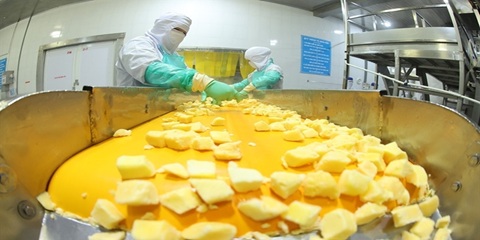
FRUIT AND VEGETABLE EXPORTS POISED TO HIT $10 BILLION IN 2026
Fruit and vegetable exports are on track to reach nearly US$10 billion in 2026, after rising 19.9 per cent year on year to nearly US$7.4 billion in the first nine months, driven by strong seasonal demand and abundant tropical fruit supplies. The Ministry of Agriculture and Environment said the growth reflected stronger international demand for fresh produce and processed agricultural products.
Events Sponsors






















