Want to be in the loop?
subscribe to
our notification
Business News
PROPERTY RULE HURTS FIRMS, BUYERS
The newly promulgated regulations require investors to deposit 1 to 2 per cent of their total investment when they are allocated land by the State, leased land, or permitted to change the land use purpose of allocated land to execute investment projects.
The new rules were supplemented both in the 2013 Land Law’s Article 58 and amended Investment Law 2014. In addition, the revised Real Estate Trading Law 2014 stipulates that investors have to pay a guaranteed amount of money for property, which will be calculated by banks in the future.
Investor will also have to pay a guarantee fee of 2 per cent out of the total guarantee value.
“The new regulations have resulted in two new factors emerging in estate price structure, including deposit and guarantee costs, which will further burden home-buyers,” Chau said.
He added that the association was opposed to the implementation of the regulation. If customers asked for the guarantee, investors would implement it for each apartment under the agreement, but not all buyers would agree to it.
It also suggested that paying the deposit should be excused on projects that have received complete site clearance. The deposit level should comprise of costs for land and infrastructure, instead of total investment for the whole project.
However, lawyer Truong Thanh Hoa said the regulations would help choose investors with full capacity, though they would only cause more difficulties for enterprises. This would ensure safety for the home-buyers.
Difficult for foreigners
Lawyer Hoa said housing ownership for foreigners in Viet Nam was still difficult though the law on the issue was more open.
According to Hoa the difficulty is that foreigners are only allowed to own less than 30 per cent of the apartments in a building and 250 apartments in a ward.
For example, all of Phu My Hung projects and several other projects are located in District 7’s Tan Phong Ward, where many foreigners reside.
If foreigners are limited to buying 250 apartments or houses in a ward, it will create problems for both investors and buyers in these areas.
This is the reason there are special regulations for big cities, such as HCM City, Ha Noi and Da Nang, which have a lot of foreigners.
The association also proposed simplifying administrative procedures for Vietnamese abroad to create favourable conditions for people to buy houses.
Source: Business Times
Related News

MEMBER CORNER / PROMOTIONS
BẰNG KIỀU LIVESHOW - A SYMPHONY OF LOVE UNDER THE GOLDEN GLOW
A masterclass in live music that takes the audience on a soulful journey through immortal love songs, guided by the peerless artistry and emotive storytelling of renowned singer Bằng Kiều. The highlight of the night is his seamless musical chemistry with special guest Triệu Hồng Ngọc, promising passionate and deeply resonant duets inside the magnificent Grand Ballroom.

INFRASTRUCTURE / CONSTRUCTION / LOGISTIC / PORT
ĐÀ NẴNG GREEN-LIGHTS US$105 MILLION THAI DEVELOPMENT DEAL
The central city has approved an investment proposal by Thailand’s WHA Group to develop infrastructure for the 400ha WHA Đà Nẵng Industrial Park project on two communes of Thăng Bình and Đồng Dương, with an investment of more than VNĐ2.7 trillion (US$105 million). The city said it approved WHA Industrial Development International's status as an investor in the project, which is expected to take place between 2027 and 2034.

VIETNAM ECONOMY INVESTMENT
MOBILE PHONE EXPORTS RISE 20% TO $51.8 BILLION IN FIRST NINE MONTHS
Exports of mobile phones and components rose 20 per cent year-on-year to nearly US$51.8 billion in the first nine months of 2026, with China, the US and Republic of Korea accounting for more than half of the total. Shipments to the three markets reached a combined $26.18 billion, or 50.6 per cent of total exports of the product group during the period, according to data from the Vietnam Department of Customs under the Ministry of Finance.

INFRASTRUCTURE / CONSTRUCTION / LOGISTIC / PORT
VIỆT NAM-CAMBODIA TRADE GATHERS PACE TOWARDS $20 BILLION TARGET
Trade between Việt Nam and Cambodia continues to grow, remaining a bright spot and a key pillar of bilateral cooperation as the two countries aim to raise two-way trade to US$20 billion in the coming years. After setting a record of more than $11.3 billion last year, bilateral trade reached about $8.7 billion in the first eight months of this year, up 8.3 per cent year on year.

VIETNAM ECONOMY INVESTMENT
FRUIT AND VEGETABLE EXPORTS POISED TO HIT $10 BILLION IN 2026
Fruit and vegetable exports are on track to reach nearly US$10 billion in 2026, after rising 19.9 per cent year on year to nearly US$7.4 billion in the first nine months, driven by strong seasonal demand and abundant tropical fruit supplies. The Ministry of Agriculture and Environment said the growth reflected stronger international demand for fresh produce and processed agricultural products.
GARMENT / TEXTILE
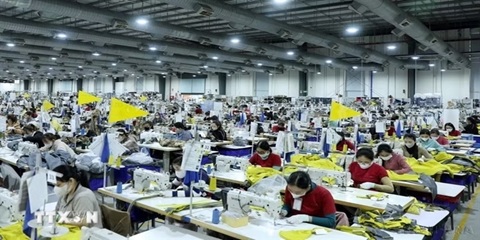
TEXTILE EXPORTS FACE DUAL CHALLENGES OF SUSTAINING ORDERS AND BOOSTING EFFICIENCY AMID GROWING COMPETITION
Data shows that the textile and garment sector maintained its growth momentum in the first nine months of this year. The industry's total export turnover reached an estimated US$35.721 billion in the first nine months of this year, up 3.3 per cent year-on-year. Despite posting encouraging export figures, Vietnamese textile and garment enterprises continue to navigate unpredictable market variables.
Events Sponsors






















