Want to be in the loop?
subscribe to
our notification
Business News
PROPERTY FIRMS OPT FOR BONDS AS BANK LOANS DRY UP
Last month, property developer Vingroup unveiled plans to sell 20 million non-convertible bonds at VND100,000 (US$4.39) each in two phases without any covered warrants or guaranteed assets.
The total value of the issuance will be VND2 trillion ($87.8 million), and, according to Vingroup, it will help partly repay its bank loans and achieve its financial targets.
Earlier, in August, Vingroup issued 84 million preference shares on a private offering basis to Hanwha Vietnam Opportunity Private Fund 1 for over VND9.3 trillion ($400 million).
A Vingroup spokesperson said the majority of the money raised from that issuance would be used for the company’s housing and social infrastructure projects.
Also in August, a subsidiary of Vingroup, Vinhomes, issued 20 million three-year bonds worth VND2 trillion ($87 million). A month later, it issued VND5 trillion worth of two-year bonds.
Sunshine Group recently announced plans to issue 100 million three-year bonds worth VND100,000 each.
The company expects the issuance to raise VND10 trillion, which it will use for developing its business strategies and investment projects.
Why are property firms issuing bonds?
In 2019, several policies meant to restrict lending to risky sectors like real estate have or will come into force.
Among them is the State Bank of Viet Nam (SBV)’s directive to increase the risk weightage for real estate loans from the current 200 per cent to 250 per cent.
It means that for every dong of real estate loan given, the value of risk-weighted assets will increase by two and a half dong, a significant disincentive for banks to lend to the property sector since their capital requirement is a ratio of their risk-weighted assets under the Basel norms.
Besides, the central bank has already reduced the maximum amount of short-term deposits that can be used for medium- and long-term loans from the current 45 per cent to 40 per cent since January 1.
The central bank’s determination to tighten lending to risky sectors has forced property developers to look at other sources of funds.
Analysts said developers are turning increasingly to the securities and bond markets, foreign investments and mergers and acquisitions to replace bank loans.
Bonds seem to be the most preferred option, they said, explaining this is because property and infrastructure projects usually require large sums of money and bonds could help raise such large amounts.
But to raise capital by issuing bonds, firms need to have a good brand name, reputation and prestige, they said.
Besides, bond issuers are required to meet more criteria than share issuers, including transparency.
However, many companies prefer this to issuing shares and diluting their equity.
Nevertheless, taking all factors into consideration, raising capital by issuing shares or bonds is the best option for property enterprises at the moment when they have to look beyond banks for funds, they added.
Many firms set to list on UPCOM this year
The Unlisted Public Company Market (UPCoM) is expected to welcome many companies in 2019, with many already announcing plans to trade their shares on the bourse this year.
Right at the start of the year, UPCoM welcomed the first company, Lao Cai Gold Joint Stock Company (GLC), which has a free float of 10.5 million shares. It is the first gold mining company to trade in the stock market.
On January 17, the Construction Consultation Joint Stock Company for Maritime Building listed on UPCoM at a reference price of VND34,500.
Market observers said that many more companies have already outlined plans to list on UPCoM this year.
They include the Tan Binh Real Estate Joint Stock Company, PetroVietnam Building and Commercial Joint Stock Company, Thang Loi International Garment Joint Stock Company, and Tra Noc-O Mon Water Supply Joint Stock Company.
Experts said the number of companies with large market capitalisation, many in fact of giant size, and good results registering to list on UPCoM is increasing.
This is helping improve the quality, liquidity and size of the market, they said.
As of last year, a total of 804 companies were trading on UPCoM with nearly 32 billion free float shares and a combined market cap of VND319 trillion ($13.87 billion), exceeding the combined number on the Ho Chi Minh and Ha Noi stock exchanges.
The figure includes 137 newly incorporated companies with more than 31 billion shares.
Several large companies, including State-owned enterprises that have already partly or wholly completed their equitisation process, have also listed on UPCoM to make their shares liquid, thus benefiting shareholders.
They include the Binh Son Refining and Petrochemical Joint Stock Company with assets of VND59.7 trillion and charter capital of over VND31 trillion, the Viet Nam Rubber Group Limited with legal capital of VND40 trillion and PetroVietnam Power Corporation with charter capital of VND23.42 trillion.
With more large-cap firms trading on UPCoM, the unlisted market has been developing at the same pace as the country’s two main stock exchange indices.
Though companies that have registered to list on UPCoM this year may not be quite so large as those, they are still expected to attract investors thanks to their good performance, experts said.
The PetroVietnam Building and Commercial Joint Stock Company is a subsidiary of the Binh Son Refining and Petrochemical Joint Stock Company, which owns an 83.26 per cent stake. Binh Son is among the largest companies traded on UPCoM.
PetroVietnam Building is the sole supplier of three-surface PE bags for packing products to the Dung Quat refinery, the first refinery in the country.
With a charter capital of VND80.6 billion, Tan Binh Real Estate Joint Stock Company (TBR) listed 8.06 million shares for trading on UPCoM this year.
Its modest size and asset value notwithstanding, TBR’s performance last year was pretty good, with after-tax profit in the first nine months of last year reaching VND12.6 billion, up VND7.1 billion from the same period in 2017.
Thang Loi International Garment Joint Stock Company has registered to list three million shares this year. In the first nine months of last year, it reported a profit of VND3.4 billion on sales of VND93.3 billion.
Source: VIR
Related News

INFRASTRUCTURE / CONSTRUCTION / LOGISTIC / PORT
VIỆT NAM-CAMBODIA TRADE GATHERS PACE TOWARDS $20 BILLION TARGET
Trade between Việt Nam and Cambodia continues to grow, remaining a bright spot and a key pillar of bilateral cooperation as the two countries aim to raise two-way trade to US$20 billion in the coming years. After setting a record of more than $11.3 billion last year, bilateral trade reached about $8.7 billion in the first eight months of this year, up 8.3 per cent year on year.
TECHNOLOGY
AI BEGINNING TO RESHAPE RECRUITMENT CRITERIA
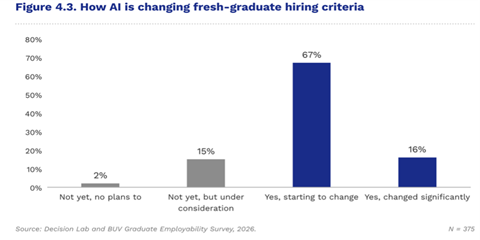
Digital literacy is the only capability area in which fresh graduates meet employers’ expectations, according to a new report. Yet, it is also the standard rising fastest, as businesses increasingly expect new hires to use AI effectively in the workplace. Some 83 per cent of employers say AI has changed, or is beginning to change, their hiring criteria, while 94 per cent report higher expectations for digital and AI capabilities than they had two to three years ago.

INFRASTRUCTURE / CONSTRUCTION / LOGISTIC / PORT
ĐÀ NẴNG GREEN-LIGHTS US$105 MILLION THAI DEVELOPMENT DEAL
The central city has approved an investment proposal by Thailand’s WHA Group to develop infrastructure for the 400ha WHA Đà Nẵng Industrial Park project on two communes of Thăng Bình and Đồng Dương, with an investment of more than VNĐ2.7 trillion (US$105 million). The city said it approved WHA Industrial Development International's status as an investor in the project, which is expected to take place between 2027 and 2034.

VIETNAM ECONOMY INVESTMENT
MOBILE PHONE EXPORTS RISE 20% TO $51.8 BILLION IN FIRST NINE MONTHS
Exports of mobile phones and components rose 20 per cent year-on-year to nearly US$51.8 billion in the first nine months of 2026, with China, the US and Republic of Korea accounting for more than half of the total. Shipments to the three markets reached a combined $26.18 billion, or 50.6 per cent of total exports of the product group during the period, according to data from the Vietnam Department of Customs under the Ministry of Finance.

VIETNAM ECONOMY INVESTMENT
FRUIT AND VEGETABLE EXPORTS POISED TO HIT $10 BILLION IN 2026
Fruit and vegetable exports are on track to reach nearly US$10 billion in 2026, after rising 19.9 per cent year on year to nearly US$7.4 billion in the first nine months, driven by strong seasonal demand and abundant tropical fruit supplies. The Ministry of Agriculture and Environment said the growth reflected stronger international demand for fresh produce and processed agricultural products.
GARMENT / TEXTILE
TEXTILE EXPORTS FACE DUAL CHALLENGES OF SUSTAINING ORDERS AND BOOSTING EFFICIENCY AMID GROWING COMPETITION
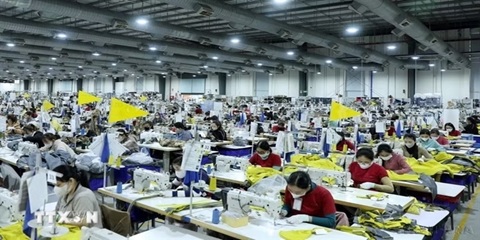
Data shows that the textile and garment sector maintained its growth momentum in the first nine months of this year. The industry's total export turnover reached an estimated US$35.721 billion in the first nine months of this year, up 3.3 per cent year-on-year. Despite posting encouraging export figures, Vietnamese textile and garment enterprises continue to navigate unpredictable market variables.
Events Sponsors






















