Want to be in the loop?
subscribe to
our notification
Business News
PUBLIC-PRIVATE PARTNERSHIPS A LEVER FOR GREENER INNOVATION
Public-private partnerships are no longer a supporting mechanism, but a strategic pillar in the global pursuit of the green transition.
The high-level dialogue between government leaders and businesses at the 2025 P4G Vietnam Summit last week, chaired by Prime Minister Pham Minh Chinh, brought together senior officials, global experts, international organisations, and private sector leaders.
They recognised that the climate crisis, digital transformation, and resource depletion are converging in ways that demand not only innovation, but deep and long-term collaboration between the public and private sectors.
UN Deputy Secretary-General Amina J. Mohammed acknowledged Vietnam’s leadership in renewable energy, noting its potential to attract trillions in sustainable investment.
“Emerging economies must accelerate the adoption of new investment models, particularly those that align private capital with green infrastructure priorities. Governments must work with the private sector to expand ambition, strengthen accountability, and deliver real impact,” she said.
From Italy, Prime Minister’s Climate Envoy Francesco Corvaro stressed that public-private partnerships (PPPs) are indispensable in addressing climate finance gaps. Drawing from Italy’s experience, he underscored the importance of public investment as a risk mitigator, enabling private sector participation in clean energy and smart infrastructure projects.
“Public investment can unlock private capital, but local authorities must lead with clear priorities and long-term vision,” Corvaro noted. “You can’t talk about renewables, AI, or digital infrastructure without modern, resilient grids, and that requires strong public-private alignment.” he said
Alejandro Dorado, Spain’s High Commissioner for Circular Economy, argued that the case for stronger PPPs lies at the intersection of two accelerating forces: the environmental-climate crisis and a wave of disruptive technologies.
“In a world where AI, green technologies, and digitalisation are reshaping the global economy, the clock is ticking. According to the Intergovernmental Panel on Climate Change, we have less than a decade to prevent irreversible climate disaster. Meanwhile, the World Economic Forum has identified biodiversity loss as one of the most severe economic risks,” he said.
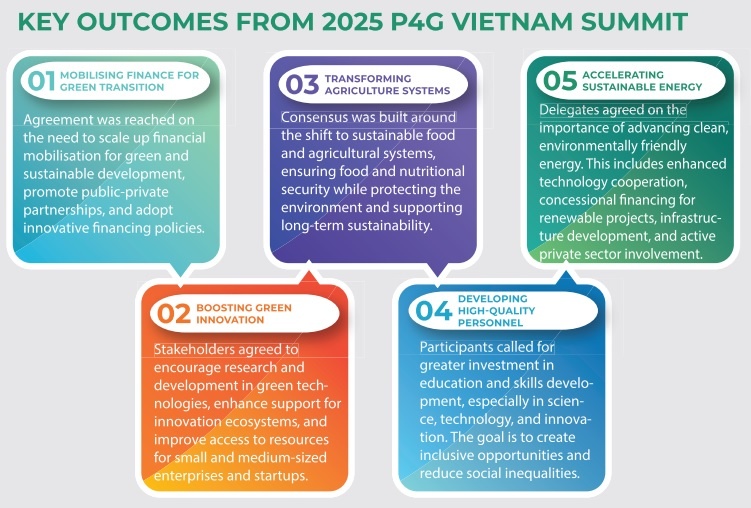
Dorado added that while multilateralism is being questioned or weakened in some quarters, the need for cooperation has never been more urgent – both to solve environmental challenges and to harness the transformative potential of innovation.
“No government or business can tackle these crises alone. Public authorities must provide the regulatory frameworks, fiscal incentives, and infrastructure deployment needed at scale to safeguard the common good,” he stressed.
From the business side, Stuart Livesey, country representative of Copenhagen Infrastructure Partners (CIP), provided a frank but optimistic outlook. Livesey stated CIP’s commitment to supporting Vietnam’s transition, but emphasised the need for enabling conditions.
“What we seek are clear, bankable projects underpinned by stable regulatory frameworks, collaborating with strong local partnerships. This is where public-private cooperation becomes not just helpful, but essential,” Livesey noted. “Over the next 10-15 years, the offshore wind sector and green energy consumers will trigger massive demand for new technologies, digital solutions, and skilled labour.”
To meet this demand, CIP is investing not only in infrastructure, but also in capacity building, research and development, and local supply chain development through partnerships with Vietnamese universities.
Still, he acknowledged barriers. “Technological application and innovation in green projects face challenges, from long-term financing constraints and skilled labour shortages to fragmented policy signals. These are not unique to Vietnam, but they require proactive, tailored local solutions,” he said. “Addressing issues such as grid availability, regulatory clarity, and inter-ministerial coordination will be critical.”
Tim Evans, CEO of HSBC Vietnam, stated that the banking sector is ready to facilitate green finance, particularly in sectors aligned with national climate targets.
“We see ourselves as a bridge between global capital and local sustainability goals. The clearer the pipeline of bankable, climate-aligned projects, the faster we can move capital,” he noted. “What’s crucial now is consistency in policy and coordination among stakeholders to ensure these projects reach maturity.”
Source: VIR
Related News

CHARITY / EXHIBITION / OTHER EVENTS
INVESTMENT OPPORTUNITIES IN CA MAU PROVINCE: 96 PROJECTS AND 20 STRATEGIC PROJECTS
We are pleased to share with you information on investment projects currently seeking investors in Ca Mau Province. Should your esteemed company or association be interested, we kindly invite you to review the project information and complete the registration form via the links provided. The Ho Chi Minh City Investment and Trade Promotion Centre (ITPC) will consolidate the expressions of interest and facilitate connections with the leadership of Ca Mau Province at a meeting tentatively scheduled for 13 November 2026 in Ho Chi Minh City.

MEMBER CORNER / PROMOTIONS
BẰNG KIỀU LIVESHOW - A SYMPHONY OF LOVE UNDER THE GOLDEN GLOW
A masterclass in live music that takes the audience on a soulful journey through immortal love songs, guided by the peerless artistry and emotive storytelling of renowned singer Bằng Kiều. The highlight of the night is his seamless musical chemistry with special guest Triệu Hồng Ngọc, promising passionate and deeply resonant duets inside the magnificent Grand Ballroom.
INFRASTRUCTURE / CONSTRUCTION / LOGISTIC / PORT
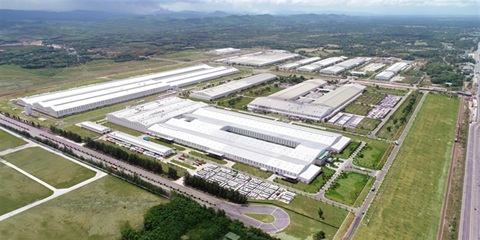
ĐÀ NẴNG GREEN-LIGHTS US$105 MILLION THAI DEVELOPMENT DEAL
The central city has approved an investment proposal by Thailand’s WHA Group to develop infrastructure for the 400ha WHA Đà Nẵng Industrial Park project on two communes of Thăng Bình and Đồng Dương, with an investment of more than VNĐ2.7 trillion (US$105 million). The city said it approved WHA Industrial Development International's status as an investor in the project, which is expected to take place between 2027 and 2034.
VIETNAM ECONOMY INVESTMENT
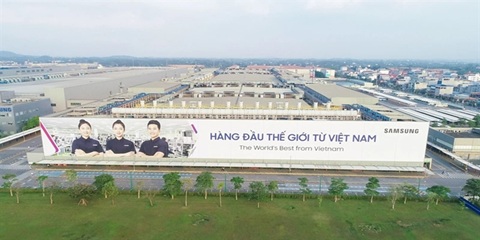
MOBILE PHONE EXPORTS RISE 20% TO $51.8 BILLION IN FIRST NINE MONTHS
Exports of mobile phones and components rose 20 per cent year-on-year to nearly US$51.8 billion in the first nine months of 2026, with China, the US and Republic of Korea accounting for more than half of the total. Shipments to the three markets reached a combined $26.18 billion, or 50.6 per cent of total exports of the product group during the period, according to data from the Vietnam Department of Customs under the Ministry of Finance.
INFRASTRUCTURE / CONSTRUCTION / LOGISTIC / PORT
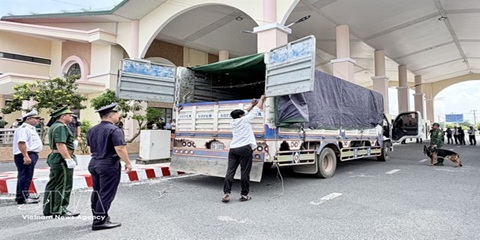
VIỆT NAM-CAMBODIA TRADE GATHERS PACE TOWARDS $20 BILLION TARGET
Trade between Việt Nam and Cambodia continues to grow, remaining a bright spot and a key pillar of bilateral cooperation as the two countries aim to raise two-way trade to US$20 billion in the coming years. After setting a record of more than $11.3 billion last year, bilateral trade reached about $8.7 billion in the first eight months of this year, up 8.3 per cent year on year.
VIETNAM ECONOMY INVESTMENT
FRUIT AND VEGETABLE EXPORTS POISED TO HIT $10 BILLION IN 2026
Fruit and vegetable exports are on track to reach nearly US$10 billion in 2026, after rising 19.9 per cent year on year to nearly US$7.4 billion in the first nine months, driven by strong seasonal demand and abundant tropical fruit supplies. The Ministry of Agriculture and Environment said the growth reflected stronger international demand for fresh produce and processed agricultural products.
Events Sponsors






















