Want to be in the loop?
subscribe to
our notification
Business News
RAILWAY, SEAPORT NETWORKS NEED TO BE ARTERIES OF ECONOMY: DEPUTY PM
The railway network connecting economic hubs and seaports needs to be designed as the key arteries of the economy, Deputy Prime Minister Trần Hồng Hà said at a meeting with the transport ministry and relevant departments yesterday.
The discussion focused on the planning, policies, solutions and resources to implement the railway and seaport planning for the 2021-30 period, with a vision to 2050.
A report by the Ministry of Transport said that the goal is that by 2030, the network of seaports in Việt Nam can handle up to 1.4 trillion tons of goods and 10.3 million passengers.
Around 33,600ha of land and 606,000ha of water surface are expected to be used to develop this network. The demand for investment by 2030 is about VNĐ313 trillion (US$13.2 million).
This funding is expected to be mobilised from the private sector, among other sources. The State budget capital is focused on public maritime infrastructure and key economic areas.
Deputy PM Hà also proposed an overall review of the general, specialised and inland waterway ports for renovation, utilising the transportation potential of the dense river network across the country.
He added: “The railway network planning must not only stop at renovating and repairing, but follow a modern, comprehensive direction to respond to the development demands in the future.”
The roadmap also needs to be supported by in-depth studies for synchronised implementation of detailed plans.
Suggesting selecting one railway route to focus on, the deputy PM asked the Ministry of Transport to work closely with the Ministry of Natural Resources and Environment for land use at intersections and stations.
The deputy PM also asked the transport ministry to focus on several key railway and seaports projects in the 2023-25 plan, while carefully reviewing and estimating investment resources, economic efficiency and the role of the State in the projects to be deployed in the following phase.
The railway network investment and development projects to 2023 are expected to make breakthroughs on the main routes of great demand, utilising its strengths in transporting a large volume of goods and passengers through medium and long distances.
The total demand for capital for the railway network by 2030 is estimated at about VNĐ240 trillion ($10.1 million), using the State budget as well as other sources.
After the master plans for the railway and seaport networks are approved by the Prime Minister, the transport ministry will actively implement the project, conducting evaluation after the first year, completing regulations and detailed plans, and allocating capital sources for the medium-term.
Source: VNS
Related News

MEMBER CORNER / PROMOTIONS
HCMC | CERTIFIED SUSTAINABILITY PROFESSIONAL (CSP) TRAINING | REGISTRATION OPEN
As sustainability becomes deeply embedded in corporate strategy and supply-chain operations across Vietnam, Hong Kong Business Association Vietnam is pleased to endorse the upcoming Certified Sustainability Professional (CSP) training program by the Asia Institute for Sustainability (AIS) - a premier internationally recognized ESG credential in Vietnam.
VIETNAM ECONOMY INVESTMENT
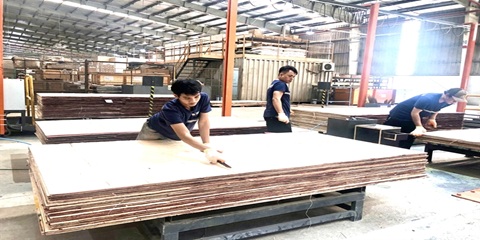
HCM CITY SAYS HOW IT PLANS TO ACHIEVE 10-11% ANNUAL EXPORT GROWTH FOR REST OF DECADE
The southern economic hub aims to strengthen its role as the country’s largest import-export centre while developing into a regional transhipment centre in Southeast Asia, supported by green and digital transformation and a circular economy. HCM City has outlined measures to expand production capacity, cut logistics costs, diversify export markets, and help businesses meet increasingly stringent international standards as it targets average annual export growth of 10-11 per cent through 2030.
VIETNAM ECONOMY INVESTMENT
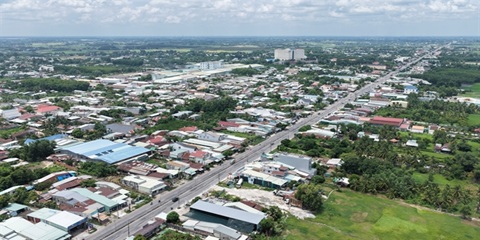
HCM CITY LEADS ECONOMIC RESTRUCTURING IN SOUTHEAST REGION
According to Associate Professor, Dr Vũ Tuấn Hưng, director of the Institute of Social Sciences of the Southern Region, the Southeast is a strategically important socio-economic space in Việt Nam’s development given its advantages in location, industry, trade, services, logistics, science and technology, urbanisation and human resources.
TECHNOLOGY
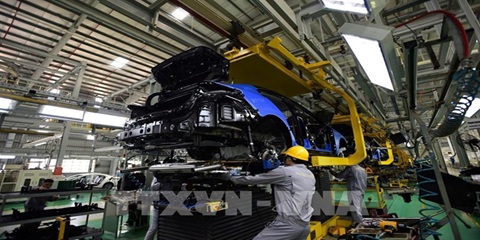
DIGITAL TRANSFORMATION TURNED INTO PRACTICAL TOOLS FOR PEOPLE, BUSINESSES
Việt Nam is moving its digital transformation agenda beyond policy frameworks and individual technology platforms towards practical applications that address everyday needs, as authorities seek measurable outcomes from science, technology and innovation. Under Politburo Resolution No. 57-NQ/TW issued on December 22, 2024, the implementation is increasingly shifting from simply completing assigned tasks towards developing concrete products and services for citizens and businesses.
TECHNOLOGY
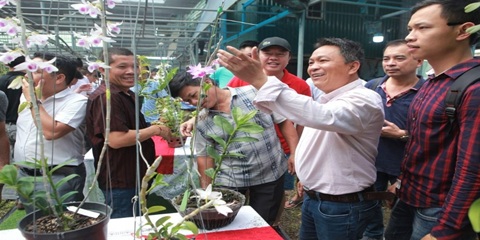
APPLYING TECHNOLOGY FOR ECONOMIC TRANSFORMATION
Having completed its new rural development program, Hanoi is shifting its focus toward improving development quality and building smart, sustainable rural areas. The transformation of Dong La orchid-growing village in An Khanh, a western commune of Hanoi, shows how digital technology is becoming a driver of production, market expansion, and higher incomes for local residents.
MEMBER CORNER / PROMOTIONS
VIGLACERA HONORED AS THE "LEADING GREEN INDUSTRIAL REAL ESTATE DEVELOPER 2026"
Organized by the Vietnam Investment Review, this prestigious awards program recognizes industry pioneers advancing eco-industrial parks, clean energy transition, and rigorous ESG standards. Outperforming competitors through a rigorous evaluation, Viglacera Corporation – JSC proudly ranked among the Top 5 highest-positioned enterprises in the Leading Green Industrial Real Estate Developers 2026 category, reinforcing its premier position in Vietnam’s industrial real estate sector.
Events Sponsors






















