Want to be in the loop?
subscribe to
our notification
Business News
REAL ESTATE MARKET MUST BE DIGITALISED
Digital transformation is no longer an option but a mandatory trend for real estate enterprises to overcome difficulties and contribute to promoting the formation of a healthy, transparent, and sustainable market.
Nguyễn Mạnh Hà, Deputy President of the Việt Nam Real Estate Association, said the digital transformation in the real estate market of Việt Nam was taking place slowly because not all market participants were fully aware of the importance of technology.
In construction, for example, the digital transformation was mainly used for energy saving and using green materials while the application of high technologies in development and operation remained modest, he said.
Hoàng Mai Chung, chairman of Meey Land Group, said that many technology platforms were developed and helped solve several social problems. However, the real estate market had not yet seen such technology platforms.
He said that property technology (protech) was born to meet the three basic real estate market requirements, including providing information, supporting transactions and managing processes. However, protech in Việt Nam had not managed to develop user data which was big enough.
Many protech companies were forced to close while others struggled to survive. However, the market was potential, Chung said, adding that the difficulties mainly came from the human resources and technology capability.
"Technology is an inevitable trend in every industry, but the fact is that real estate is falling a step behind the common ground," he said.
Currently, each enterprise can only solve a narrow corner in the digital transformation of the real estate market. Technology application was still mainly concentrated in the rental segment and had not been applied much in other activities such as transactions and customer relations.
The slow application of technology in the real estate sector would result in a slow increase in labour productivity and slow revenue growth, Chung said, adding that, like other economic sectors, the real estate market needed more drastic measures to speed up the digitalisation process, including a comprehensive ecosystem and adequate capital resources to motivate enterprises to make breakthroughs.
Nguyễn Trần Linh, general director of SSLAND Joint Stock Company, said technologies were comprehensively changing the operation of real estate businesses.
Linh expected that the digital transformation would help improve productivity, efficiency and value for customers with a more transparent market.
Bùi Văn Luật, general director of Gold Star Holding Asset Development Joint Stock Company, digital transformation was not an easy journey for businesses. He added that it would take time to change the habit and gain the customers' confidence.
Real estate businesses must speed up the digital transformation if they do not want to lose the opportunities, he said, adding that attention should be paid to the training to enhance the knowledge and skills of staff as well as analysis of customers' psychology to raise appropriate digital transformation strategy.
As technology developers in the real estate market struggled to find new directions, digital transformation was not simply a technological revolution. Still, it should also be a revolution in the institution.
The Government played a critical role in the success of digital transformation, Bùi Văn Doanh, Director of the Việt Nam Real Estate Research Institute, said.
The digital transformation for the real estate market was a long process, Doanh said, adding that developing an ecosystem was vital for the real estate market to follow the sustainable development trend.
Nguyễn Công Chính, who was in charge of digital transformation at Đất Xanh Miền Bắc Real Estate Service Joint Stock Company, said that there was no definite template for digital transformation. Digital transformation was a lengthy process, and the leaders' mindset was a significant factor.
Võ Trí Thành, Director of the Institute of Branding and Competition Strategy, highlighted four keys towards successful digital transformation in the real estate market.
The first was the vision and determination of leaders.
The second was that the digital transformation strategy must be closely linked with the enterprises' business strategy.
Third, digital transformation should be started from the very beginning and implemented in the best way.
Finally, enterprises should not try to handle everything alone. They should cooperate for mutual development, Thành stressed.
"Digital transformation in the real estate sector is not only a purely technological revolution but also an institutional revolution to aim at positive and modern changes to improve policies, regulations and working processes. The centre is the people, so whatever you do, you must create trust for the market," Thành said.
Source: VNS
Related News

INFRASTRUCTURE / CONSTRUCTION / LOGISTIC / PORT
VIỆT NAM-CAMBODIA TRADE GATHERS PACE TOWARDS $20 BILLION TARGET
Trade between Việt Nam and Cambodia continues to grow, remaining a bright spot and a key pillar of bilateral cooperation as the two countries aim to raise two-way trade to US$20 billion in the coming years. After setting a record of more than $11.3 billion last year, bilateral trade reached about $8.7 billion in the first eight months of this year, up 8.3 per cent year on year.
TECHNOLOGY
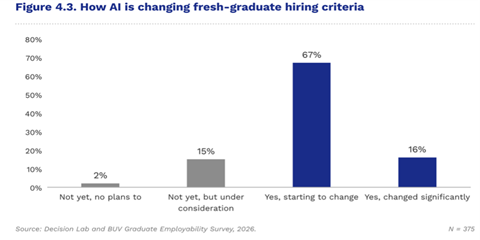
AI BEGINNING TO RESHAPE RECRUITMENT CRITERIA
Digital literacy is the only capability area in which fresh graduates meet employers’ expectations, according to a new report. Yet, it is also the standard rising fastest, as businesses increasingly expect new hires to use AI effectively in the workplace. Some 83 per cent of employers say AI has changed, or is beginning to change, their hiring criteria, while 94 per cent report higher expectations for digital and AI capabilities than they had two to three years ago.

INFRASTRUCTURE / CONSTRUCTION / LOGISTIC / PORT
ĐÀ NẴNG GREEN-LIGHTS US$105 MILLION THAI DEVELOPMENT DEAL
The central city has approved an investment proposal by Thailand’s WHA Group to develop infrastructure for the 400ha WHA Đà Nẵng Industrial Park project on two communes of Thăng Bình and Đồng Dương, with an investment of more than VNĐ2.7 trillion (US$105 million). The city said it approved WHA Industrial Development International's status as an investor in the project, which is expected to take place between 2027 and 2034.

VIETNAM ECONOMY INVESTMENT
MOBILE PHONE EXPORTS RISE 20% TO $51.8 BILLION IN FIRST NINE MONTHS
Exports of mobile phones and components rose 20 per cent year-on-year to nearly US$51.8 billion in the first nine months of 2026, with China, the US and Republic of Korea accounting for more than half of the total. Shipments to the three markets reached a combined $26.18 billion, or 50.6 per cent of total exports of the product group during the period, according to data from the Vietnam Department of Customs under the Ministry of Finance.

VIETNAM ECONOMY INVESTMENT
FRUIT AND VEGETABLE EXPORTS POISED TO HIT $10 BILLION IN 2026
Fruit and vegetable exports are on track to reach nearly US$10 billion in 2026, after rising 19.9 per cent year on year to nearly US$7.4 billion in the first nine months, driven by strong seasonal demand and abundant tropical fruit supplies. The Ministry of Agriculture and Environment said the growth reflected stronger international demand for fresh produce and processed agricultural products.
GARMENT / TEXTILE
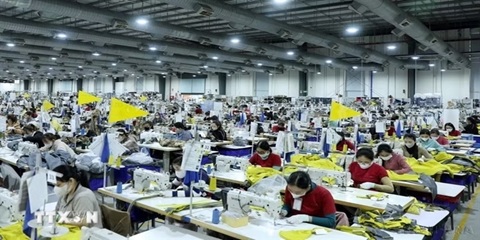
TEXTILE EXPORTS FACE DUAL CHALLENGES OF SUSTAINING ORDERS AND BOOSTING EFFICIENCY AMID GROWING COMPETITION
Data shows that the textile and garment sector maintained its growth momentum in the first nine months of this year. The industry's total export turnover reached an estimated US$35.721 billion in the first nine months of this year, up 3.3 per cent year-on-year. Despite posting encouraging export figures, Vietnamese textile and garment enterprises continue to navigate unpredictable market variables.
Events Sponsors






















