Want to be in the loop?
subscribe to
our notification
Business News
REVISED RULES SET TO EXPAND OPTIONS FOR OVERSEAS NATIONALS TO OWN PROPERTY
New laws for next year are expected to help increase remittances into Vietnam, particularly towards the real estate sector.
According to real estate law expert Nguyen Van Dinh, new laws coming into effect in 2025 will allow Vietnamese nationals residing abroad to carry out real estate business and own property the same as Vietnamese.
“Overseas Vietnamese will be allowed to invest in building houses and construction projects for sale, lease, or lease purchase, and investing in the technical infrastructure in real estate projects for transfer, lease, and subleasing land use rights that already have technical infrastructure,” said Dinh.
However, he added that those of Vietnamese origin residing abroad who are not Vietnamese citizens were only allowed to do real estate business according to the current law.
“Meanwhile, the new Land Law states that Vietnamese nationals residing abroad who are Vietnamese citizens have full rights related to land, not only rights to residential land, like Vietnamese citizens already in the country,” Dinh said.
The provisions of the related laws that have been passed, on land, housing, and real estate, create a unified and synchronised approach to ensure that overseas Vietnamese still retain Vietnamese nationality and have land use rights and real estate business rights like domestic citizens, thus showing that overseas Vietnamese are an inseparable part of the Vietnam.
According to the provisions of the previous Land Law, overseas Vietnamese who are eligible to own housing in Vietnam could only receive transfer of residential land use rights through the form of purchase, lease-purchase, inheritance, or donation of housing attached to the land use rights or receive residential land use rights in housing development projects only.
This regulation leads to restrictions on the right to transfer, donate, and inherit residential land outside of housing development projects, and the right to build and own houses on residential land outside of housing development projects.
Lawyer Nguyen Van Hau, deputy chairman of the Ho Chi Minh City Bar Association, said that with the new regulations, it would be easier for overseas Vietnamese to own real estate in the country. “Previously, although regulations allowed overseas Vietnamese to buy real estate in Vietnam, many had to authorise their relatives to be the owner of the property. Because of concerns about complicated procedures and regulations, many overseas Vietnamese hesitate to buy real estate in the country,” Hau said.
“This amendment has created equality between domestic individuals and overseas Vietnamese in terms of investing and doing real estate business. When buying a house and having the rights like domestic citizens, they will transfer remittances to invest and buy a house in Vietnam. Thus, the real estate market will have a great demand from overseas Vietnamese individuals for high-end housing in the market now.”
More than $19 billion in remittances flowed into Vietnam last year, a similar figure to 2022. It is forecast that in 2024, remittances will increase by about 20 per cent compared to last year.
Since 2012, the amount of remittance sent to Vietnam has generally reached over $10 billion per year, of which about one-quarter is poured into real estate.
Le Tien Vu, general director of Cat Tuong Land Real Estate Trading JSC said that houses and land plots were a solid and durable segment, attracting the most remittances.
“Housed attached with land have great accumulated value, especially in times of crisis, so land-based real estate products such as land plots, townhouses, and completed commercial townhouses will be attracted by overseas Vietnamese due to their strong financial source,” Vu said.
Meanwhile, Mai Hai, a real estate broker, said that the populous market and high profits are considered attractive for remittance to pour into Vietnamese real estate. “The rate of overseas Vietnamese buying houses in Vietnam is increasing. Vietnam’s rental profit is also quite attractive, from 5 to 7 per cent, higher than developed markets like Australia or the US,” Hai said.
According to the Business Association of Overseas Vietnamese, in the future, the number of remittances will be abundant because the Vietnamese community abroad is increasing in both quantity and number of territories.
The number of Vietnamese people living abroad, which was about 2.7 million in 2004, has now tripled to about 7 million in 109 countries and territories around the world.
About 80 per cent of overseas Vietnamese live and work in developed countries such as the United States, Australia, Canada, and France, and more than half a million work through labour export programmes, or while studying abroad.
Source: VIR
Related News

INFRASTRUCTURE / CONSTRUCTION / LOGISTIC / PORT
VIỆT NAM-CAMBODIA TRADE GATHERS PACE TOWARDS $20 BILLION TARGET
Trade between Việt Nam and Cambodia continues to grow, remaining a bright spot and a key pillar of bilateral cooperation as the two countries aim to raise two-way trade to US$20 billion in the coming years. After setting a record of more than $11.3 billion last year, bilateral trade reached about $8.7 billion in the first eight months of this year, up 8.3 per cent year on year.
TECHNOLOGY
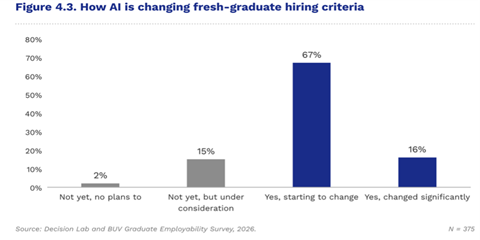
AI BEGINNING TO RESHAPE RECRUITMENT CRITERIA
Digital literacy is the only capability area in which fresh graduates meet employers’ expectations, according to a new report. Yet, it is also the standard rising fastest, as businesses increasingly expect new hires to use AI effectively in the workplace. Some 83 per cent of employers say AI has changed, or is beginning to change, their hiring criteria, while 94 per cent report higher expectations for digital and AI capabilities than they had two to three years ago.

INFRASTRUCTURE / CONSTRUCTION / LOGISTIC / PORT
ĐÀ NẴNG GREEN-LIGHTS US$105 MILLION THAI DEVELOPMENT DEAL
The central city has approved an investment proposal by Thailand’s WHA Group to develop infrastructure for the 400ha WHA Đà Nẵng Industrial Park project on two communes of Thăng Bình and Đồng Dương, with an investment of more than VNĐ2.7 trillion (US$105 million). The city said it approved WHA Industrial Development International's status as an investor in the project, which is expected to take place between 2027 and 2034.

VIETNAM ECONOMY INVESTMENT
MOBILE PHONE EXPORTS RISE 20% TO $51.8 BILLION IN FIRST NINE MONTHS
Exports of mobile phones and components rose 20 per cent year-on-year to nearly US$51.8 billion in the first nine months of 2026, with China, the US and Republic of Korea accounting for more than half of the total. Shipments to the three markets reached a combined $26.18 billion, or 50.6 per cent of total exports of the product group during the period, according to data from the Vietnam Department of Customs under the Ministry of Finance.

VIETNAM ECONOMY INVESTMENT
FRUIT AND VEGETABLE EXPORTS POISED TO HIT $10 BILLION IN 2026
Fruit and vegetable exports are on track to reach nearly US$10 billion in 2026, after rising 19.9 per cent year on year to nearly US$7.4 billion in the first nine months, driven by strong seasonal demand and abundant tropical fruit supplies. The Ministry of Agriculture and Environment said the growth reflected stronger international demand for fresh produce and processed agricultural products.
GARMENT / TEXTILE
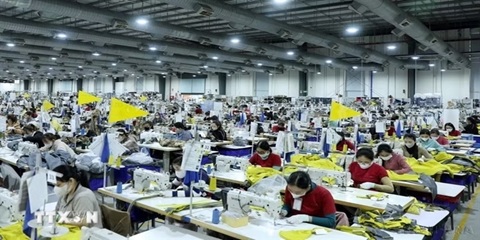
TEXTILE EXPORTS FACE DUAL CHALLENGES OF SUSTAINING ORDERS AND BOOSTING EFFICIENCY AMID GROWING COMPETITION
Data shows that the textile and garment sector maintained its growth momentum in the first nine months of this year. The industry's total export turnover reached an estimated US$35.721 billion in the first nine months of this year, up 3.3 per cent year-on-year. Despite posting encouraging export figures, Vietnamese textile and garment enterprises continue to navigate unpredictable market variables.
Events Sponsors






















