Want to be in the loop?
subscribe to
our notification
Business News
SEAFOOD EXPORT GROWTH CONTINUES
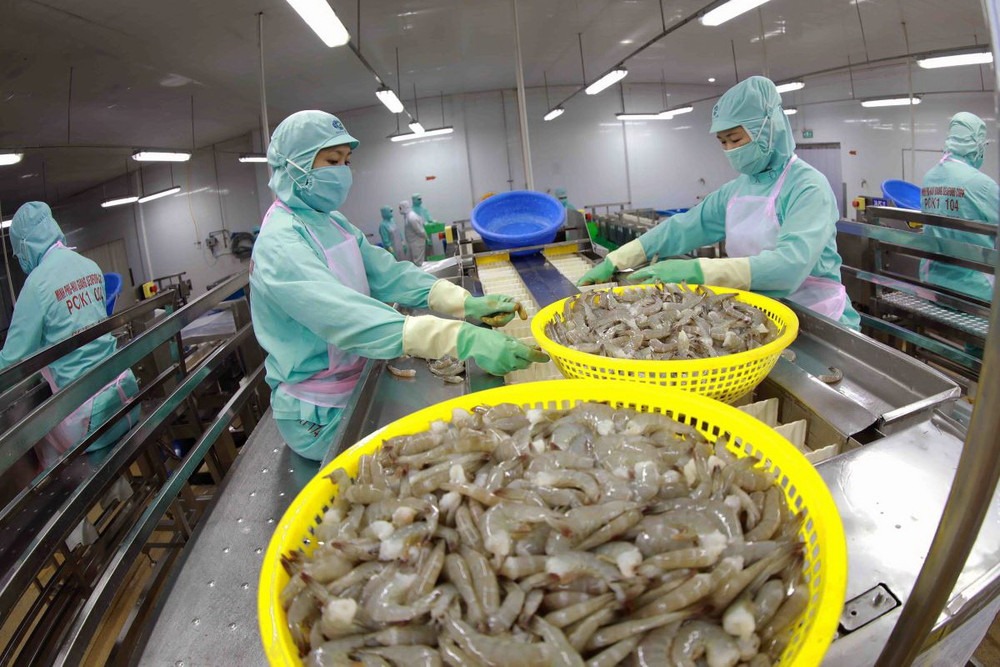
Workers process seafood at a facility in Vietnam - PHOTO: VNA
HCMC – Vietnam’s seafood export revenue in 2026 could rise by around US$1 billion from the 2025 level of approximately US$11.3 billion if current growth is sustained and bottlenecks are addressed, according to the Vietnam Association of Seafood Exporters and Producers (VASEP).
From the beginning of 2026 to date, aquaculture has recorded favorable conditions, with seafood export value estimated at nearly US$4 billion, up 11.9% year-on-year. In April alone, exports reached an estimated US$947.8 million, bringing the four-month total to US$3.59 billion.
According to the Ministry of Agriculture and Environment, total seafood output in the first four months of 2026 was estimated at over three million tons, up 3.1% against the same period last year. Of this, fish output grew 2.5% to 2.2 million tons, while shrimp output totaled 368,600 tons, up 6.6%. Aquaculture production was estimated at nearly 1.8 million tons, up 5.2%, while capture output edged up 0.1% to nearly 1.3 million tons.
In April, total seafood output was estimated at 831,700 tons, up 2.8% year-on-year, including 471,600 tons from aquaculture, up 4.8%, and 360,100 tons from capture, up 0.2%.
China, Japan and the U.S. remained Vietnam’s three largest seafood export markets, accounting for 26.7%, 13.8% and 13% of total exports, respectively. Export value to China rose 52.3% year-on-year in the first four months, while shipments to Japan increased 1.8% and exports to the U.S. declined 7.4%.
Among the country’s top 15 seafood export markets, China posted the highest growth, while the U.S. recorded the only decline. Pangasius exports fell by around 6%, while most other product groups maintained growth.
VASEP said the U.S. market declined due to policy pressures and trade barriers, including investigations related to subsidies, labor and other trade issues, particularly affecting shrimp exports. In Europe, stricter requirements on traceability, environmental standards and social responsibility, along with the continued application of the yellow card warning over illegal, unreported and unregulated (IUU) fishing, have added compliance requirements.
Domestically, seafood processors reported rising compliance costs, including the need to invest in separate wastewater treatment systems even when located in industrial zones.
VASEP said measures to support export growth in 2026 include improving the business environment, reducing compliance costs and addressing regulatory obstacles. Increased dialogue between regulators and businesses is also needed to respond to changes in international markets.
Source: The Saigon Times
Related News

INFRASTRUCTURE / CONSTRUCTION / LOGISTIC / PORT
VIỆT NAM-CAMBODIA TRADE GATHERS PACE TOWARDS $20 BILLION TARGET
Trade between Việt Nam and Cambodia continues to grow, remaining a bright spot and a key pillar of bilateral cooperation as the two countries aim to raise two-way trade to US$20 billion in the coming years. After setting a record of more than $11.3 billion last year, bilateral trade reached about $8.7 billion in the first eight months of this year, up 8.3 per cent year on year.
TECHNOLOGY
AI BEGINNING TO RESHAPE RECRUITMENT CRITERIA
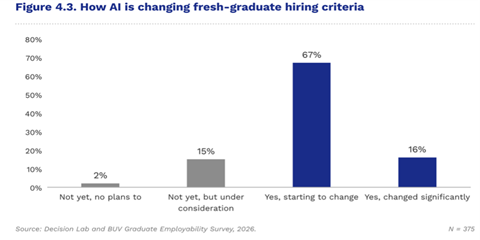
Digital literacy is the only capability area in which fresh graduates meet employers’ expectations, according to a new report. Yet, it is also the standard rising fastest, as businesses increasingly expect new hires to use AI effectively in the workplace. Some 83 per cent of employers say AI has changed, or is beginning to change, their hiring criteria, while 94 per cent report higher expectations for digital and AI capabilities than they had two to three years ago.

INFRASTRUCTURE / CONSTRUCTION / LOGISTIC / PORT
ĐÀ NẴNG GREEN-LIGHTS US$105 MILLION THAI DEVELOPMENT DEAL
The central city has approved an investment proposal by Thailand’s WHA Group to develop infrastructure for the 400ha WHA Đà Nẵng Industrial Park project on two communes of Thăng Bình and Đồng Dương, with an investment of more than VNĐ2.7 trillion (US$105 million). The city said it approved WHA Industrial Development International's status as an investor in the project, which is expected to take place between 2027 and 2034.

VIETNAM ECONOMY INVESTMENT
MOBILE PHONE EXPORTS RISE 20% TO $51.8 BILLION IN FIRST NINE MONTHS
Exports of mobile phones and components rose 20 per cent year-on-year to nearly US$51.8 billion in the first nine months of 2026, with China, the US and Republic of Korea accounting for more than half of the total. Shipments to the three markets reached a combined $26.18 billion, or 50.6 per cent of total exports of the product group during the period, according to data from the Vietnam Department of Customs under the Ministry of Finance.

VIETNAM ECONOMY INVESTMENT
FRUIT AND VEGETABLE EXPORTS POISED TO HIT $10 BILLION IN 2026
Fruit and vegetable exports are on track to reach nearly US$10 billion in 2026, after rising 19.9 per cent year on year to nearly US$7.4 billion in the first nine months, driven by strong seasonal demand and abundant tropical fruit supplies. The Ministry of Agriculture and Environment said the growth reflected stronger international demand for fresh produce and processed agricultural products.
GARMENT / TEXTILE
TEXTILE EXPORTS FACE DUAL CHALLENGES OF SUSTAINING ORDERS AND BOOSTING EFFICIENCY AMID GROWING COMPETITION
Data shows that the textile and garment sector maintained its growth momentum in the first nine months of this year. The industry's total export turnover reached an estimated US$35.721 billion in the first nine months of this year, up 3.3 per cent year-on-year. Despite posting encouraging export figures, Vietnamese textile and garment enterprises continue to navigate unpredictable market variables.
Events Sponsors






















