Want to be in the loop?
subscribe to
our notification
Business News
SEAPORTS FACE CHALLENGING FORECASTS
Despite reaching better business performance in 2021 so far compared to a problem-strewn previous year, foreign-invested joint venture seaports are facing challenges related to full capacity and container attraction.
Shipping giant Vietnam Maritime Corporation (VIMC) last week held its first-half review meeting, with positive developments and potential challenges in the seaport segment being the key points discussed.
CEO Nguyen Canh Tinh told VIR, “Most seaports reported encouraging results, with some having higher business results compared to the same period last year – and some even surpassed the yearly targets.”
According to VIMC’s statistics, Cai Mep International Terminal (CMIT), and SP-SSA International Terminal (SSIT) have been making profits since late 2020. Between January and June, CMIT reported a six-month profit of $3.25 million, while SSIT made $5.39 million and witnessed a 96.75 per cent on-year rise in revenues.
Moreover, the former’s container throughput rose 14.11 per cent, while the latter saw an on-year increase of 300 per cent in container throughput, surpassing the yearly target by nearly 14 per cent.
Located in the Cai Mep-Thi Vai port area of the southern province of Ba Ria-Vung Tau, CMIT has Denmark’s APM Terminals as a foreign stakeholder, while SSIT is a joint venture between VIMC and SSA Marine. Meanwhile, SP-PSA – a joint venture between VIMC and Singapore-based PSA, also lying in the Cai Mep-Thi Vai area – handled nearly 2.5 million tonnes of goods during the six-month span, up nearly 33 per cent on-year, and meeting 62.66 per cent of the yearly target.
While SP-PSA failed to attract container throughput, its revenue ascended 25.3 per cent from the same period last year to $5.21 million and fulfilling 61.62 per cent of the yearly target.
In the north, Cai Lan International Container Terminals was estimated to handle 504 twenty-foot equivalent units of container throughput, up 1.36 per cent on-year. Its revenue rose 6.05 per cent to on-year to $6.65 million.
Located in the northeastern province of Quang Ninh, the facility is a joint venture seaport between VIMC and US-based Carrix, the parent company of SSA Marine.
The VIMC leader attributed the positive results to economic rapid recovery in countries, especially China, the EU, and the US, leading to growing demands for consumption of goods and materials.
Moreover, the dry cargo ship market in the first half saw improvements. The Baltic Dry Index hit 3,267 in mid-June, up nearly 3,000 on-year and reaching the highest level since 2016.
What is more, the global container vessel market continues to be bustling, while import-export turnover rose over 30 per cent on-year.
With business improvements of joint-venture seaports, VIMC reported the total volume of goods and commodities via its ports at 67.95 million tonnes during the first half, up 24.5 per cent on-year, and meeting 60 per cent of the yearly target.
Between January and June, Vietnam’s total volume of goods through seaports in Vietnam in the first six months of 2021 was estimated at 363 million tonnes, up 7 per cent on-year. Container throughput strongly rose with over nine million tonnes, up 24 per cent, with seaports in the northern port city of Haiphong, Ho Chi Minh City, and Ba Ria-Vung Tau being among the biggest contributors.
Despite the improvements, joint-venture seaports and others are facing barriers to growth. VIMC admitted that the growth rate of seaports remains lower than regional peers. Saigon Port’s container market share is just 1.8 per cent of the region; meanwhile, Haiphong port is yet to develop new services.
Among such seaports, SP-PSA is yet to attract container vessels in spite of strong growth of 39 per cent in Ba Ria-Vung Tau, and many others in the Cai Mep-Thi Vai port area operate at full capacity, thus possibly making it hard to attract more goods.
Worse still, IT application at port operations remains slow, failing to meet new trends and lagging behind their rivals like Saigon Newport and Gemadept.
Industry insiders forecast that the shipping market in the second half of 2021 will continue to develop positively as the World Bank, the International Monetary Fund, and the Organisation for Economic Co-operation and Development have raised their economic growth forecasts globally.
In addition, trade by means of the seas in 2021 is also forecast to undergo more positive growth than in the previous year, with containers projected to rise 6 per cent, dry commodities 4 per cent, and oil products at 7 per cent.
Source: VIR
Related News
MEMBER CORNER / PROMOTIONS
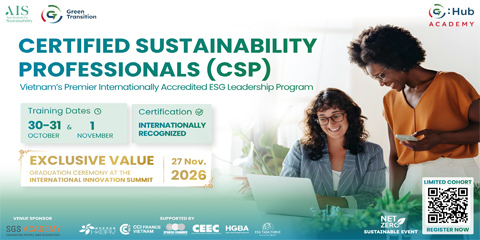
HCMC | CERTIFIED SUSTAINABILITY PROFESSIONAL (CSP) TRAINING | REGISTRATION OPEN
As sustainability becomes deeply embedded in corporate strategy and supply-chain operations across Vietnam, Hong Kong Business Association Vietnam is pleased to endorse the upcoming Certified Sustainability Professional (CSP) training program by the Asia Institute for Sustainability (AIS) - a premier internationally recognized ESG credential in Vietnam.
VIETNAM ECONOMY INVESTMENT
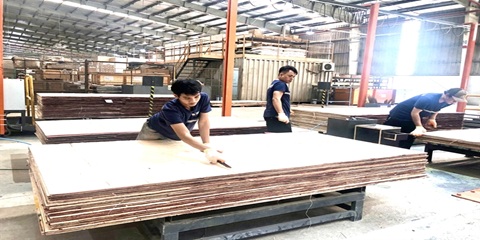
HCM CITY SAYS HOW IT PLANS TO ACHIEVE 10-11% ANNUAL EXPORT GROWTH FOR REST OF DECADE
The southern economic hub aims to strengthen its role as the country’s largest import-export centre while developing into a regional transhipment centre in Southeast Asia, supported by green and digital transformation and a circular economy. HCM City has outlined measures to expand production capacity, cut logistics costs, diversify export markets, and help businesses meet increasingly stringent international standards as it targets average annual export growth of 10-11 per cent through 2030.
VIETNAM ECONOMY INVESTMENT
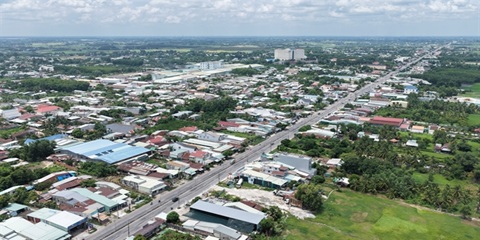
HCM CITY LEADS ECONOMIC RESTRUCTURING IN SOUTHEAST REGION
According to Associate Professor, Dr Vũ Tuấn Hưng, director of the Institute of Social Sciences of the Southern Region, the Southeast is a strategically important socio-economic space in Việt Nam’s development given its advantages in location, industry, trade, services, logistics, science and technology, urbanisation and human resources.
TECHNOLOGY
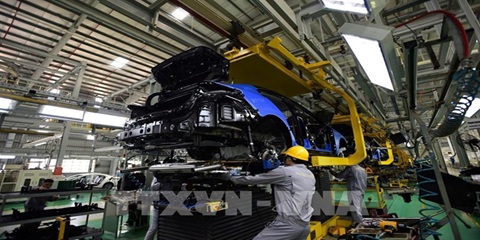
DIGITAL TRANSFORMATION TURNED INTO PRACTICAL TOOLS FOR PEOPLE, BUSINESSES
Việt Nam is moving its digital transformation agenda beyond policy frameworks and individual technology platforms towards practical applications that address everyday needs, as authorities seek measurable outcomes from science, technology and innovation. Under Politburo Resolution No. 57-NQ/TW issued on December 22, 2024, the implementation is increasingly shifting from simply completing assigned tasks towards developing concrete products and services for citizens and businesses.
TECHNOLOGY
APPLYING TECHNOLOGY FOR ECONOMIC TRANSFORMATION
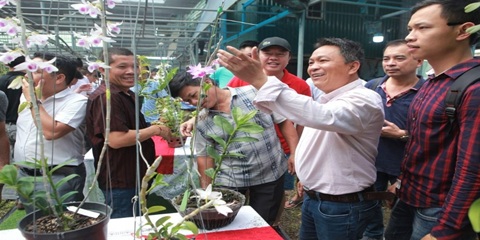
Having completed its new rural development program, Hanoi is shifting its focus toward improving development quality and building smart, sustainable rural areas. The transformation of Dong La orchid-growing village in An Khanh, a western commune of Hanoi, shows how digital technology is becoming a driver of production, market expansion, and higher incomes for local residents.
MEMBER CORNER / PROMOTIONS
VIGLACERA HONORED AS THE "LEADING GREEN INDUSTRIAL REAL ESTATE DEVELOPER 2026"
Organized by the Vietnam Investment Review, this prestigious awards program recognizes industry pioneers advancing eco-industrial parks, clean energy transition, and rigorous ESG standards. Outperforming competitors through a rigorous evaluation, Viglacera Corporation – JSC proudly ranked among the Top 5 highest-positioned enterprises in the Leading Green Industrial Real Estate Developers 2026 category, reinforcing its premier position in Vietnam’s industrial real estate sector.
Events Sponsors






















