Want to be in the loop?
subscribe to
our notification
Business News
SIGNIFICANT IMPROVEMENTS IN ENVIRONMENTAL MANAGEMENT QUALITY
Vietnam's commitment to green growth is yielding significant results, shown by improvements in environmental management. The average provincial green index (PGI) across Vietnam’s provinces and cities rose by 3.9 points, from 21.00 in 2023 to 25.39 in 2024 - a 17% increase in just one year.
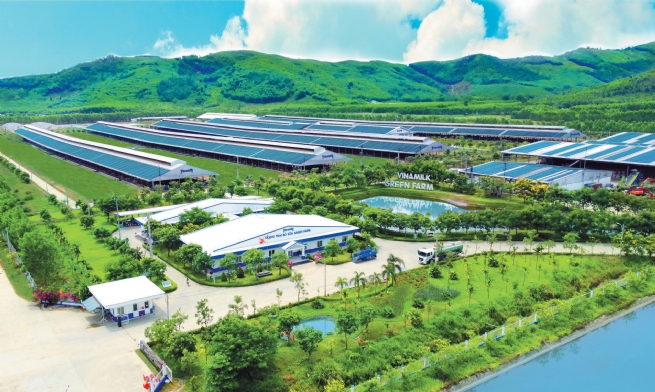
Many companies are actively working to develop a sustainable ecosystem
The PGI 2024 results showed that Hai Phong ranked first overall, achieving outstanding scores in all four sub-indices with a total of 29 points. It was followed by Vinh Long (28.16 points), Ha Nam (28.04 points), Bac Ninh (27.78 points) and Binh Duong (27.64 points).
Tracking the level of improvement
The Provincial Green Index (PGI) is coordinated by the Vietnam Chamber of Commerce and Industry (VCCI), in partnership with the U.S. Agency for International Development (USAID) and private partners, to assess the role of environmental protection within Vietnam’s development strategy. Developed and refined over the past six years, the PGI, like the PCI, gathers business perceptions and conveys the collective voice of the business community regarding the quality of environmental management to authorities at all levels.
According to Mr. Dau Anh Tuan, Deputy General Secretary of VCCI and Director of the PGI Initiative Project, a locality is considered to have good environmental management quality when it makes efforts to prevent and minimize pollution and the negative impacts of climate change (subindex 1); implements regulations and reasonable measures to ensure compliance with environmental laws without imposing a heavy burden on businesses (subindex 2); promotes and widely shares green practices, including green purchasing (subindex 3); and encourages the greening of production and business models through specific policies and support programs (subindex 4).
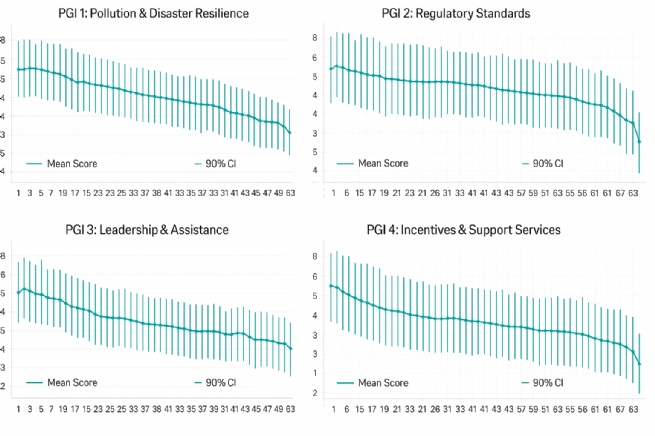
The results of PGI 2024 showed that the median score of provinces and cities increased from 21.9 points in 2023 to 24.9 points this year. Notably, all 63 provinces and cities in this year’s PGI ranking showed improvement across all four subindices compared to 2023, revealing two significant trends. The greatest improvements were in subindex 4, which measures incentives and support services (up 1.3 points), and subindex 2, which covers regulatory standards (up 1.14 points). Subindex 3, related to leadership-assistance, also increased by nearly 1 point, while the smallest improvement, 0.15 points, was in the subindex for minimizing pollution and preventing natural disasters and climate change.
The evaluation report showed that the implementation of environmental regulations at the provincial level is being strengthened, resulting in higher levels of environmental compliance among enterprises. In subindex 1, 59% of enterprises reported good environmental quality, up from 57% in 2023; 31% of businesses noticed a decrease in pollution, compared to 29% last year; and 56% said pollution is no longer a problem - an increase of 11 percentage points from 2023. In subindex 2, the tightening of enforcement is evident: in 2024, 53% of enterprises were inspected by environmental authorities, up from 46% the previous year; 81% said localities strictly sanctioned environmental violations, an increase of nearly 6.9 percentage points; and 78% of enterprises agreed that local authorities acted promptly to address pollution issues, up 7.3 percentage points.
PGI 2024 data, along with previous evidence, showed that tightening regulations is a strong motivation for promoting green upgrades, especially among businesses targeting the domestic market. In subindex 3, 20% of businesses say that legal requirements are the main reason for their green upgrades, up from 14.3% in 2023. Consequently, improved enforcement is linked to 49% of enterprises upgrading green practices (subindex 3) and 36% operating in the green industry (subindex 4), increases of 10 and 5 percentage points respectively compared to previous benchmarks.
Unofficial costs and environmental pressure on businesses
According to the PGI 2024 report, as the number of inspections and the strictness of regulations increased, businesses expressed greater frustration with procedural burdens and the fairness of inspections and related activities. In 2023, only 5% of enterprises believed that environmental inspection officers imposed excessive regulations, but this figure more than doubled to 11.5% in 2024. Only 1.1% of enterprises reported coordination between inspection teams from different agencies to reduce procedural burdens, a slight decrease from the previous year. About a quarter of enterprises considered the inspections fair based on criteria such as the validity of the issues raised, detection of violations, sanction decisions and fine levels, an increase of 5 percentage points from the low of 30% in 2023.
More alarmingly, the percentage of enterprises reporting unofficial fees during inspections and environmental checks has more than doubled: 50% of businesses nationwide confirmed paying such fees in 2024, compared to only 22% the previous year. Therefore, although inspection activities have played an important role, much effort is still needed to convince businesses that inspections are necessary by improving the quality of procedures and regulations that businesses must follow.
Vietnam's economic growth has reached a critical turning point. Despite impressive achievements in improving the national average ranking, these gains are threatened by rising environmental issues and natural disasters that damage infrastructure, disrupt production and business activities, and jeopardize people's livelihoods. The report emphasized the urgent need for Vietnam to establish a robust management system enabling policymakers to effectively address these challenges while balancing the convenience and competitiveness of the business environment with controlling pollution and climate change, failing which sustainable economic development could be at risk in the long term.
Source: VCCI
Related News

CHARITY / EXHIBITION / OTHER EVENTS
INVESTMENT OPPORTUNITIES IN CA MAU PROVINCE: 96 PROJECTS AND 20 STRATEGIC PROJECTS
We are pleased to share with you information on investment projects currently seeking investors in Ca Mau Province. Should your esteemed company or association be interested, we kindly invite you to review the project information and complete the registration form via the links provided. The Ho Chi Minh City Investment and Trade Promotion Centre (ITPC) will consolidate the expressions of interest and facilitate connections with the leadership of Ca Mau Province at a meeting tentatively scheduled for 13 November 2026 in Ho Chi Minh City.
MEMBER CORNER / PROMOTIONS
BẰNG KIỀU LIVESHOW - A SYMPHONY OF LOVE UNDER THE GOLDEN GLOW
A masterclass in live music that takes the audience on a soulful journey through immortal love songs, guided by the peerless artistry and emotive storytelling of renowned singer Bằng Kiều. The highlight of the night is his seamless musical chemistry with special guest Triệu Hồng Ngọc, promising passionate and deeply resonant duets inside the magnificent Grand Ballroom.
INFRASTRUCTURE / CONSTRUCTION / LOGISTIC / PORT
ĐÀ NẴNG GREEN-LIGHTS US$105 MILLION THAI DEVELOPMENT DEAL
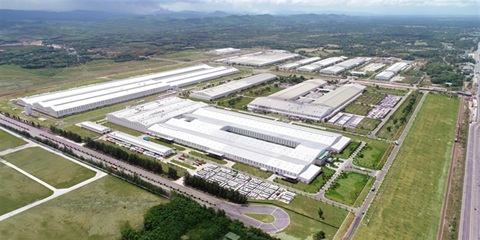
The central city has approved an investment proposal by Thailand’s WHA Group to develop infrastructure for the 400ha WHA Đà Nẵng Industrial Park project on two communes of Thăng Bình and Đồng Dương, with an investment of more than VNĐ2.7 trillion (US$105 million). The city said it approved WHA Industrial Development International's status as an investor in the project, which is expected to take place between 2027 and 2034.
VIETNAM ECONOMY INVESTMENT
MOBILE PHONE EXPORTS RISE 20% TO $51.8 BILLION IN FIRST NINE MONTHS
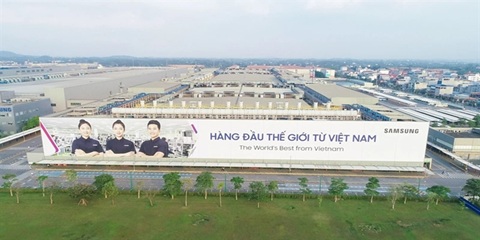
Exports of mobile phones and components rose 20 per cent year-on-year to nearly US$51.8 billion in the first nine months of 2026, with China, the US and Republic of Korea accounting for more than half of the total. Shipments to the three markets reached a combined $26.18 billion, or 50.6 per cent of total exports of the product group during the period, according to data from the Vietnam Department of Customs under the Ministry of Finance.

INFRASTRUCTURE / CONSTRUCTION / LOGISTIC / PORT
VIỆT NAM-CAMBODIA TRADE GATHERS PACE TOWARDS $20 BILLION TARGET
Trade between Việt Nam and Cambodia continues to grow, remaining a bright spot and a key pillar of bilateral cooperation as the two countries aim to raise two-way trade to US$20 billion in the coming years. After setting a record of more than $11.3 billion last year, bilateral trade reached about $8.7 billion in the first eight months of this year, up 8.3 per cent year on year.
VIETNAM ECONOMY INVESTMENT
FRUIT AND VEGETABLE EXPORTS POISED TO HIT $10 BILLION IN 2026
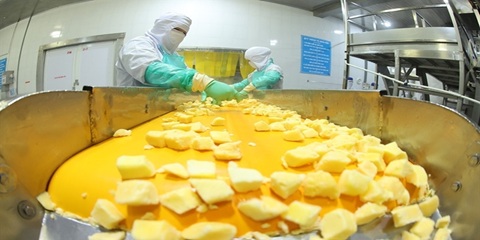
Fruit and vegetable exports are on track to reach nearly US$10 billion in 2026, after rising 19.9 per cent year on year to nearly US$7.4 billion in the first nine months, driven by strong seasonal demand and abundant tropical fruit supplies. The Ministry of Agriculture and Environment said the growth reflected stronger international demand for fresh produce and processed agricultural products.
Events Sponsors






















