Want to be in the loop?
subscribe to
our notification
Business News
START-UPS EMBRACE LOGISTICS SECTOR
The logistics sector has been the bottleneck for Việt Nam’s economic development, but offers plentiful opportunities for local startup companies with the application of technologies.
In a report on the Vietnamese logistics market released by the business data and information provider StoxPlus, the percentage of logistics cost over the nation’s total gross domestic product (GDP) is 20.8 per cent, much higher than the world’s average rate of 10-11 per cent.
Also in the report, the number of vehicles in Việt Nam increases by 10 per cent each year while the development of transport infrastructure and facilities grows by just 3-4 per cent per year. The area of land used for transportation rises only 1 per cent, while the total area for parking lots meets just a small part of demand.
According to Chief Executive Officer of Abivin Joint Stock Company, Phạm Nam Long, inappropriate urban planning and underdeveloped transportation infrastructure are among the reasons causing the logistics sector to be the bottleneck of the Vietnamese economy.
Local companies are not aware of logistics activities and they have not met the requirement of corporate governance and human resource management, Long said.
Việt Nam’s trade activities have improved recently and the number of foreign partners doing business in Việt Nam keeps increasing, thus raising demand for high-quality logistics, he added.
Startup opportunities
Despite the limitations, the logistics sector offers a wide range of opportunities for startup companies that can operate in different sectors of the rising industry.
Startup companies have the latest technologies and software to optimise their logistics procedures. Some of them have developed programmes that help customs agencies automate their procedures.
As a developing economy, Việt Nam’s logistics sector has lured the attention of foreign companies, however, local firms have their own advantages, Phạm Khánh Linh, CEO of Logivan Technologies Pte, said.
“Local logistic companies understand the market, people and local culture. Besides, the Vietnamese working style is quite different from that of foreign firms,” she said.
“The Vietnamese Government also gives more incentives to Vietnamese startups in tax, policies and other issues.”
Vietnamese startups are often small, so “our sole advantages are being able to make mistakes, quickly resolving issues and realising our new ideas,” Long said.
Technologies – the solution
In logistics, operation management is key and technology helps smooth the operation procedures for many logistics firms.
Long said technology helps companies simplify repetitive tasks, and in the case of logistics firms, they are able to operate more efficiently.
Goods transportation requires the calculation of different variables such as the size, volume and weight of the package, packaging method, the type of truck and hours of service, and those variables have a big impact on the price of transport, Linh said.
“Technology helps optimise the connection between truck drivers, sellers and consumers. And global positioning system (GPS) helps us locate the trucks and drivers,” Linh said.
But technological advancements cannot remove people from the work flow as people are still needed to resolve unexpected issues on the trip, Linh added.
In the near future, Logivan will study the Internet of Things (IoT) to scan trucks and maximise the trucks’ loading capacity, and use artificial intelligence (AI) to solve customers’ problems, she said.
Source: VNS
Related News
MEMBER CORNER / PROMOTIONS
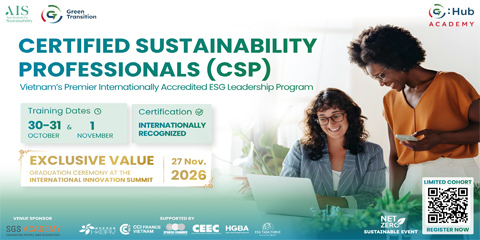
HCMC | CERTIFIED SUSTAINABILITY PROFESSIONAL (CSP) TRAINING | REGISTRATION OPEN
As sustainability becomes deeply embedded in corporate strategy and supply-chain operations across Vietnam, Hong Kong Business Association Vietnam is pleased to endorse the upcoming Certified Sustainability Professional (CSP) training program by the Asia Institute for Sustainability (AIS) - a premier internationally recognized ESG credential in Vietnam.
VIETNAM ECONOMY INVESTMENT
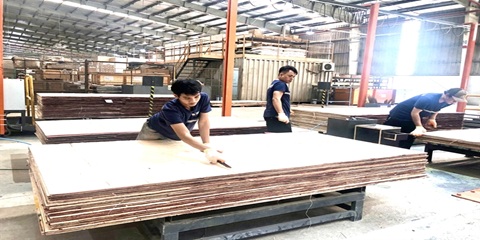
HCM CITY SAYS HOW IT PLANS TO ACHIEVE 10-11% ANNUAL EXPORT GROWTH FOR REST OF DECADE
The southern economic hub aims to strengthen its role as the country’s largest import-export centre while developing into a regional transhipment centre in Southeast Asia, supported by green and digital transformation and a circular economy. HCM City has outlined measures to expand production capacity, cut logistics costs, diversify export markets, and help businesses meet increasingly stringent international standards as it targets average annual export growth of 10-11 per cent through 2030.
VIETNAM ECONOMY INVESTMENT
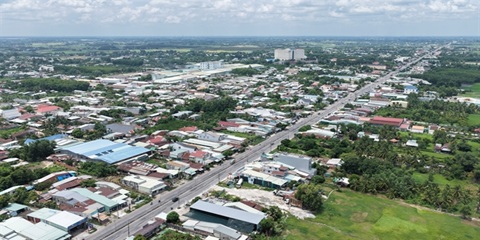
HCM CITY LEADS ECONOMIC RESTRUCTURING IN SOUTHEAST REGION
According to Associate Professor, Dr Vũ Tuấn Hưng, director of the Institute of Social Sciences of the Southern Region, the Southeast is a strategically important socio-economic space in Việt Nam’s development given its advantages in location, industry, trade, services, logistics, science and technology, urbanisation and human resources.
TECHNOLOGY
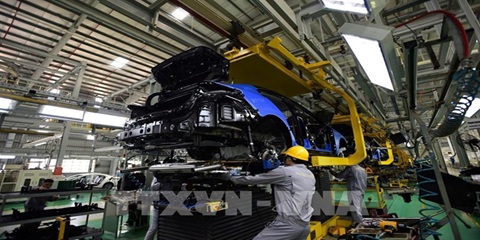
DIGITAL TRANSFORMATION TURNED INTO PRACTICAL TOOLS FOR PEOPLE, BUSINESSES
Việt Nam is moving its digital transformation agenda beyond policy frameworks and individual technology platforms towards practical applications that address everyday needs, as authorities seek measurable outcomes from science, technology and innovation. Under Politburo Resolution No. 57-NQ/TW issued on December 22, 2024, the implementation is increasingly shifting from simply completing assigned tasks towards developing concrete products and services for citizens and businesses.
TECHNOLOGY
APPLYING TECHNOLOGY FOR ECONOMIC TRANSFORMATION
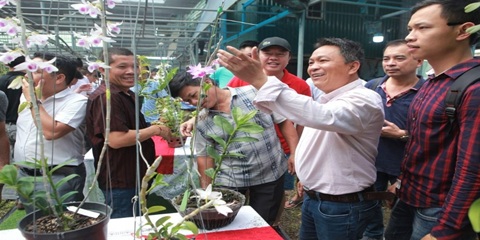
Having completed its new rural development program, Hanoi is shifting its focus toward improving development quality and building smart, sustainable rural areas. The transformation of Dong La orchid-growing village in An Khanh, a western commune of Hanoi, shows how digital technology is becoming a driver of production, market expansion, and higher incomes for local residents.

MEMBER CORNER / PROMOTIONS
VIGLACERA HONORED AS THE "LEADING GREEN INDUSTRIAL REAL ESTATE DEVELOPER 2026"
Organized by the Vietnam Investment Review, this prestigious awards program recognizes industry pioneers advancing eco-industrial parks, clean energy transition, and rigorous ESG standards. Outperforming competitors through a rigorous evaluation, Viglacera Corporation – JSC proudly ranked among the Top 5 highest-positioned enterprises in the Leading Green Industrial Real Estate Developers 2026 category, reinforcing its premier position in Vietnam’s industrial real estate sector.
Events Sponsors






















