Want to be in the loop?
subscribe to
our notification
Business News
STRONG SCOPE FOR ADDED AGRO-EXPORTS
Strong growth in the first half of 2025, along with efforts to expand export markets, is expected to help Vietnam reach an export turnover of $65 billion in agro-forestry-fishery products for the year.
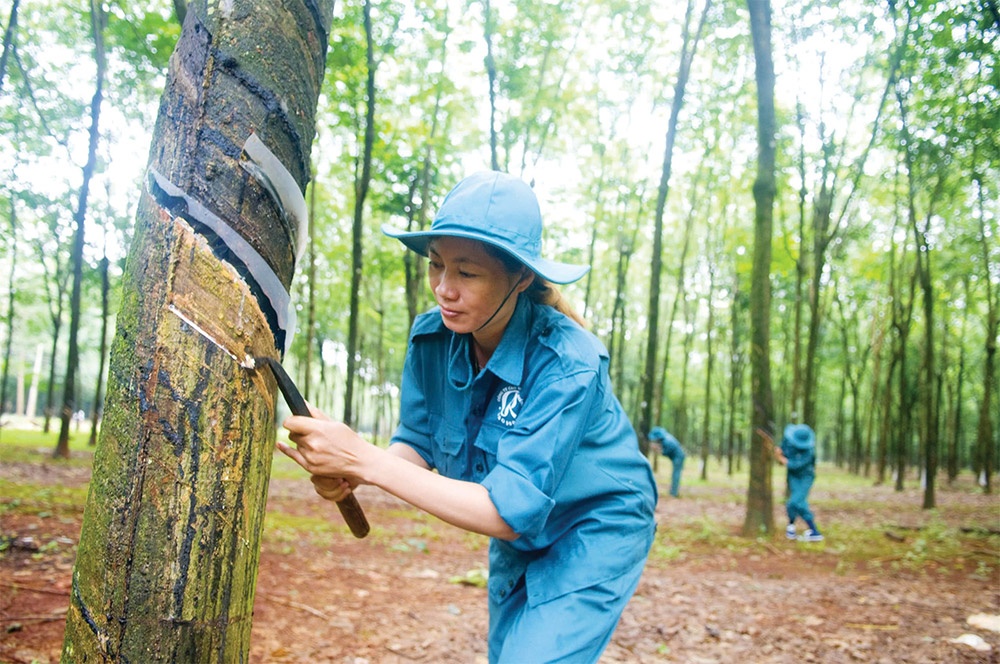
Vietnam has priorities to further open up markets for products and encouraging agricultural cooperation, Le Toan
During a business trip to Brazil in early July to attend the expanded BRICS Summit and conduct bilateral engagements, Prime Minister Pham Minh Chinh met with Brazilian Minister of Agriculture Carlos Favaro to discuss measures to boost agricultural trade between the two countries.
PM Chinh proposed that the two countries’ agriculture ministries establish a joint working group to implement high-level commitments effectively.
“Key priorities include opening up markets further for each other’s major agricultural products, encouraging on-site agricultural cooperation, developing a joint Vietnam-Brazil coffee brand to deepen collaboration in production and consumption, and establishing a food security partnership, with Vietnam supplying rice to help meet Brazil’s needs,” said PM Chinh.
Minister Favaro expressed his willingness to exchange lists of priority agricultural products and work with Vietnam to develop a roadmap for mutual market access.
Separately, during a working visit to Beijing in May, leaders of the Ministry of Agriculture and Environment (MoAE) held talks with Sun Mai Jun, director general of the China’s General Administration of Customs.
The meeting focused on removing barriers to the export of Vietnamese agro-forestry-fishery goods to China. A Chinese inspection delegation is expected to visit Vietnam shortly to assess pomelo and lemon cultivation sites – a prerequisite for signing an export protocol.
Protocols for harvested and live fishery products are also being finalised. Several expired protocols are under review for renewal to better reflect current trade realities. Notably, both sides agreed to establish a “green channel” for agricultural goods, prioritising expedited customs clearance at border gates for fresh fruits during peak harvest periods. Border gate working hours will be extended, including weekends and outside regular hours, to accommodate rising clearance demand.
Vietnam and China are also exploring the establishment of an annual ministerial-level meeting mechanism on a rotating basis, aimed at strengthening cooperation and addressing trade challenges in agro-forestry-fishery products in a timely manner.
These developments, along with the current export growth momentum, are expected to form a solid foundation for reaching this year’s export target.
In the first six months of 2025, the export value of agro-forestry-fishery products reached $33.84 billion, up 15.5 per cent on-year. The trade surplus rose to $9.83 billion, a 16.5 per cent increase, reflecting the growing competitiveness of Vietnamese agricultural goods on the global market.
Within the export structure, agricultural products accounted for $18.3 billion, up 16.8 per cent; fishery products reached $5 billion, up 14.5 per cent; forestry products earned $8.7 billion, an increase of 8.8 per cent; and livestock products hit $264 million, up 10.1 per cent.
Importantly, nine out of 11 key product groups maintained growth, including coffee, rubber, pepper, and wood products.
The MoAE has issued a plan to promote exports of agro-forestry-fishery goods, targeting an annual turnover of $65 billion by the end of this year.
To reach this goal, the ministry has proposed a series of measures, including market expansion, product diversification, and leveraging the advantages of bilateral and multilateral free trade agreements. It also called on relevant agencies to work closely with local authorities in northern border provinces to monitor, update, and forecast goods flow, ensuring efficient vehicle management, minimising congestion, and safeguarding year-end export progress.
At the same time, urgent action is required to maintain momentum in traditional markets while also diversifying export lines and developing products suitable for emerging markets. The ministry’s projections suggest export turnover in the second half of the year will reach $31.6 billion – down 4.8 per cent year-on-year, or approximately $1.6 billion – if current reciprocal tariff rates remain unchanged. In the first half, the country’s export value was estimated at $33.5 billion, with imports at $23.5 billion, up 14.3 per cent and 23.5 per cent respectively over the same period last year.
The MoAE has outlined a roadmap under which the second quarter is expected to exceed $17 billion in exports, the third quarter is forecast to reach between $14–15 billion, and the fourth quarter is projected to surpass $16 billion.
To support these objectives, the ministry has identified three key solution groups. “Firstly, the ministry will continue to stabilise supply chains and strongly develop industries with competitive advantages and growth potential. Secondly, it should take full advantage of tax relief measures and rebalance trade with the United States,” the MoAE noted. “The third group of solutions focuses on accelerating exports from Q3 to drive growth through the remainder of the year.”
Source: VIR
Related News

CHARITY / EXHIBITION / OTHER EVENTS
INVESTMENT OPPORTUNITIES IN CA MAU PROVINCE: 96 PROJECTS AND 20 STRATEGIC PROJECTS
We are pleased to share with you information on investment projects currently seeking investors in Ca Mau Province. Should your esteemed company or association be interested, we kindly invite you to review the project information and complete the registration form via the links provided. The Ho Chi Minh City Investment and Trade Promotion Centre (ITPC) will consolidate the expressions of interest and facilitate connections with the leadership of Ca Mau Province at a meeting tentatively scheduled for 13 November 2026 in Ho Chi Minh City.

MEMBER CORNER / PROMOTIONS
BẰNG KIỀU LIVESHOW - A SYMPHONY OF LOVE UNDER THE GOLDEN GLOW
A masterclass in live music that takes the audience on a soulful journey through immortal love songs, guided by the peerless artistry and emotive storytelling of renowned singer Bằng Kiều. The highlight of the night is his seamless musical chemistry with special guest Triệu Hồng Ngọc, promising passionate and deeply resonant duets inside the magnificent Grand Ballroom.

INFRASTRUCTURE / CONSTRUCTION / LOGISTIC / PORT
ĐÀ NẴNG GREEN-LIGHTS US$105 MILLION THAI DEVELOPMENT DEAL
The central city has approved an investment proposal by Thailand’s WHA Group to develop infrastructure for the 400ha WHA Đà Nẵng Industrial Park project on two communes of Thăng Bình and Đồng Dương, with an investment of more than VNĐ2.7 trillion (US$105 million). The city said it approved WHA Industrial Development International's status as an investor in the project, which is expected to take place between 2027 and 2034.

VIETNAM ECONOMY INVESTMENT
MOBILE PHONE EXPORTS RISE 20% TO $51.8 BILLION IN FIRST NINE MONTHS
Exports of mobile phones and components rose 20 per cent year-on-year to nearly US$51.8 billion in the first nine months of 2026, with China, the US and Republic of Korea accounting for more than half of the total. Shipments to the three markets reached a combined $26.18 billion, or 50.6 per cent of total exports of the product group during the period, according to data from the Vietnam Department of Customs under the Ministry of Finance.

INFRASTRUCTURE / CONSTRUCTION / LOGISTIC / PORT
VIỆT NAM-CAMBODIA TRADE GATHERS PACE TOWARDS $20 BILLION TARGET
Trade between Việt Nam and Cambodia continues to grow, remaining a bright spot and a key pillar of bilateral cooperation as the two countries aim to raise two-way trade to US$20 billion in the coming years. After setting a record of more than $11.3 billion last year, bilateral trade reached about $8.7 billion in the first eight months of this year, up 8.3 per cent year on year.

VIETNAM ECONOMY INVESTMENT
FRUIT AND VEGETABLE EXPORTS POISED TO HIT $10 BILLION IN 2026
Fruit and vegetable exports are on track to reach nearly US$10 billion in 2026, after rising 19.9 per cent year on year to nearly US$7.4 billion in the first nine months, driven by strong seasonal demand and abundant tropical fruit supplies. The Ministry of Agriculture and Environment said the growth reflected stronger international demand for fresh produce and processed agricultural products.
Events Sponsors






















