Want to be in the loop?
subscribe to
our notification
Business News
SUPPORTING INDUSTRY: LOW QUALITY, HIGH PRICE
The scale and capacity of Vietnamese supporting industry enterprises are still limited.
Data from the General Statistics Office of Việt Nam showed that the number of supporting industry enterprises nationwide currently stands at about 5,000.
Supporting industry products are sufficiently supplied domestically and exported to several markets around the world. The main export markets are Korea, Japan, China, and the US.
Currently, Vietnamese supporting industry enterprises are conscious of improving and enhancing their capabilities through training for management teams and by integrating scientific and technical advances into their production process.
Data from the Ministry of Industry and Trade (MoIT) showed that, to date, the number of businesses participating as tier-1 vendors for multinational corporations is about 100 enterprises, while tier-2 and tier-3 vendors number about 700 businesses.
Specifically, in the electronics field, Samsung currently has about 50 businesses as tier-1 vendors and about 170 businesses as tier-2 vendors.
In the field of mechanical engineering - automobiles, there are currently about 12 businesses serving as tier-1 providers to Toyota.
Moreover, the localisation rate of our supporting industry products has improved significantly in recent years.
In the fields of textiles, garments and footwear, the localisation rate stands at about 45 - 50 per cent; mechanical manufacturing is at 15 - 20 per cent; and the automobile manufacturing and assembly sector is between 5 - 20 per cent. Notably, for some vehicle products such as trucks and passenger cars, the localisation rate is even higher.
At a recent workshop on the supporting industry, Phạm Tuấn Anh, Deputy Director of the MoIT’s Industry Agency, commented that, despite the achieved results, the supporting industry still faced certain limitations.
Supporting industry enterprises currently remained in the very low value-added segment of the supply chain, he said.
Moreover, the capacity of supporting industry enterprises was still limited, and the connection between supporting industry enterprises and FDI enterprises was not strong, he added.
Additionally, according to Nguyễn Vân, Deputy Director of the Hà Nội Supporting Industry Association, domestic businesses, especially small and medium-sized enterprises lacking capital and technology, also require support in trade promotion and sales.
Consequently, the competitiveness of products is not high, many Vietnamese supporting industry products are priced high, and do not meet quality and technical compatibility requirements.
State and local management agencies, alongside industry associations, need to intervene more robustly to support businesses, using policy tools and mechanisms, to assist businesses in improving productivity and quality, thereby narrowing the gap between the requirements of multinational corporations and the capabilities of domestic manufacturing enterprises.
Regarding policy issues, Anh mentioned that the MoIT has been assigned by the Government to amend Decree No 111/2015/NĐ-CP on supporting industry development. However, the revision process has encountered many challenges due to varying perspectives of ministries and branches on business support issues.
Source: VNS
Related News

MEMBER CORNER / PROMOTIONS
KNIC ENGAGES WITH GOVERNMENT AND HIGH-TECH BUSINESS COMMUNITIES IN CHINA
From Beijing to Shandong, KN Holdings and KN Industrial City are continuing to expand their engagement with government authorities, trade promotion organizations, and high-tech business communities in China. In Beijing, the delegation met with the Center for International Economic and Technological Cooperation under the Ministry of Industry and Information Technology (MIIT), exchanging perspectives on industrial and technology cooperation between the two markets.
VIETNAM ECONOMY INVESTMENT
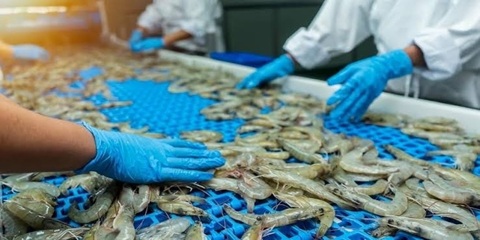
VIETNAM’S TRADE TOPS $825 BILLION BY MID-SEPTEMBER
Figures released on September 21 showed goods trade reached nearly $55 billion in the first 15 days of September alone, bringing cumulative turnover since the beginning of the year to more than $825 billion. The strong growth reflects robust trade flows, with demand for consumer goods and production inputs remaining high.

TECHNOLOGY
VIỆT NAM'S BUSINESSES MOVE TOWARDS AI AGENTS
Việt Nam’s AI landscape is entering a new phase as businesses move beyond generative AI (GenAI) tools designed to assist human users towards autonomous AI, agentic AI and AI agents that can take action with limited supervision, experts have said. The shift comes as Việt Nam seeks to accelerate science and technology, innovation and digital transformation under Politburo Resolution 57-NQ/TW, issued on December 22, 2024.
GARMENT / TEXTILE
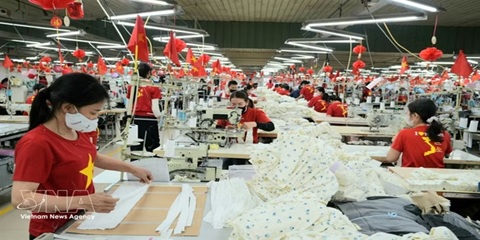
VIỆT NAM TARGETS $48 BILLION IN TEXTILE-GARMENT EXPORTS
Việt Nam’s textile and garment industry is facing both opportunities and challenges amid complex and unpredictable developments in the global market, prompting businesses to improve growth quality, optimise production costs and enhance adaptability in pursuit of an export turnover of about $48 billion this year. The target is considered an important milestone that requires concerted efforts from management agencies and the business community.
INFRASTRUCTURE / CONSTRUCTION / LOGISTIC / PORT
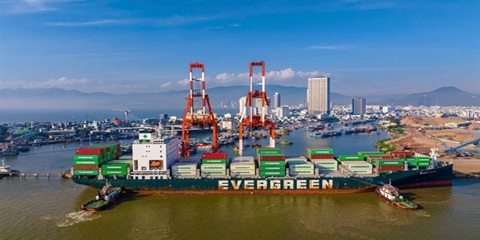
CUTTING LOGISTICS COSTS KEY TO BOOSTING EXPORTS
Reducing costs has become an increasingly urgent priority for import-export activities, particularly logistics costs, a conference in Hà Nội was told on Tuesday. According to Deputy General Director of the Ministry of Industry and Trade's Agency for Foreign Trade, Trần Thanh Hải, import-export activities has remained a bright spot for the economy in recent years, playing an important role and helping drive macroeconomic growth.
LEGAL UPDATE / POLICY
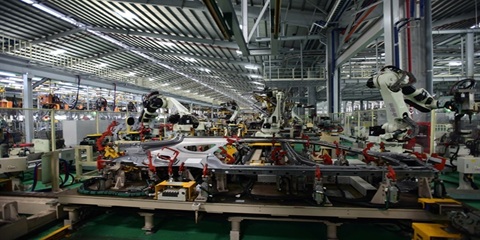
FLEXIBLE FISCAL POLICY HELPS DRIVE ECONOMIC GROWTH
Việt Nam’s fiscal policy has been implemented in a targeted expansionary manner since early 2026, helping maintain macroeconomic stability and supporting the country’s goal of achieving double-digit economic growth. According to the Ministry of Finance, State budget revenue in the first eight months of 2026 was estimated at VNĐ2.02 quadrillion (US$77.7 billion), equivalent to 80 per cent of the annual estimate and up 16 per cent year-on-year.
Events Sponsors






















