Want to be in the loop?
subscribe to
our notification
Business News
TEXTILE AND GARMENT SECTOR SEES EXPORT GROWTH
The domestic textiles and garment industry is witnessing a surge in export orders in 2025, driven by a positive economic outlook and competitive advantages, positioning the country as a key player in the global market.
Accordingly, Vietnam posted $3.19 billion in textiles and garments industry exports in January – a 1.8 per cent increase from the same period last year – driven by robust demand from major markets such as the United States, EU, and Japan.
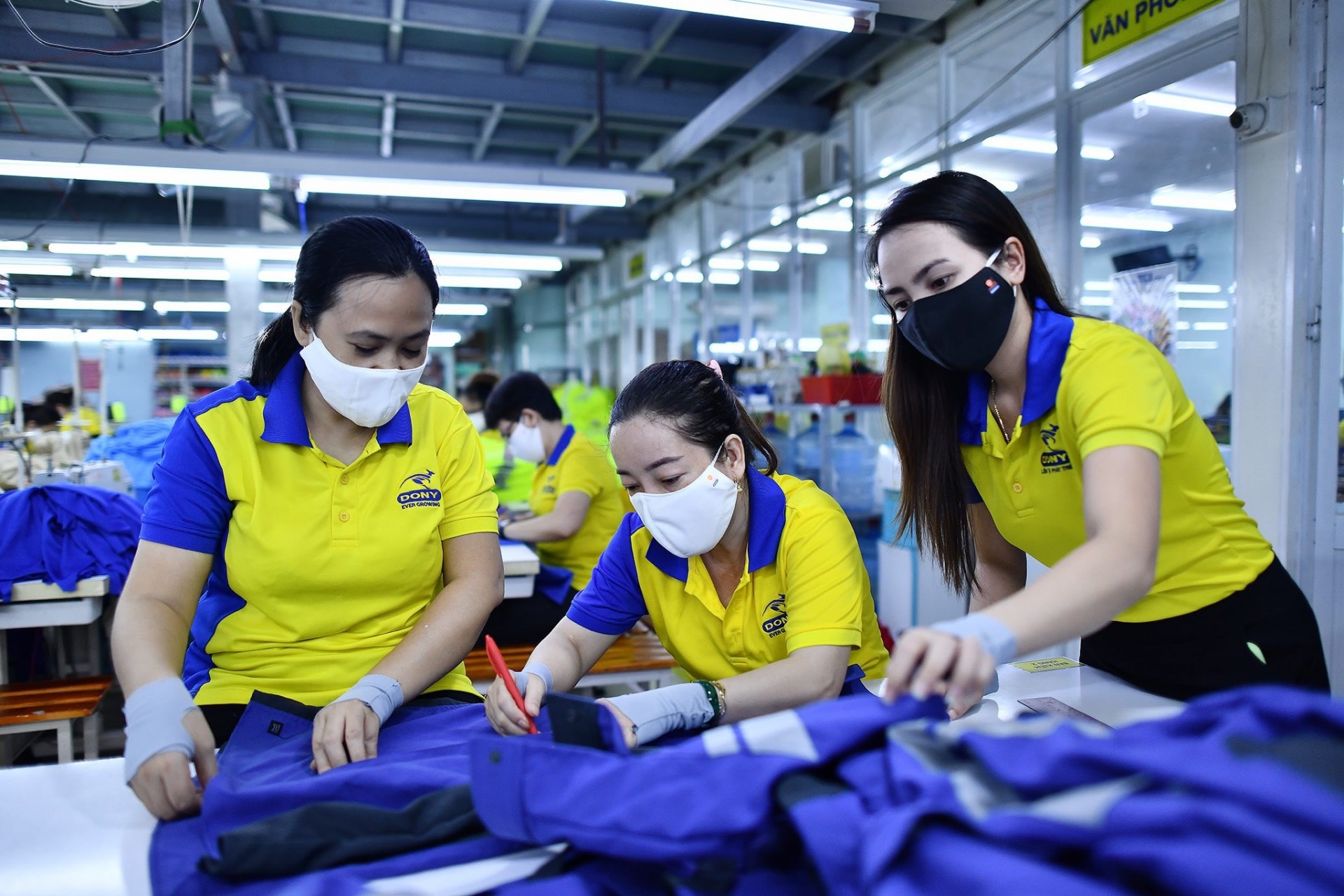
Photo: baodautu.vn
Orders have already been booked through Q2, with some extending into Q3.
“Our company has secured significant orders for Q2 of 2025, setting a strong pace for the year,” said Than Duc Viet, general director of Garment 10 Corporation.
Garment 10 is actively expanding its reach in both domestic and export markets, targeting traditional markets in the US, EU, and Japan while exploring opportunities in South Korea, China, and other Asian nations. The company underscored the sector’s potential in 2024 by posting $187.9 million in total revenue and $5.26 million in pre-tax profit, up 10 per cent and 7 per cent on-year, respectively.
TNG Investment and Trading JSC revealed that many of its factories have locked in orders through Q2, with 46 per cent of exports headed to the US and 13 per cent to the EU. Song Hong Garment JSC directs over 70 per cent of its exports to the US and plans to expand production capacity by 25 per cent in 2025.
Meanwhile, Thanh Cong Textile Investment Trading JSC has successfully filled its Q1 orders and is actively fulfilling contracts for Q2. The company plans to develop a strategic business plan aimed at enhancing value for shareholders and investors, with primary export markets in Asia accounting for 68 per cent of its exports, followed by the Americas at 27.4 per cent and Europe at 4.2 per cent in 2025.
State conglomerate Vietnam National Textile and Garment Group reported that several subsidiaries have already received orders through Q3 of this year, with additional negotiations underway. To meet rising Spring-Summer demand, many companies have ramped up production schedules to ensure timely order fulfilment, sustaining the recovery momentum that began in late 2024.
However, challenges remain. According to SSI Research, the industry is expected to return to a compound annual growth rate of 13–15 per cent in 2025 – similar to 2015–2019. Rising shipping costs are also a concern, with freight rates increasing by 3 per cent for Asia-to-US West Coast routes and 1 per cent for Asia-to-US East Coast routes, according to Eimskip, Iceland’s leading shipping and logistics company. Transportation expenses are projected to rise by 10–15 per cent on-year, which may pressure profit margins despite a forecast 15 per cent revenue growth.
In 2024, Vietnam surpassed Bangladesh to become the world’s second-largest textiles and apparel exporter, trailing only China, with total export revenues reaching $44 billion.
SSI Research notes that Vietnam’s textile and apparel industry maintains a competitive edge thanks to tariffs 10–20 per cent lower than China’s and significantly cheaper labour costs—less than half of China’s, which rose 40 per cent from 2019 to 2023.
Vietnam’s textile and apparel industry is poised for continued expansion in 2025, leveraging cost advantages, rapid production turnaround, and strong global demand while proactively managing rising logistics costs and adapting to shifting trade dynamics to solidify its position in the competitive international market.
Source: VIR
Related News

INFRASTRUCTURE / CONSTRUCTION / LOGISTIC / PORT
VIỆT NAM-CAMBODIA TRADE GATHERS PACE TOWARDS $20 BILLION TARGET
Trade between Việt Nam and Cambodia continues to grow, remaining a bright spot and a key pillar of bilateral cooperation as the two countries aim to raise two-way trade to US$20 billion in the coming years. After setting a record of more than $11.3 billion last year, bilateral trade reached about $8.7 billion in the first eight months of this year, up 8.3 per cent year on year.
TECHNOLOGY
AI BEGINNING TO RESHAPE RECRUITMENT CRITERIA
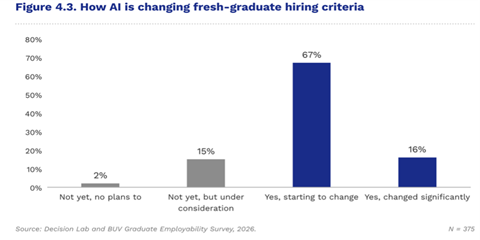
Digital literacy is the only capability area in which fresh graduates meet employers’ expectations, according to a new report. Yet, it is also the standard rising fastest, as businesses increasingly expect new hires to use AI effectively in the workplace. Some 83 per cent of employers say AI has changed, or is beginning to change, their hiring criteria, while 94 per cent report higher expectations for digital and AI capabilities than they had two to three years ago.

INFRASTRUCTURE / CONSTRUCTION / LOGISTIC / PORT
ĐÀ NẴNG GREEN-LIGHTS US$105 MILLION THAI DEVELOPMENT DEAL
The central city has approved an investment proposal by Thailand’s WHA Group to develop infrastructure for the 400ha WHA Đà Nẵng Industrial Park project on two communes of Thăng Bình and Đồng Dương, with an investment of more than VNĐ2.7 trillion (US$105 million). The city said it approved WHA Industrial Development International's status as an investor in the project, which is expected to take place between 2027 and 2034.

VIETNAM ECONOMY INVESTMENT
MOBILE PHONE EXPORTS RISE 20% TO $51.8 BILLION IN FIRST NINE MONTHS
Exports of mobile phones and components rose 20 per cent year-on-year to nearly US$51.8 billion in the first nine months of 2026, with China, the US and Republic of Korea accounting for more than half of the total. Shipments to the three markets reached a combined $26.18 billion, or 50.6 per cent of total exports of the product group during the period, according to data from the Vietnam Department of Customs under the Ministry of Finance.

VIETNAM ECONOMY INVESTMENT
FRUIT AND VEGETABLE EXPORTS POISED TO HIT $10 BILLION IN 2026
Fruit and vegetable exports are on track to reach nearly US$10 billion in 2026, after rising 19.9 per cent year on year to nearly US$7.4 billion in the first nine months, driven by strong seasonal demand and abundant tropical fruit supplies. The Ministry of Agriculture and Environment said the growth reflected stronger international demand for fresh produce and processed agricultural products.
GARMENT / TEXTILE
TEXTILE EXPORTS FACE DUAL CHALLENGES OF SUSTAINING ORDERS AND BOOSTING EFFICIENCY AMID GROWING COMPETITION
Data shows that the textile and garment sector maintained its growth momentum in the first nine months of this year. The industry's total export turnover reached an estimated US$35.721 billion in the first nine months of this year, up 3.3 per cent year-on-year. Despite posting encouraging export figures, Vietnamese textile and garment enterprises continue to navigate unpredictable market variables.
Events Sponsors






















