Want to be in the loop?
subscribe to
our notification
Business News
THREE IMPORTANT FINANCIAL POLICIES TO TAKE EFFECT IN MAY
From May 18, foreign investors can only buy treasury shares if the shares were purchased by Vietnamese credit institutions before January 1, 2021.
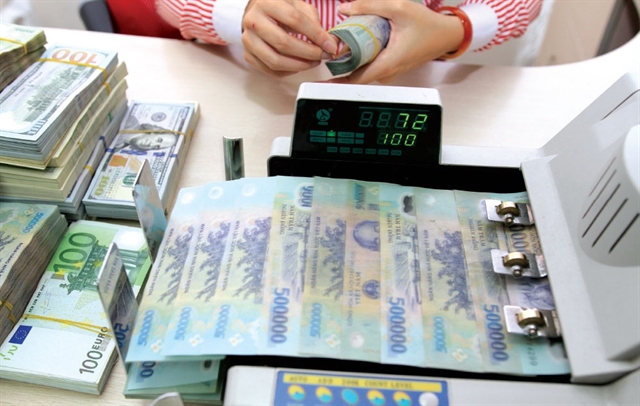
Bank notes are counted at a commercial bank. — Photo thoibaonganhang.vn
HÀ NỘI — New policies concerning foreign investors, apartment management fees in Hà Nội, and money printing orders from the State Bank, will come into effect next month.
Revised regulation on foreign investors' purchases of shares in Vietnamese credit institutions
From May 18, foreign investors can only buy treasury shares if the shares were purchased by Vietnamese credit institutions (CIs) before January 1, 2021, according to Decree 69 issued by the Government on March 18.
This regulation is in accordance with the 2019 Law on Securities, which requires public companies to cancel their treasury shares instead of keeping them to sell.
Regarding ownership ratios, the total foreign ownership in a Vietnamese commercial bank cannot exceed 30 per cent of the bank's charter capital and cannot exceed 50 per cent in non-bank CIs.
However, in special cases such as weak CIs or banks under compulsory transfer, the foreign ownership ratio can be raised to a maximum of 49 per cent according to an approved transfer plan.
If the foreign ownership exceeds the allowed limit, investors have up to six months to reduce their ownership ratio to comply with the regulations and they cannot purchase more shares until their total ownership is back within the allowed limit.
Apartment management fees in Hà Nội capped
From May 1, new fees will be applied for apartment management services in the capital city, according do Decision 33 issued by the Hà Nội People's Committee on April 21.
For apartments without elevators, the fee is from VNĐ700 to a maximum of VNĐ5,000 (US$0.2) per square metre per month. For apartments with elevators, it is from VNĐ1,200 to a maximum of VNĐ16,500 ($0.6) per square metre per month.
Premium services like saunas, swimming pools and cable TV are not included in these fees.
This framework does not apply to old apartments that have not been renovated, social housing for students, workers, and other cases where the price is agreed upon through apartment meetings or in sales/rental contracts.
New regulations on the State Bank's money printing, minting orders
Decision 06, signed by Deputy Prime Minister Hồ Đức Phớc on March 26 to regulate orders for money printing and minting between the State Bank of Việt Nam and domestic printing and minting facilities, will take effect from May 19.
According to the decision, the ordering process will be based on the technical-economic norms issued by the State Bank, the annual printing and minting plan, and the unit prices set by the authorities.
After receiving an order, the printing and minting facility will submit a pricing plan to the State Bank for review.
Based on the review, the Ministry of Finance will issue a maximum price for the order, and the State Bank will determine the unit price for each product, ensuring they do not exceed the approved maximum price as a whole.
Adjustments to unit prices must comply with legal principles on pricing, according to the decision.
The money printing and minting facilities must be legally established, with the function of printing paper money and producing metal coins in accordance with to banking regulations.
They must meet all requirements regarding financial capacity, infrastructure, technical equipment, technology, and human resources and ensure absolute security and safety throughout the money printing and minting process. — BIZHUB/VNS
Source: VNS
Related News

BANKING / FINANCE / INSURANCE / TAX
REMITTANCES TO HCM CITY RISE NEARLY 40% IN Q3
Remittances to HCM City reached more than US$2.83 billion in the third quarter of this year, up 39.5 per cent from the previous quarter and 3.6 per cent year-on-year. This was the first quarter showing positive annual growth this year, helping narrow the decline in remittance inflows over the first nine months. According to the State Bank of Vietnam (SBV)’s Regional Branch 2, remittances transferred to HCM City through credit institutions and economic organisations totalled $2.835 billion in Q3, an increase of more than $802 million from the previous quarter.
TECHNOLOGY
TECH SECTOR GROWTH OPENS UP OPPORTUNITIES FOR VIỆT NAM TO GO GLOBAL
The growth of the electronics, semiconductor and high-tech sectors worldwide is opening up a variety of opportunities for Vietnamese enterprises to integrate more deeply into the global supply chain. However, to become suppliers for these corporations, domestic enterprises must meet rigorous standards regarding quality, technology, productivity and order fulfilment capabilities.
VIETNAM ECONOMY INVESTMENT
FOREIGN INVESTORS SEEKING A SYNCHRONISED MANUFACTURING ECOSYSTEM
Instead of focusing only on land costs and incentives as usual, foreign investors are seeking a synchronised manufacturing ecosystem, from stable power supply and logistics to shared infrastructure and the convenience of completing residence procedures for experts to serve their long-term investment in the country.
MEMBER CORNER / PROMOTIONS
SENTRYSAFE FHW40200 – PROTECT YOUR VALUABLES, ENJOY PEACE OF MIND!
Looking for a reliable solution to protect your important documents, cash, and valuables from fire and water damage? Genuine SENTRYSAFE - Reliable protection for your valuables and peace of mind! Contact Sen Wai Vietnam for more information and personalized product recommendations.
PROPERTY / INDUSTRIAL ZONE
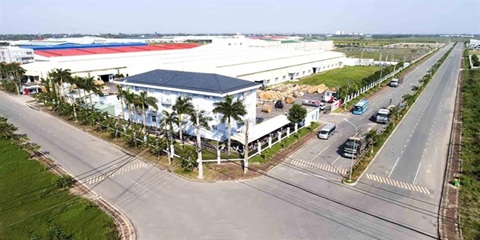
HCM CITY ATTRACTS US$5.7 BILLION INTO EXPORT PROCESSING AND INDUSTRIAL ZONES
HCM City attracted US$5.7 billion in domestic and foreign investment into its export processing and industrial zones during the first nine months of 2026. The figure exceeded the city's full-year target by 31 per cent, highlighting strong momentum in high-quality industrial investment under Resolution No.10-NQ/TW. Total investment reached 131 per cent of the 2026 target of $4.25 billion and represented a 29 per cent increase compared with the same period in 2025, according to the city's Export Processing and Industrial Zones Authority (HEPZA).
INFRASTRUCTURE / CONSTRUCTION / LOGISTIC / PORT
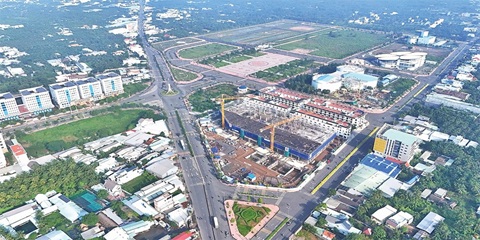
DONG THAP PROVINCE STEPS UP INDUSTRIAL EXPANSION AND INFRASTRUCTURE CONNECTIVITY
Accelerating public investment, strengthening inter-regional connectivity, and expanding industrial land are helping Dong Thap efficiently bolster competitiveness and drive economic growth. Following the 2025 merger of the former Dong Thap and Tien Giang provinces, the expanded Dong Thap province in the Mekong Delta faces mounting pressure to accelerate infrastructure development and strengthen connectivity among local economic zones, urban areas, industrial parks (IPs), and production centres.
Events Sponsors






















