Want to be in the loop?
subscribe to
our notification
Business News
TIGHTENED MONETARY POLICY FORECAST FOR Q4 2018
The State Bank of Việt Nam (SBV) will likely continue its tightened monetary policy in the remaining months of the year after its decision to strictly control lending to high risk sectors in the third quarter didn’t adversely affect the country’s economic growth, according to experts.
In contrast to some concerns that SBV’s regulations on requiring credit institutions to limit loans to high risk sectors such as real estate, securities and consumption in the third quarter of 2018 could slow down the country’s economic growth, GDP in the period still grew well, helping the indicator in the first three quarters expand 6.98 per cent, the highest growth since 2011.
With the high growth, GDP will need to increase by only 6.1 per cent in the last quarter to meet the National Assembly’s 6.7 per cent GDP growth target set for 2018. Economists forecast the target is easily achievable as the annual growth rate of the country’s GDP in the fourth quarter averaged 6.87 per cent over the past five years.
According to Ho Chi Minh City Securities Corporation (HSC), this result will help reinforce the SBV’s policy of tightening credit growth in Q3 and SBV will likely continue the policy in the remaining months of the year. In fact, although the official growth target is set at 17 per cent in 2018, the credit growth limit assigned to commercial banks was only 14 per cent.
“SBV wants to control inflation to keep it below 4 per cent while also ensuring the exchange rate is stable,” HSC analysts said, adding the main tool to achieve the targets is to actively restrict credit growth and SBV will be confident to continue its policy at least until the end of the year as the tightened policy didn’t seem to have a negative impact on Q3 GDP growth.
Though inflation has eased in recent months and is currently below 4 per cent, SBV will remain cautious as inflation normally accelerates in the last months of a year due to seasonal factors, the analysts added.
HSC analysts have also maintained its pre-tax profit growth forecast of listed banks at 45.2 per cent in 2018 though projecting the credit crunch will slightly affect the profitability of some banks.
“We are not worried about this as 2018 will be a special year for growth of the banking industry,” the analysts emphasised.
Net interest margin (NIM) and non-interest income of banks are increasing while their provision costs are increasing slowly, they explained, adding banks also have significant irregular income from sales of collateral assets and investments, and recovery of bad debts. The credit slowdown therefore won’t affect the profit of banks too much.
As for 2019, HSC forecasts pre-tax profits of listed banks will rise by 19.8 per cent against this year despite the continually tightened credit.
Source: VNS
Related News

TECHNOLOGY
TECH SECTOR GROWTH OPENS UP OPPORTUNITIES FOR VIỆT NAM TO GO GLOBAL
The growth of the electronics, semiconductor and high-tech sectors worldwide is opening up a variety of opportunities for Vietnamese enterprises to integrate more deeply into the global supply chain. However, to become suppliers for these corporations, domestic enterprises must meet rigorous standards regarding quality, technology, productivity and order fulfilment capabilities.
INFRASTRUCTURE / CONSTRUCTION / LOGISTIC / PORT
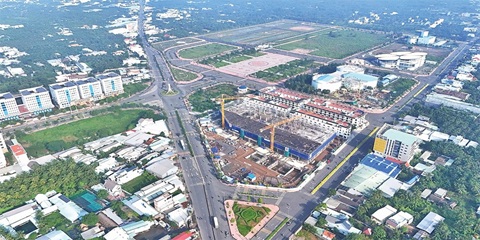
DONG THAP PROVINCE STEPS UP INDUSTRIAL EXPANSION AND INFRASTRUCTURE CONNECTIVITY
Accelerating public investment, strengthening inter-regional connectivity, and expanding industrial land are helping Dong Thap efficiently bolster competitiveness and drive economic growth. Following the 2025 merger of the former Dong Thap and Tien Giang provinces, the expanded Dong Thap province in the Mekong Delta faces mounting pressure to accelerate infrastructure development and strengthen connectivity among local economic zones, urban areas, industrial parks (IPs), and production centres.
PROPERTY / INDUSTRIAL ZONE
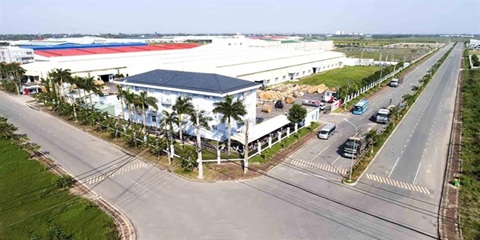
HCM CITY ATTRACTS US$5.7 BILLION INTO EXPORT PROCESSING AND INDUSTRIAL ZONES
HCM City attracted US$5.7 billion in domestic and foreign investment into its export processing and industrial zones during the first nine months of 2026. The figure exceeded the city's full-year target by 31 per cent, highlighting strong momentum in high-quality industrial investment under Resolution No.10-NQ/TW. Total investment reached 131 per cent of the 2026 target of $4.25 billion and represented a 29 per cent increase compared with the same period in 2025, according to the city's Export Processing and Industrial Zones Authority (HEPZA).

BANKING / FINANCE / INSURANCE / TAX
REMITTANCES TO HCM CITY RISE NEARLY 40% IN Q3
Remittances to HCM City reached more than US$2.83 billion in the third quarter of this year, up 39.5 per cent from the previous quarter and 3.6 per cent year-on-year. This was the first quarter showing positive annual growth this year, helping narrow the decline in remittance inflows over the first nine months. According to the State Bank of Vietnam (SBV)’s Regional Branch 2, remittances transferred to HCM City through credit institutions and economic organisations totalled $2.835 billion in Q3, an increase of more than $802 million from the previous quarter.
VIETNAM ECONOMY INVESTMENT
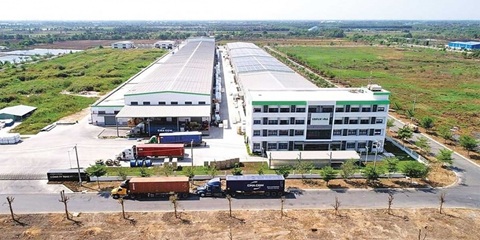
FOREIGN INVESTORS SEEKING A SYNCHRONISED MANUFACTURING ECOSYSTEM
Instead of focusing only on land costs and incentives as usual, foreign investors are seeking a synchronised manufacturing ecosystem, from stable power supply and logistics to shared infrastructure and the convenience of completing residence procedures for experts to serve their long-term investment in the country.
VIETNAM ECONOMY INVESTMENT
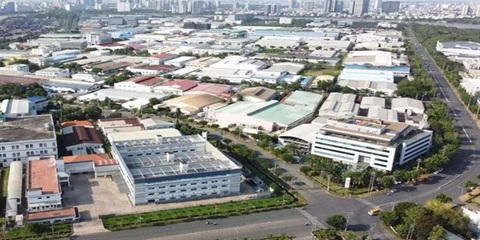
HCM CITY ADDRESSES MANUFACTURING, LAND HURDLES FOR Q4 GROWTH PUSH
HCM City is adjusting growth scenarios for lagging sectors and removing key bottlenecks in manufacturing and industrial land pricing to achieve a 13.23 per cent expansion in the fourth quarter of 2026. This sharp fourth-quarter acceleration is required to secure the city's full-year double-digit targets, following a 9.06 per cent GRDP growth recorded in the first nine months.
Events Sponsors






















