Want to be in the loop?
subscribe to
our notification
Business News
TRADE BUDGET REVENUE NEARS VND265 TRILLION, DRIVEN BY CUSTOMS REFORM
Budget revenue from Vietnam's import-export activities reached VND264.795 trillion (US$10.59 billion) in the first six months of 2026, up 18.6% from the same period last year. The result reflects not only the strong recovery in trade but also progress in institutional reform, administrative simplification, and digital transformation across the customs sector, helping reduce compliance costs, improve competitiveness, and facilitate trade for businesses.
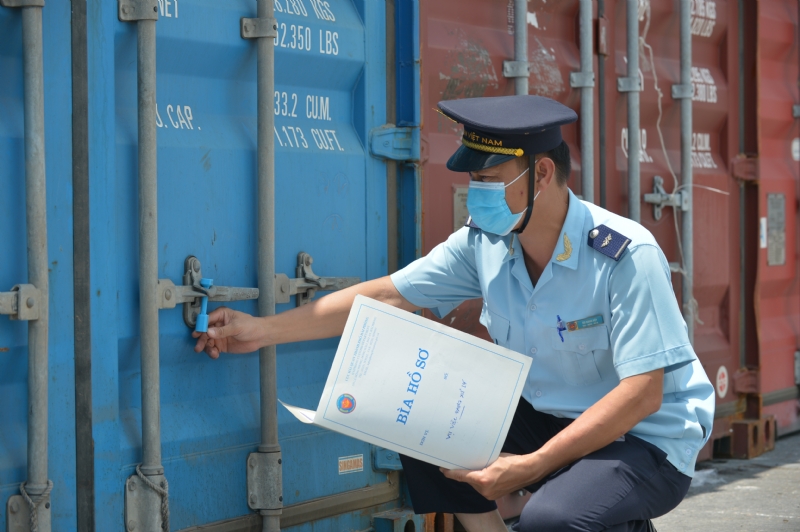
Administrative reforms help to accelerate cargo screening at import-export gateways
Reform drives revenue growth
According to the Customs Department, Vietnam's State budget revenue from import-export activities totaled VND264.795 trillion (US$10.59 billion) in the first half of 2026, reaching 58.7% of the assigned estimate, 51.2% of the annual target, and rising 18.6% from the same period in 2025.
The result came amid a recovery in global trade and continued growth in imports of raw materials and machinery for manufacturing. Beyond market factors, the Customs Department attributed the increase in part to administrative reform, management modernization, and digital transformation, which have accelerated customs clearance, improved transparency, and made customs procedures more business-friendly.
Several regional Customs Sub-Departments also reported strong revenue collection. Regional Customs Sub-Department VI collected 127.2% of its assigned target, while Regional Customs Sub-Department XIV reached 83.4% and Regional Customs Sub-Department XIII achieved 85.1%. Efforts to recover tax arrears were also strengthened, helping limit new overdue tax debt and improve budget revenue management.
Import-export activity also maintained strong growth. Vietnam's total trade turnover reached US$549.69 billion in the first six months of 2026, up 27.1% year on year. Exports totaled US$266.52 billion, up 21%, while imports reached US$283.17 billion, an increase of 33.4%.
These figures show that trade flows remained strong while also reflecting the effectiveness of the customs sector's trade facilitation measures.
Institutional improvements reduce administrative burdens
Alongside revenue collection, institutional reform and legal improvements remained among the customs sector's top priorities. During the first half of 2026, the Customs Department completed 13 proposals submitted to the Government, 38 submitted to the Ministry of Finance, and 72 at the departmental level to strengthen the legal framework for customs administration.
Among the key developments, the Government issued two decrees revising regulations on customs operating areas, anti-smuggling coordination, and administrative penalties in the customs sector. The Ministry of Finance also issued three circulars amending regulations on intellectual property rights protection, customs procedures, and customs brokerage services.
The Customs Department also continued consulting ministries, agencies, local authorities, and related organizations through workshops, seminars, and field surveys to finalize the draft law amending and supplementing the 2014 Customs Law.
Strengthening the legal framework not only meets the requirements of a changing regulatory environment but also helps create a transparent and stable business climate, giving companies greater confidence to expand production, business operations, and import-export activities.
At the same time, the customs sector continued implementing administrative reform programs under the direction of the Party and the Government.
To date, the sector has eliminated 39 administrative procedures, simplified 26 others, and removed two conditional business sectors and 14 business conditions. Reviewing and restructuring procedures through digital platforms has shortened processing times, reduced compliance costs for businesses, and improved the effectiveness of public administration. These efforts have also helped improve the investment and business environment and strengthen Vietnam's competitiveness.
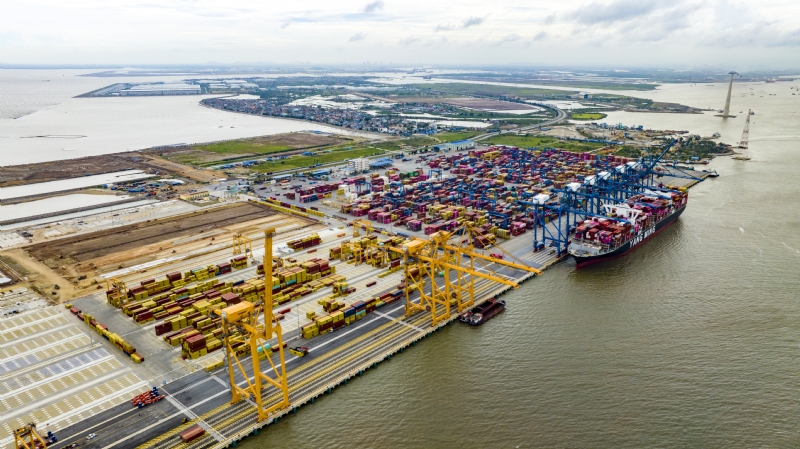
Vietnam's total trade turnover reached US$549.69 billion in the first six months of 2026
Digital transformation modernizes customs
During the first half of 2026, the Customs Department continued improving its management and supervision system to make it more modern, transparent, and consistent, while strengthening the management of product origin, intellectual property rights protection, and risk control in import-export activities.
A key initiative was the pilot launch of the centralized customs clearance model at Regional Customs Sub-Department III on June 1, 2026. After one month of operation, the Centralized Customs Clearance Team had processed 45,425 declarations. For yellow-channel declarations, customs clearance time was reduced by 12%–19% compared with the period before implementation. Initial results show that the centralized clearance model is helping standardize procedures, improve operational efficiency, and shorten customs clearance times for businesses.
The customs sector also continued developing digital and smart border gate models. Following directives from Party General Secretary and President To Lam on modernizing border gate management, the Customs Department advised the Ministry of Finance on preparing a proposal for the unified management of specialized inspections for import-export goods and cross-border transport vehicles for Government approval.
Information technology deployment also continued to support the transition to Digital Customs. The Vietnam Automated Cargo Clearance System/Vietnam Customs Intelligence Information System (VNACCS/VCIS) and its supporting platforms operated safely and continuously 24/7, ensuring uninterrupted customs clearance. Projects under Project 06, including the user registration system, connectivity with the National Population Database, and the administrative procedures processing system, have largely completed their key technical components.
During the first six months of 2026, the customs sector processed more than 11.8 million online applications. The use of artificial intelligence, particularly chatbot-based support tools, has begun improving assistance for customs officials and businesses in carrying out administrative procedures.
The results achieved in the first half of 2026 show that the customs sector is steadily moving toward a modern, transparent customs administration built on digital data. From institutional reform and administrative simplification to technology adoption and customs clearance modernization, these measures are aimed at reducing costs, shortening clearance times, and creating a more business-friendly environment. They also provide a solid foundation for meeting budget revenue targets while supporting production, business, and import-export activities during the second half of 2026.
For the second half of the year, Customs Department Director Nguyen Van Tho instructed the sector to focus on completing its priority tasks, including finalizing the amended 2014 Customs Law and accelerating the development of decrees and circulars on Digital Customs, cross-border e-commerce, specialized inspections, and smart border gates. The sector will also continue implementing measures to simplify administrative procedures and business conditions, facilitate trade, and reduce compliance costs for businesses.
Source: VCCI
Related News

INFRASTRUCTURE / CONSTRUCTION / LOGISTIC / PORT
VIỆT NAM-CAMBODIA TRADE GATHERS PACE TOWARDS $20 BILLION TARGET
Trade between Việt Nam and Cambodia continues to grow, remaining a bright spot and a key pillar of bilateral cooperation as the two countries aim to raise two-way trade to US$20 billion in the coming years. After setting a record of more than $11.3 billion last year, bilateral trade reached about $8.7 billion in the first eight months of this year, up 8.3 per cent year on year.
TECHNOLOGY
AI BEGINNING TO RESHAPE RECRUITMENT CRITERIA
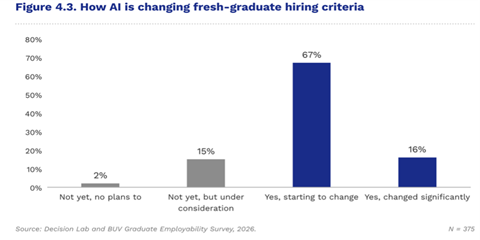
Digital literacy is the only capability area in which fresh graduates meet employers’ expectations, according to a new report. Yet, it is also the standard rising fastest, as businesses increasingly expect new hires to use AI effectively in the workplace. Some 83 per cent of employers say AI has changed, or is beginning to change, their hiring criteria, while 94 per cent report higher expectations for digital and AI capabilities than they had two to three years ago.

INFRASTRUCTURE / CONSTRUCTION / LOGISTIC / PORT
ĐÀ NẴNG GREEN-LIGHTS US$105 MILLION THAI DEVELOPMENT DEAL
The central city has approved an investment proposal by Thailand’s WHA Group to develop infrastructure for the 400ha WHA Đà Nẵng Industrial Park project on two communes of Thăng Bình and Đồng Dương, with an investment of more than VNĐ2.7 trillion (US$105 million). The city said it approved WHA Industrial Development International's status as an investor in the project, which is expected to take place between 2027 and 2034.

VIETNAM ECONOMY INVESTMENT
MOBILE PHONE EXPORTS RISE 20% TO $51.8 BILLION IN FIRST NINE MONTHS
Exports of mobile phones and components rose 20 per cent year-on-year to nearly US$51.8 billion in the first nine months of 2026, with China, the US and Republic of Korea accounting for more than half of the total. Shipments to the three markets reached a combined $26.18 billion, or 50.6 per cent of total exports of the product group during the period, according to data from the Vietnam Department of Customs under the Ministry of Finance.

VIETNAM ECONOMY INVESTMENT
FRUIT AND VEGETABLE EXPORTS POISED TO HIT $10 BILLION IN 2026
Fruit and vegetable exports are on track to reach nearly US$10 billion in 2026, after rising 19.9 per cent year on year to nearly US$7.4 billion in the first nine months, driven by strong seasonal demand and abundant tropical fruit supplies. The Ministry of Agriculture and Environment said the growth reflected stronger international demand for fresh produce and processed agricultural products.
GARMENT / TEXTILE
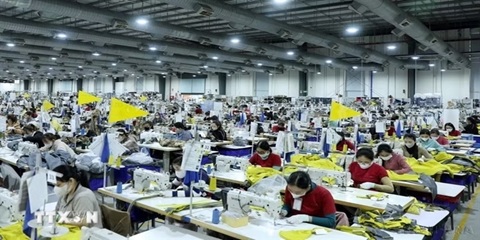
TEXTILE EXPORTS FACE DUAL CHALLENGES OF SUSTAINING ORDERS AND BOOSTING EFFICIENCY AMID GROWING COMPETITION
Data shows that the textile and garment sector maintained its growth momentum in the first nine months of this year. The industry's total export turnover reached an estimated US$35.721 billion in the first nine months of this year, up 3.3 per cent year-on-year. Despite posting encouraging export figures, Vietnamese textile and garment enterprises continue to navigate unpredictable market variables.
Events Sponsors






















