Want to be in the loop?
subscribe to
our notification
Business News
VCCI PROPOSES REMOVING DRAFT REGULATION ON LOAN INTEREST EXPENSE CAP
Management authorities should not try to restrict the thin capitalisation of domestic enterprises by applying a loan interest expense cap regulation, the Vietnam Chamber of Commerce and Industry (VCCI) said.
The Ministry of Finance (MoF) is collecting comments on a draft decree that amends and supplements Decree 132/2020/NĐ-CP on tax management for enterprises with associated transactions.
Under a written proposal sent to the MoF, the VCCI said the loan interest expense cap regulation under the draft decree will have adverse impacts on enterprises and the ability to form economic groups in the country.
According to the VCCI, the thin capitalisation means that an enterprise operates mainly on borrowing capital, which causes its ratio of loan capital to equity too high. Limiting the thin capitalisation of enterprise will help ensure financial security, and avoid large enterprises from borrowing too much and easily losing liquidity.
However, the VCCI believes that the loan interest expense cap regulation is unreasonable and causes many negative impacts on Vietnamese enterprises, especially large one, as the thin capitalisation is common and necessary in the early stage of industrialisation in developing countries.
The VCCI explained in fact, in developing countries with late industrialisation, growth motivation depends heavily on the ability to reduce product costs that is based on capital accumulation and more flexible management. Accordingly, enterprises must rely heavily on loans and the assistance of lenders to enhance corporate governance capacity and reduce costs. As financial markets not being truly transparent in late industrialisation countries, enterprises there depend more on loans than their counterparts in early industrialisation countries.
Therefore, the VCCI suggests the application of anti-thin capitalisation rule of developed countries needs to be considered more carefully in Việt Nam.
Besides, the VCCI was also concerned the loan interest expense cap regulation also negatively impacts the formation of domestic economic groups and their motivation to invest in risky fields.
According to the VCCI, normally, when a subsidiary wants to invest in a risky field, its parent company will borrow from banks and then re-lend it to the subsidiary. This is an associated transaction and is subject to the loan interest expense cap regulation.
Therefore, the VCCI requested the drafting agency to exempt the regulation for associated transactions between domestic enterprises with the same tax payment.
In addition, in the proposal sent to the MoF, the VCCI also said the regulation on loan interest expense of enterprises with associated transactions must not exceed 30 per cent of total net profit is unreasonable.
According to the VCCI, at the end of 2022 and early 2023, due to macroeconomic uncertainties, interest rates in the market increased sharply which caused interest costs of many enterprises to surge beyond 30 per cent. Enterprises still had to pay banks for the interest costs that exceeded the 30 per cent rate, and the costs were not considered a deductible expense when calculating taxes. Therefore, despite suffering large losses due to a sharp increase in interest costs paid to banks, many enterprises reported to the VCCI that they still had to pay corporate income tax to the State.
The MoF has recently proposed to amend in the direction of excluding the determination of affiliated relationships when banks do not participate in operating, controlling, contributing capital or investing in borrowed enterprises. It means enterprises may not be subject to the 30 per cent interest cost cap regulation if banks that they borrow from do not operate, control, or contribute capital in the enterprises.
The MoF is due to collect comments on the draft decree in the first quarter of 2024 before submitting it to the Government for promulgation in the third quarter of 2024.
Previously, the HCM City Real Estate Association (HoREA) also proposed that the MoF remove the 30 per cent loan interest expense cap because it is unnecessary. HoREA believes that the cap should only apply to foreign enterprises that have affiliated transactions and have not yet applied the global minimum tax.
Source: VNS
Related News

MEMBER CORNER / PROMOTIONS
KNIC ENGAGES WITH GOVERNMENT AND HIGH-TECH BUSINESS COMMUNITIES IN CHINA
From Beijing to Shandong, KN Holdings and KN Industrial City are continuing to expand their engagement with government authorities, trade promotion organizations, and high-tech business communities in China. In Beijing, the delegation met with the Center for International Economic and Technological Cooperation under the Ministry of Industry and Information Technology (MIIT), exchanging perspectives on industrial and technology cooperation between the two markets.

VIETNAM ECONOMY INVESTMENT
VIETNAM’S TRADE TOPS $825 BILLION BY MID-SEPTEMBER
Figures released on September 21 showed goods trade reached nearly $55 billion in the first 15 days of September alone, bringing cumulative turnover since the beginning of the year to more than $825 billion. The strong growth reflects robust trade flows, with demand for consumer goods and production inputs remaining high.

TECHNOLOGY
VIỆT NAM'S BUSINESSES MOVE TOWARDS AI AGENTS
Việt Nam’s AI landscape is entering a new phase as businesses move beyond generative AI (GenAI) tools designed to assist human users towards autonomous AI, agentic AI and AI agents that can take action with limited supervision, experts have said. The shift comes as Việt Nam seeks to accelerate science and technology, innovation and digital transformation under Politburo Resolution 57-NQ/TW, issued on December 22, 2024.

GARMENT / TEXTILE
VIỆT NAM TARGETS $48 BILLION IN TEXTILE-GARMENT EXPORTS
Việt Nam’s textile and garment industry is facing both opportunities and challenges amid complex and unpredictable developments in the global market, prompting businesses to improve growth quality, optimise production costs and enhance adaptability in pursuit of an export turnover of about $48 billion this year. The target is considered an important milestone that requires concerted efforts from management agencies and the business community.
INFRASTRUCTURE / CONSTRUCTION / LOGISTIC / PORT
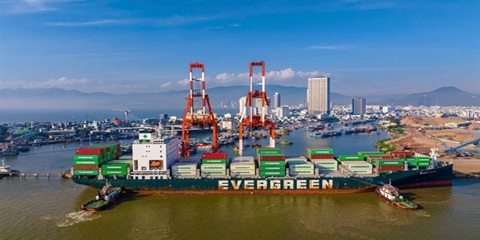
CUTTING LOGISTICS COSTS KEY TO BOOSTING EXPORTS
Reducing costs has become an increasingly urgent priority for import-export activities, particularly logistics costs, a conference in Hà Nội was told on Tuesday. According to Deputy General Director of the Ministry of Industry and Trade's Agency for Foreign Trade, Trần Thanh Hải, import-export activities has remained a bright spot for the economy in recent years, playing an important role and helping drive macroeconomic growth.

LEGAL UPDATE / POLICY
FLEXIBLE FISCAL POLICY HELPS DRIVE ECONOMIC GROWTH
Việt Nam’s fiscal policy has been implemented in a targeted expansionary manner since early 2026, helping maintain macroeconomic stability and supporting the country’s goal of achieving double-digit economic growth. According to the Ministry of Finance, State budget revenue in the first eight months of 2026 was estimated at VNĐ2.02 quadrillion (US$77.7 billion), equivalent to 80 per cent of the annual estimate and up 16 per cent year-on-year.
Events Sponsors






















