Want to be in the loop?
subscribe to
our notification
Business News
VIET NAM A POTENTIAL INVESTMENT MARKET FOR RETAILERS
Việt Nam, with a population of nearly 100 million people, is considered a potential investment market for famous retailers around the world; therefore, many foreign retailers have enhanced their investments.
According to the Ministry of Industry and Trade, Việt Nam's retail market has a scale of more than US$142 billion, 16 per cent of which comes from e-commerce. This scale is forecast to increase to $350 billion, or nearly 2.5 times higher, by 2025.
The retail based on e-commerce platforms is also growing at an exponential rate. E-commerce businesses in Việt Nam gained a revenue of $14 billion by 2022, and the revenue is expected to reach $32 billion by 2025.
These figures show the huge potential of Việt Nam's retail market for enterprises at home and abroad.
A supermarket is still considered an attractive retail option in Việt Nam, with diverse products, a seamless customer experience, and guaranteed product quality.
Data from Euromonitor shows that supermarket revenue in 2023 is estimated to reach about VNĐ110 trillion ($4.5 billion), an increase of 8.8 per cent over the previous year.
These figures confirm a significant change in consumer shopping behaviour.
Việt Nam has witnessed excitement in the domestic retail market from the first months of the year until now, when a series of big brands in the foreign retail industry has announced an increase in investment capital to this market.
Among them, MUJI - a famous retail brand for lifestyle, leather goods, and office furniture from Japan, has expanded its retail system in Hà Nội and HCM City to 11 stores.
Meanwhile, Uniqlo - another big brand from Japan, also opened its 19th store in Hà Nội, which is the fourth new store in the first half of 2023.
Additionally, in recent years, many large Thai enterprises have also evaluated Việt Nam's retail market as one of the most potential and attractive markets.
Therefore, Central Retail Group, a giant in Thailand's retail industry, has announced a schedule to increase investment capital in Việt Nam to $1.45 billion (VNĐ35 trillion) in the period 2023 - 2027, along with the goal of doubling the number of stores and supermarkets in Việt Nam to 600 in 57 out of 63 provinces and cities. This is considered the largest investment ever announced by Central Retail.
To implement those goals, this year, the company has spent about VNĐ4.1 trillion in the Việt Nam market, focusing on developing essential foods businesses, stabilising prices, and restructuring electronic stores.
Central Retail also aims to become the largest multi-channel retailer in the food industry, and the second largest investor in the shopping centre segment in Việt Nam's real estate market by 2027.
Meanwhile, local retailers still dominate the domestic market, accounting for 70 - 80 per cent of total retail sales points nationwide. There are big brands with thousands of sales points such as WinMart, Co.op Mart, and Bách Hóa Xanh.
However, foreign retailers' investment in the Việt Nam market also puts certain pressure on domestic retailers. This situation urges domestic businesses to find ways to compete with foreign rivals.
In the past few years, Vietnamese businesses expanded their retail market share strongly in the segment of supermarkets and convenience stores.
Of which, in mid-2018, Saigon Co.op acquired the entire retail system of Auchan (France) in Việt Nam. In 2019, Singapore's Shop&Go also sold its business in Việt Nam to VinCommerce.
Last year, THISO International Commerce and Services Corporation (THISO), a subsidiary of THACO Group, completed the acquisition of South Korea’s Emart Inc’s business in Việt Nam.
Along with implementing the merger and acquisition (M&A) activities with foreign brands in Việt Nam, many domestic retailers have also expanded their retail systems in the domestic market.
Notably, Vingroup's Vincom Retail system owns more than 80 shopping centres nationwide. The WinMart and WinMart+ retail chains, with more than 3,500 convenience stores, are constantly opening new sales points.
Although the market is very competitive, economic experts still believe that Vietnamese retail businesses will have a solid foothold in the domestic retail market due to the advantages of understanding Vietnamese consumers, implementing digital transformation, and restructuring human resources.
To maintain their market shares, expert Vũ Vinh Phú said that Việt Nam companies need to improve in all aspects, from training professional human resources to building modern infrastructure, meeting the needs of the digital age to continue development in the retail sector.
Retail enterprises must always link to producers of Vietnamese goods, especially agricultural and food products, to ensure stability for the input of the distribution system.
Also, according to Phú, the domestic retailers are now mostly small and medium-sized enterprises, and there is no large retail group. Therefore, a joint venture with foreign retailers is necessary.
The newly published report of Rồng Việt Securities (VDSC) predicts that the retail industry will slightly recover in the second half of 2023 and improve more clearly in 2024. Market leaders will continue to grow their market share after the slowdown.
Retailers will increasingly target the Northern regions, where modern trade channels have not yet gained substantial traction. However, they will first focus on consolidating their market share in the South before tapping into these untapped markets. Urbanisation will also play a role in shaping consumer behaviour, allowing for the expansion of modern retail networks in Tier 2 and 3 areas, according to the report.
To restore consumer demand in the last months of the year, localities are ready with promotion programmes. In Hanoi, this year's promotion programmes last longer and focus on each kind of goods according to each month's theme.
Trần Thị Lan Phương, acting director of the Hà Nội Department of Industry and Trade, said the department has received 21,000 trade promotion programmes from 4,000 businesses registered to participate, double last year's number, and continues to add more.
For example, in November, the "Promotion Month" event is deployed in the city with participants being enterprises, production, and business facilities of all economic sectors.
Also in November, the event "Hanoi Midnight Sale 2023" will attract about 200 businesses, shopping centres, supermarkets, convenience store chains, production, and business facilities.
The Ministry of Industry and Trade also said that from now until the end of the year, the ministry will direct the people's committees of cities and the departments of industry and trade to promote the consumption stimulus programme associated with stabilising the market of goods for the Lunar New Year in 2024, and organising the cultural and tourism events to both attract tourism and increase purchasing power.
Businesses also said that many policies of the Government, such as reducing value-added tax and increasing the base salary from July 1, are expected to increase consumers' purchasing power, contributing to the recovery of GDP in 2023.
The experts also believe that the State's efforts to promote consumption and the businesses' diverse business strategies are helping the business of the retail industry be better in the last months of the year.
Source: VNS
Related News

MEMBER CORNER / PROMOTIONS
KNIC ENGAGES WITH GOVERNMENT AND HIGH-TECH BUSINESS COMMUNITIES IN CHINA
From Beijing to Shandong, KN Holdings and KN Industrial City are continuing to expand their engagement with government authorities, trade promotion organizations, and high-tech business communities in China. In Beijing, the delegation met with the Center for International Economic and Technological Cooperation under the Ministry of Industry and Information Technology (MIIT), exchanging perspectives on industrial and technology cooperation between the two markets.

VIETNAM ECONOMY INVESTMENT
VIETNAM’S TRADE TOPS $825 BILLION BY MID-SEPTEMBER
Figures released on September 21 showed goods trade reached nearly $55 billion in the first 15 days of September alone, bringing cumulative turnover since the beginning of the year to more than $825 billion. The strong growth reflects robust trade flows, with demand for consumer goods and production inputs remaining high.

TECHNOLOGY
VIỆT NAM'S BUSINESSES MOVE TOWARDS AI AGENTS
Việt Nam’s AI landscape is entering a new phase as businesses move beyond generative AI (GenAI) tools designed to assist human users towards autonomous AI, agentic AI and AI agents that can take action with limited supervision, experts have said. The shift comes as Việt Nam seeks to accelerate science and technology, innovation and digital transformation under Politburo Resolution 57-NQ/TW, issued on December 22, 2024.
GARMENT / TEXTILE
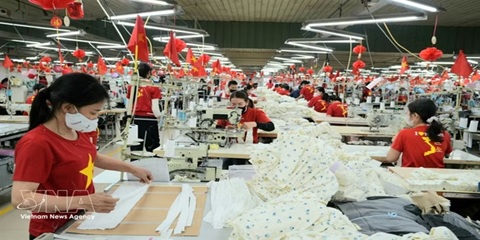
VIỆT NAM TARGETS $48 BILLION IN TEXTILE-GARMENT EXPORTS
Việt Nam’s textile and garment industry is facing both opportunities and challenges amid complex and unpredictable developments in the global market, prompting businesses to improve growth quality, optimise production costs and enhance adaptability in pursuit of an export turnover of about $48 billion this year. The target is considered an important milestone that requires concerted efforts from management agencies and the business community.
INFRASTRUCTURE / CONSTRUCTION / LOGISTIC / PORT
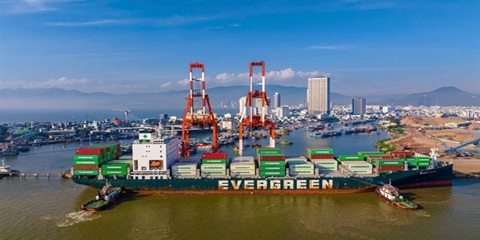
CUTTING LOGISTICS COSTS KEY TO BOOSTING EXPORTS
Reducing costs has become an increasingly urgent priority for import-export activities, particularly logistics costs, a conference in Hà Nội was told on Tuesday. According to Deputy General Director of the Ministry of Industry and Trade's Agency for Foreign Trade, Trần Thanh Hải, import-export activities has remained a bright spot for the economy in recent years, playing an important role and helping drive macroeconomic growth.
LEGAL UPDATE / POLICY
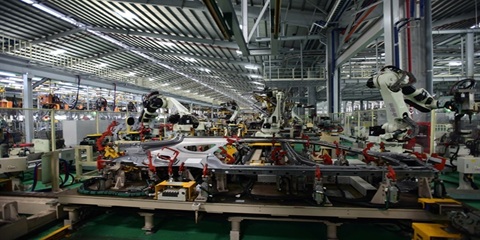
FLEXIBLE FISCAL POLICY HELPS DRIVE ECONOMIC GROWTH
Việt Nam’s fiscal policy has been implemented in a targeted expansionary manner since early 2026, helping maintain macroeconomic stability and supporting the country’s goal of achieving double-digit economic growth. According to the Ministry of Finance, State budget revenue in the first eight months of 2026 was estimated at VNĐ2.02 quadrillion (US$77.7 billion), equivalent to 80 per cent of the annual estimate and up 16 per cent year-on-year.
Events Sponsors






















