Want to be in the loop?
subscribe to
our notification
Business News
VIỆT NAM ENJOYS POSITIVE EXPORT GROWTH IN NEW MARKETS
By the end of April, Việt Nam’s total export turnover reached US$140.34 billion, an increase of 13 per cent compared to the same period in 2024
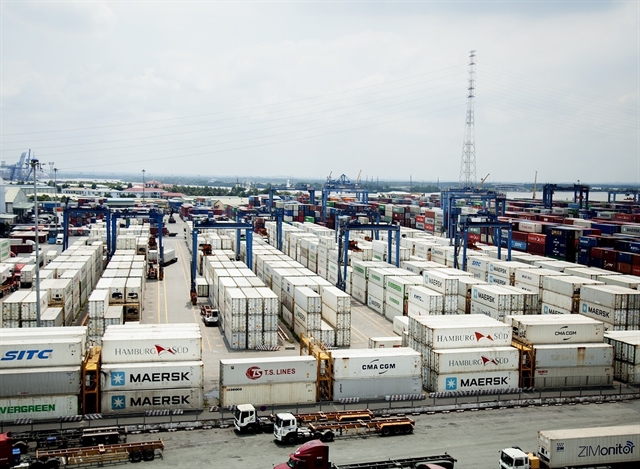
Good containers seen at Tân Cảng Cát Lái Port in HCM City. — VNA/VNS Photo
HÀ NỘI — The export situation in the early months of 2025 has continued to show promising signs, as Vietnamese enterprises have not only maintained their market share with traditional partners but have also actively expanded into new markets.
Positive indicators
According to the Ministry of Industry and Trade, by the end of April, Việt Nam’s total export turnover reached US$140.34 billion, an increase of 13 per cent compared to the same period in 2024. Although exports to the US showed signs of slowing down, overall export turnover still recorded growth thanks to compensation from other markets. Specifically, exports to China reached $18.1 billion, up 2.1 per cent; to the EU, $18.5 billion, up 12.8 per cent; to Japan, $8.5 billion, up 12 per cent; and to the Republic of Korea, $8.9 billion, up 9.1 per cent year-on-year.
Exports to China increased mainly due to a strong recovery in demand for food and aquatic products in this billion-population market starting from the second quarter of 2024. Products such as shrimp, tra fish, and tropical fruits continued to hold a large share, as the advantages of free trade agreements (FTAs) such as the ASEAN-China FTA and the Regional Comprehensive Economic Partnership (RCEP) have been exploited effectively, according to Nông Đức Lai, Việt Nam's Trade Counsellor in China.
In the British market, thanks to the UK-Việt Nam FTA, export turnover continued to surge, particularly in machinery, equipment, textiles, and footwear. In the Canadian market, the Comprehensive and Progressive Agreement for Trans-Pacific Partnership (CPTPP) helped drive export growth of over 13.5 per cent in 2024, with this momentum continuing into 2025.
Additionally, ASEAN countries, India, as well as regions such as the Middle East and Africa, are emerging as promising markets for Vietnamese businesses.
In recent times, many businesses in sectors such as aquatic products, garment and textiles, wood, and food have actively explored markets like Latin America and the Middle East.
Trương Văn Cẩm, vice chairman of the Vietnam Textile and Apparel Association, said that Việt Nam's textile and garment exports still largely focus on major markets. However, effectively expanding into new markets such as the EU, Canada, Mexico, and the Middle East is essential to enhance the industry’s resilience. At present, many enterprises have actively participated in international trade fairs, engaged in online business matchmaking, and tapped into the potential of non-traditional markets beyond the US and the EU. As a result, export turnover has maintained a notable growth rate.
Strengthening internal capabilities
In reality, the key driving force behind Việt Nam’s recent success in tapping into new markets lies in its market diversification strategy and the flexibility of the business community.
The signing and implementation of next-generation FTAs such as the EU-Việt Nam Free Trade Agreement (EVFTA), CPTPP, UKVFTA, and RCEP have significantly expanded market access for Vietnamese goods. At the same time, domestic capabilities have been continuously reinforced, with many sectors investing heavily in deep processing, increasing value-added content, ensuring traceability, and complying with international environmental standards.
However, to sustain long-term growth momentum, experts suggested Vietnamese enterprises accelerate the professionalisation of international trade promotion, make stronger use of cross-border e-commerce, and actively integrate into global value chains at a higher level.
The State should continue to improve mechanisms that support small- and medium-sized enterprises, facilitating their access to preferential capital sources; shorten procedures for tax refunds and international certification to reduce costs and risks as businesses enter new markets. Additionally, strongly developing the domestic market through demand-stimulating policies and improving logistics infrastructure will be key factors in building a safe ‘buffer zone’ for Việt Nam, proposed Professor Trần Ngọc Anh from US-based Indiana University.
Regarding support directions for the business community, Nguyễn Ngọc Hòa, chairman of the HCM City Business Association (HUBA), emphasised the need to closely monitor FDI flows, ensure transparency in product origin, and strongly encourage domestic businesses to invest in technology, branding, and value-added service sectors.
Challenges, he noted, also present opportunities for Việt Nam to restructure its growth model.
Enterprises should accelerate transformation, increase the localisation rate of their products, invest in design and brand building, and develop professional after-sales services, Hòa stated, adding that this is not only a pressing requirement to enhance added value but also a key factor for Việt Nam to assert its position in the global supply chain. — VNS
Source: VNS
Related News

CHARITY / EXHIBITION / OTHER EVENTS
INVESTMENT OPPORTUNITIES IN CA MAU PROVINCE: 96 PROJECTS AND 20 STRATEGIC PROJECTS
We are pleased to share with you information on investment projects currently seeking investors in Ca Mau Province. Should your esteemed company or association be interested, we kindly invite you to review the project information and complete the registration form via the links provided. The Ho Chi Minh City Investment and Trade Promotion Centre (ITPC) will consolidate the expressions of interest and facilitate connections with the leadership of Ca Mau Province at a meeting tentatively scheduled for 13 November 2026 in Ho Chi Minh City.

MEMBER CORNER / PROMOTIONS
BẰNG KIỀU LIVESHOW - A SYMPHONY OF LOVE UNDER THE GOLDEN GLOW
A masterclass in live music that takes the audience on a soulful journey through immortal love songs, guided by the peerless artistry and emotive storytelling of renowned singer Bằng Kiều. The highlight of the night is his seamless musical chemistry with special guest Triệu Hồng Ngọc, promising passionate and deeply resonant duets inside the magnificent Grand Ballroom.
INFRASTRUCTURE / CONSTRUCTION / LOGISTIC / PORT
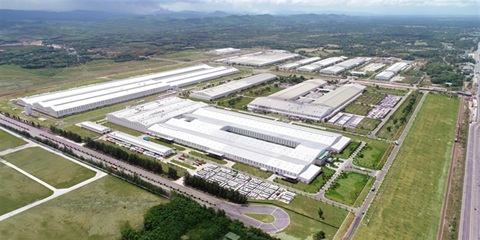
ĐÀ NẴNG GREEN-LIGHTS US$105 MILLION THAI DEVELOPMENT DEAL
The central city has approved an investment proposal by Thailand’s WHA Group to develop infrastructure for the 400ha WHA Đà Nẵng Industrial Park project on two communes of Thăng Bình and Đồng Dương, with an investment of more than VNĐ2.7 trillion (US$105 million). The city said it approved WHA Industrial Development International's status as an investor in the project, which is expected to take place between 2027 and 2034.
VIETNAM ECONOMY INVESTMENT
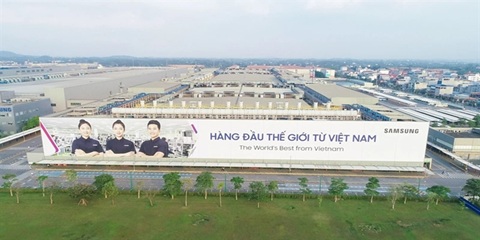
MOBILE PHONE EXPORTS RISE 20% TO $51.8 BILLION IN FIRST NINE MONTHS
Exports of mobile phones and components rose 20 per cent year-on-year to nearly US$51.8 billion in the first nine months of 2026, with China, the US and Republic of Korea accounting for more than half of the total. Shipments to the three markets reached a combined $26.18 billion, or 50.6 per cent of total exports of the product group during the period, according to data from the Vietnam Department of Customs under the Ministry of Finance.

INFRASTRUCTURE / CONSTRUCTION / LOGISTIC / PORT
VIỆT NAM-CAMBODIA TRADE GATHERS PACE TOWARDS $20 BILLION TARGET
Trade between Việt Nam and Cambodia continues to grow, remaining a bright spot and a key pillar of bilateral cooperation as the two countries aim to raise two-way trade to US$20 billion in the coming years. After setting a record of more than $11.3 billion last year, bilateral trade reached about $8.7 billion in the first eight months of this year, up 8.3 per cent year on year.
VIETNAM ECONOMY INVESTMENT
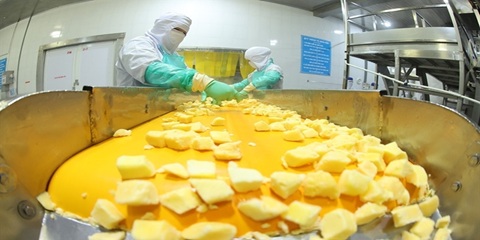
FRUIT AND VEGETABLE EXPORTS POISED TO HIT $10 BILLION IN 2026
Fruit and vegetable exports are on track to reach nearly US$10 billion in 2026, after rising 19.9 per cent year on year to nearly US$7.4 billion in the first nine months, driven by strong seasonal demand and abundant tropical fruit supplies. The Ministry of Agriculture and Environment said the growth reflected stronger international demand for fresh produce and processed agricultural products.
Events Sponsors






















