Want to be in the loop?
subscribe to
our notification
Business News
VIỆT NAM MUST REACH 11.9% GROWTH IN H2 TO ACHIEVE 2026 TARGET
The target was set out in Resolution 168/NQ-CP issued on June 27, which updates the country's growth scenario and outlines key policy measures for the remaining months of 2026.
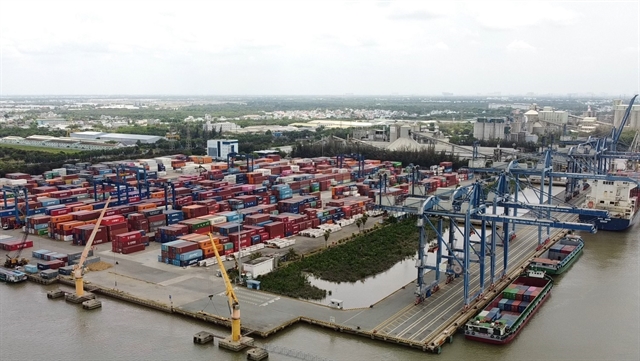
A port in HCM City. The southern metropolis has been assigned a full-year gross regional domestic product (GRDP) growth target of 10.2 per cent. — VNA/VNS Photo Hữu Duyên
HÀ NỘI — The Vietnamese Government has set a target of 11.9 per cent GDP growth in the second half of 2026, betting on investment, production, reform and digital transformation to achieve double-digit economic growth for the full year.
The target was set out in Resolution 168/NQ-CP issued on June 27, which updates the country's growth scenario and outlines key policy measures for the remaining months of 2026.
According to the Government, the global and regional outlook during the first half of the year was challenging, with the conflict in the Middle East weighing on Việt Nam's economy.
Yet despite external headwinds, the economy maintained macroeconomic stability, kept inflation under control and recorded some of its strongest growth indicators in years, the Government said.
Reports from ministries and localities have projected Việt Nam's economic growth at 8.7 per cent in 2026, which is below the Government’s target of at least 10 per cent.
To achieve this double-digit growth goal, Resolution 168 stated that GDP must expand at 11.9 per cent in the second half of the year.
The resolution assigns ambitious H2 growth targets to several sectors, including electricity production at 16.9 per cent, construction at 17.6 per cent and accommodation and food services at 17.3 per cent.
HCM City and Hà Nội, two major economic hubs accounting for 23.3 per cent and 12.4 per cent of the country’s GDP, have been assigned full-year gross regional domestic product (GRDP) growth targets of 10.2 per cent and 11 per cent, respectively, 3.13 percentage points higher than the growth rates achieved in the first half.
Other provinces and cities assigned double-digit growth targets include Hải Phòng and Quảng Ninh at 13 per cent, Bắc Ninh at 12.5 per cent, Hưng Yên at 11.5 per cent and Đà Nẵng at 11.22 per cent.
Key measures
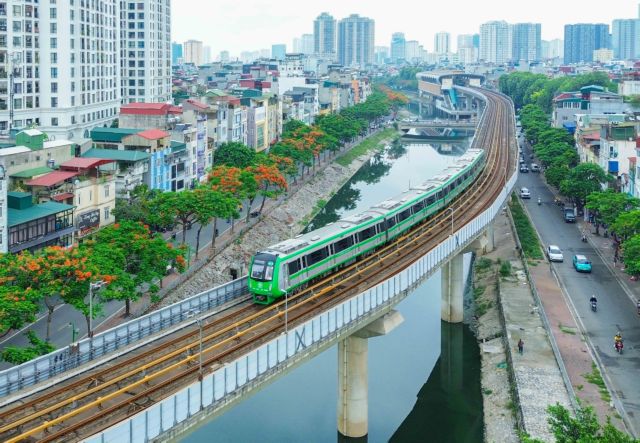
Hà Nội's Cát Linh - Hà Đông urban metro line. The Government has stepped up its efforts to achieve double-digit growth. — VNA/VNS Photo Phan Phương
To support this expansion, the Government asked ministries and local authorities to adopt more innovative approaches and intensify efforts to meet the updated growth scenario, with particular emphasis on Hà Nội, HCM City and other major growth engines that fell short of their first-half targets.
The Ministry of Finance was tasked with maintaining an appropriate expansionary fiscal policy, while proposing adjustments to fuel and aviation fuel taxes in line with global price movements.
It was also instructed to continue developing the stock and insurance markets, attract foreign direct investment, prepare amendments to the Law on Securities for submission to the National Assembly in October, and design new financial products to channel international capital into the Việt Nam International Financial Centre.
The State Bank of Vietnam was directed to pursue a proactive and flexible monetary policy, stabilise interest rates, contain inflation and steer credit towards manufacturing, priority sectors, key growth drivers and major infrastructure projects.
Under the resolution, efforts to fully disburse public investment allocations for this year are required, with detailed weekly, monthly and quarterly implementation schedules to identify delays early and strengthen accountability.
Focus must be placed on removing bottlenecks delaying major infrastructure projects, including metro lines in Hà Nội and HCM City, railway links with China, sections of the planned North-South high-speed railway and the construction and expansion of airports at Gia Bình, Phú Quốc, Chu Lai and Cà Mau.
The Government also called for measures to foster a sustainable and healthy property market. Major localities, including Hà Nội, HCM City, Hải Phòng, Đà Nẵng, Đồng Nai, Quảng Ninh, Bắc Ninh, Hưng Yên and Ninh Bình, were instructed to review plans for rental housing associated with industrial parks and economic zones to better match future demand.
Stronger measures to stimulate domestic consumption, tourism and exports as additional drivers of growth were also directed under the Government resolution.
Price adjustments for State-controlled products will be carefully considered to keep inflation under control while maintaining stable supplies of essential goods and services.
The Ministry of Industry and Trade was tasked with ensuring adequate domestic fuel supplies and to pursue electricity-saving measures, with a target of reducing nationwide power consumption by at least 3 per cent this year.
Faster digital transformation is considered critical under the resolution, including the integration of national databases, the completion of key digital infrastructure and the development of strategic technology industries.
The resolution has estimated the GRDP growth rates for 34 provinces and cities in the first half of this year, with the northern port city of Hải Phòng posting the highest expansion at 12.42 per cent.
Other provinces with double-digit growth rates in the period include Ninh Bình at 12.04 per cent, Hà Tĩnh with 12.02 per cent, Phú Thọ at 10.87 per cent, Bắc Ninh with 10.22 per cent, and Hưng Yên, which saw 10.15 per cent growth. — VNS
Source: VNS
Related News

INFRASTRUCTURE / CONSTRUCTION / LOGISTIC / PORT
VIỆT NAM-CAMBODIA TRADE GATHERS PACE TOWARDS $20 BILLION TARGET
Trade between Việt Nam and Cambodia continues to grow, remaining a bright spot and a key pillar of bilateral cooperation as the two countries aim to raise two-way trade to US$20 billion in the coming years. After setting a record of more than $11.3 billion last year, bilateral trade reached about $8.7 billion in the first eight months of this year, up 8.3 per cent year on year.
TECHNOLOGY
AI BEGINNING TO RESHAPE RECRUITMENT CRITERIA
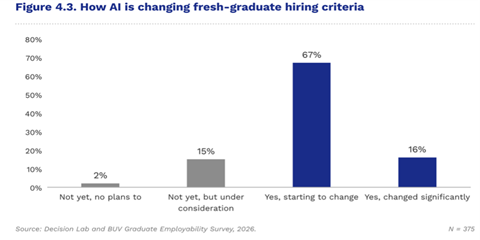
Digital literacy is the only capability area in which fresh graduates meet employers’ expectations, according to a new report. Yet, it is also the standard rising fastest, as businesses increasingly expect new hires to use AI effectively in the workplace. Some 83 per cent of employers say AI has changed, or is beginning to change, their hiring criteria, while 94 per cent report higher expectations for digital and AI capabilities than they had two to three years ago.

INFRASTRUCTURE / CONSTRUCTION / LOGISTIC / PORT
ĐÀ NẴNG GREEN-LIGHTS US$105 MILLION THAI DEVELOPMENT DEAL
The central city has approved an investment proposal by Thailand’s WHA Group to develop infrastructure for the 400ha WHA Đà Nẵng Industrial Park project on two communes of Thăng Bình and Đồng Dương, with an investment of more than VNĐ2.7 trillion (US$105 million). The city said it approved WHA Industrial Development International's status as an investor in the project, which is expected to take place between 2027 and 2034.

VIETNAM ECONOMY INVESTMENT
MOBILE PHONE EXPORTS RISE 20% TO $51.8 BILLION IN FIRST NINE MONTHS
Exports of mobile phones and components rose 20 per cent year-on-year to nearly US$51.8 billion in the first nine months of 2026, with China, the US and Republic of Korea accounting for more than half of the total. Shipments to the three markets reached a combined $26.18 billion, or 50.6 per cent of total exports of the product group during the period, according to data from the Vietnam Department of Customs under the Ministry of Finance.

VIETNAM ECONOMY INVESTMENT
FRUIT AND VEGETABLE EXPORTS POISED TO HIT $10 BILLION IN 2026
Fruit and vegetable exports are on track to reach nearly US$10 billion in 2026, after rising 19.9 per cent year on year to nearly US$7.4 billion in the first nine months, driven by strong seasonal demand and abundant tropical fruit supplies. The Ministry of Agriculture and Environment said the growth reflected stronger international demand for fresh produce and processed agricultural products.
GARMENT / TEXTILE
TEXTILE EXPORTS FACE DUAL CHALLENGES OF SUSTAINING ORDERS AND BOOSTING EFFICIENCY AMID GROWING COMPETITION
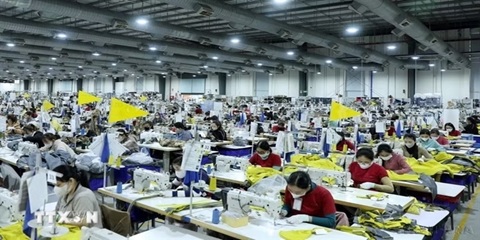
Data shows that the textile and garment sector maintained its growth momentum in the first nine months of this year. The industry's total export turnover reached an estimated US$35.721 billion in the first nine months of this year, up 3.3 per cent year-on-year. Despite posting encouraging export figures, Vietnamese textile and garment enterprises continue to navigate unpredictable market variables.
Events Sponsors






















