Want to be in the loop?
subscribe to
our notification
Business News
VIỆT NAM’S FDI GROWS 27.3% IN SEVEN MONTHS, SIGNALS INVESTOR CONFIDENCE
Việt Nam pulled in US$24.09 billion in foreign direct investment (FDI) in the first seven months of 2025, a 27.3 per cent surge year-on-year.
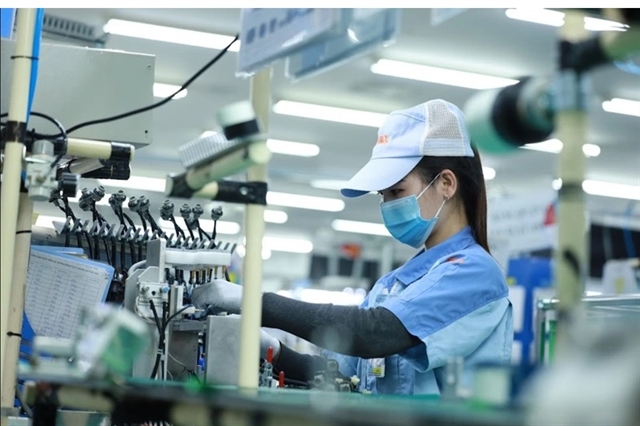
A local worker at the Stanley Electronic Company in Việt Nam. Factories were the big winners, with manufacturing and processing snagging 55.9 per cent (US$5.61 billion) of the newly-registered capital. Photo hanoitimes.vn
HÀ NỘI — Việt Nam pulled in US$24.09 billion in foreign direct investment (FDI) in the first seven months of 2025, a 27.3 per cent surge year-on-year, driven by strong investor confidence, the Ministry of Finance’s National Statistics Office (NSO) reported on Wednesday.
The FDI inflows, covering newly-registered and adjusted capital, and capital contribution through share purchases, included $10.03 billion registered for 2,254 new projects. The figures presented a year-on-year rise of 15.2 per cent in projects, though registered capital dropped 11.1 per cent, showing that investors have continued to flock to Việt Nam but with smaller deals.
Factories were the big winners, with manufacturing and processing snagging 55.9 per cent (US$5.61 billion) of the newly-registered capital, while real estate scooped up 23.5 per cent ($2.36 billion).
Singapore led the charge among 74 countries and territories, pouring in $2.84 billion, or 28.3 per cent of the new capital total. Mainland China followed with $2.27 billion, Sweden added US$1 billion, and traditional partners like Japan, Taiwan, and Hong Kong also kept the cash flowing, proving Việt Nam’s broad appeal across Asia and beyond.
A bright spot was the dramatic 95.3 per cent surge in adjusted capital, with 920 existing projects pumping in additional $9.99 billion. This sharp increase signaled strong confidence in Việt Nam’s business environment and economic prospects. Global corporations are scaling up production and tech upgrades, betting big on Việt Nam as a stable and promising base for sustainable growth.
When combining new and adjusted capital, manufacturing and processing ruled with $12.12 billion, or 60.6 per cent of the total FDI, followed by real estate at $4.95 billion, equivalent to 24.7 per cent.
Share purchases and capital contributions jumped 61 per cent year on year to $4.07 billion via 1,982 transactions, targeting manufacturing (39.3 per cent) and professional, scientific, and technological activities (20.3 per cent), showing foreign investors’ interest in high-value, knowledge-driven sectors.
Việt Nam disbursed $13.6 billion in FDI, up 8.4 per cent and marking the biggest seven-month sum in five years, fueling jobs and growth as promises turn into action.
Vietnamese firms are also going global, with outward investment skyrocketing over 200 per cent to $398.9 million. Total overseas investment, including newly-registered and adjusted capital, hit $528.5 million, a 3.5-fold leap year on year.
Electricity and gas production took the lead (21 per cent), transport and warehousing (20.6 per cent), and wholesale and retail (14.8 per cent). Laos was the biggest recipient of Vietnamese investment, grabbing $150.3 million (28.4 per cent), followed by the Philippines and Indonesia. — VNS
Source: VNS
Related News

MEMBER CORNER / PROMOTIONS
BẰNG KIỀU LIVESHOW - A SYMPHONY OF LOVE UNDER THE GOLDEN GLOW
A masterclass in live music that takes the audience on a soulful journey through immortal love songs, guided by the peerless artistry and emotive storytelling of renowned singer Bằng Kiều. The highlight of the night is his seamless musical chemistry with special guest Triệu Hồng Ngọc, promising passionate and deeply resonant duets inside the magnificent Grand Ballroom.
INFRASTRUCTURE / CONSTRUCTION / LOGISTIC / PORT
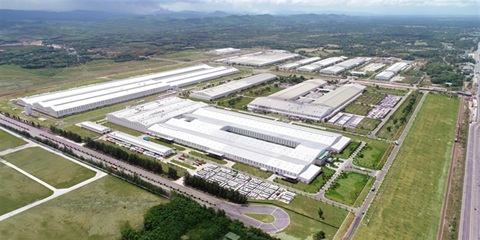
ĐÀ NẴNG GREEN-LIGHTS US$105 MILLION THAI DEVELOPMENT DEAL
The central city has approved an investment proposal by Thailand’s WHA Group to develop infrastructure for the 400ha WHA Đà Nẵng Industrial Park project on two communes of Thăng Bình and Đồng Dương, with an investment of more than VNĐ2.7 trillion (US$105 million). The city said it approved WHA Industrial Development International's status as an investor in the project, which is expected to take place between 2027 and 2034.
VIETNAM ECONOMY INVESTMENT
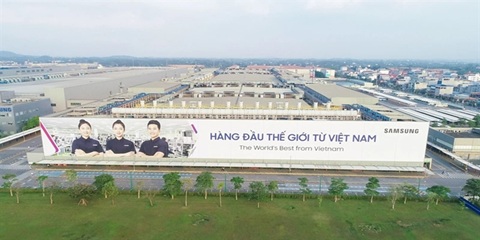
MOBILE PHONE EXPORTS RISE 20% TO $51.8 BILLION IN FIRST NINE MONTHS
Exports of mobile phones and components rose 20 per cent year-on-year to nearly US$51.8 billion in the first nine months of 2026, with China, the US and Republic of Korea accounting for more than half of the total. Shipments to the three markets reached a combined $26.18 billion, or 50.6 per cent of total exports of the product group during the period, according to data from the Vietnam Department of Customs under the Ministry of Finance.

INFRASTRUCTURE / CONSTRUCTION / LOGISTIC / PORT
VIỆT NAM-CAMBODIA TRADE GATHERS PACE TOWARDS $20 BILLION TARGET
Trade between Việt Nam and Cambodia continues to grow, remaining a bright spot and a key pillar of bilateral cooperation as the two countries aim to raise two-way trade to US$20 billion in the coming years. After setting a record of more than $11.3 billion last year, bilateral trade reached about $8.7 billion in the first eight months of this year, up 8.3 per cent year on year.
VIETNAM ECONOMY INVESTMENT
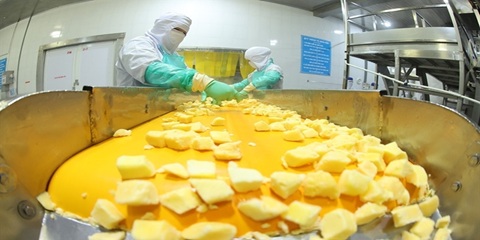
FRUIT AND VEGETABLE EXPORTS POISED TO HIT $10 BILLION IN 2026
Fruit and vegetable exports are on track to reach nearly US$10 billion in 2026, after rising 19.9 per cent year on year to nearly US$7.4 billion in the first nine months, driven by strong seasonal demand and abundant tropical fruit supplies. The Ministry of Agriculture and Environment said the growth reflected stronger international demand for fresh produce and processed agricultural products.
GARMENT / TEXTILE
TEXTILE EXPORTS FACE DUAL CHALLENGES OF SUSTAINING ORDERS AND BOOSTING EFFICIENCY AMID GROWING COMPETITION
Data shows that the textile and garment sector maintained its growth momentum in the first nine months of this year. The industry's total export turnover reached an estimated US$35.721 billion in the first nine months of this year, up 3.3 per cent year-on-year. Despite posting encouraging export figures, Vietnamese textile and garment enterprises continue to navigate unpredictable market variables.
Events Sponsors






















