Want to be in the loop?
subscribe to
our notification
Business News
VIỆT NAM'S INDUSTRIAL REAL ESTATE MARKET MAINTAINS STRONG MOMENTUM
In the first six months of the year, the industrial real estate sector in Việt Nam saw robust growth driven by a substantial influx of FDI.
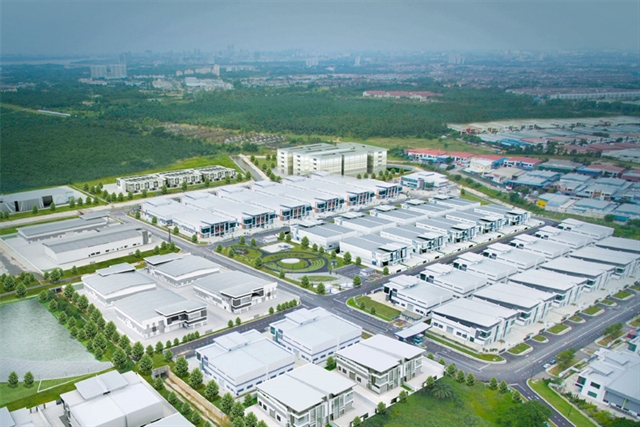
Image of an industrial zone. Industrial real estate market will continue its positive trend over the next 12–24 months. — Photo Courtesy of maisonoffice.vn
Compiled by Thu Ngân
HCM CITY — Industry experts have forecast that Việt Nam's industrial real estate market will continue its positive trend over the next 12–24 months, with solid support from high-quality foreign direct investment (FDI), regional production shifts, and significant nationwide infrastructure projects currently underway.
In the first six months of the year, the industrial real estate sector in Việt Nam saw robust growth driven by a substantial influx of FDI. Total registered FDI in the country reached US$34.7 billion in the first half of 2026, marking a remarkable 61 per cent year-on-year increase. Of this total, the manufacturing and processing sector made up 62 per cent of newly registered FDI, amounting to US$10.8 billion.
Despite global geopolitical uncertainties and shifting international trade policies, Việt Nam remains a pivotal manufacturing and logistics hub in the region. This consistent positioning underscores the demand for industrial land, ready-built factories, and modern logistics facilities in key manufacturing centres.
A report by market analyst JLL states that by the end of 2026, Việt Nam is anticipated to witness a significant new supply in the industrial real estate market. This includes approximately 1,900 hectares of industrial land, nearly 700,000 square metres of ready-built warehouses, and 1.0 million sq.m of ready-built factories in vital markets in the North and South regions. Despite an increase in supply, rental rates are forecast to sustain a stable growth trajectory due to continuous demand.
Projections indicate that the demand for industrial land, ready-built factories, and modern logistics assets will remain robust. Looking ahead, green industrial parks, data centres, modern logistics facilities, and projects catering to high-tech industries are expected to emerge as new growth drivers.
Will Trần, head of office, industrial & logistics leasing at JLL Vietnam, highlighted the increasing significance of Environmental, Social, and Governance (ESG) criteria in investment and leasing decisions.
"ESG criteria are becoming a crucial factor in investment and leasing decisions. Companies in the electronics, high-tech, data centre, and logistics sectors are increasingly prioritising projects that are energy-efficient, integrate renewable energy, and support carbon reduction goals. This trend is expected to drive the development of green industrial parks, modern factories, and next-generation logistics assets in the coming years," he said.
"Although Việt Nam is no longer positioned as a low-cost manufacturing destination, the country still maintains competitive advantages in its strategic location and attractive investment policies. More importantly, Việt Nam is actively enhancing the capacity and productivity of its workforce through training and skills development programmes, aiming to position itself as a destination for advanced, high-value-added manufacturing industries," he added.
Meeting long-term demand
Continuing to meet long-term demand, JLL reported that the total supply of industrial land in key northern and southern markets in the first half of 2026 reached nearly 41,000 hectares, showing a slight 1 per cent year-on-year increase. The supply of ready-built factories and warehouses reached approximately 10.4 million sq.m and 8.6 million sq.m, respectively, demonstrating strong year-on-year growth.
Significant new projects like KTG Industrial An Phước 2, Kizuna Eco2IP, KCN Vietnam Phúc Điền, and SLP Park Tiên Du have contributed to leasing activity, with substantial areas of industrial land and ready-built factories and warehouses transacted in the first half of the year.
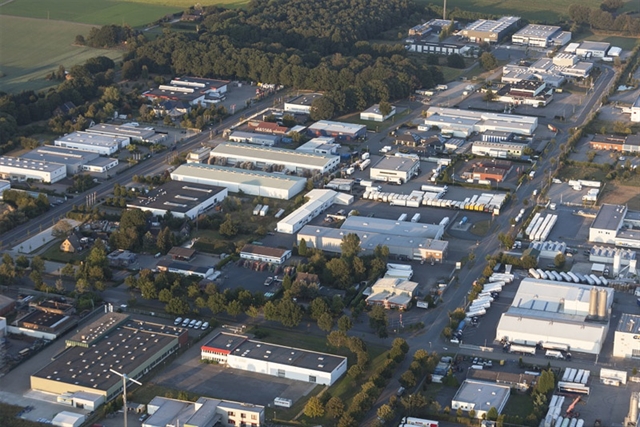
Despite global geopolitical uncertainties and shifting international trade policies, Việt Nam remains a pivotal manufacturing and logistics hub in the region. — Photo Courtesy of maisonoffice.com
In the Southern market, CBRE data for the first half of 2026 revealed a recovery in the industrial real estate sector. Noteworthy developments included a strategic shift in FDI inflows towards core technologies in HCM City, exemplified by investments in Artificial Intelligence (AI) and digital infrastructure within Saigon Hi-Tech Park.
Total industrial land net absorption reached 124 hectares, representing a robust 125 per cent year-on-year increase. The Southern Tier 1 hubs of Bình Dương and Đồng Nai captured 83 per cent of this total absorbed area, with demand primarily fueled by the electronics and logistics sectors.
In the ready-built warehouse and ready-built factory segment, Southern Tier 1 markets recorded approximately 0.47 million sqm of net leasable area in new supply during the first half of 2026. This met with healthy net absorption of over 0.37 million sqm.
Thanh Phạm, director of research & consulting in HCM City, said: "2026 is projected to witness a high volume of new industrial real estate supply, particularly in the ready-built factory segment. This is driven by its capacity to offer flexibility in leasable areas and lease terms, whilst optimising capital expenditure and shortening the time-to-market for tenants. This trend also reflects the strategy of industrial park developers to diversify their product portfolios, thereby enhancing their appeal to a broader tenant base. Against the backdrop of mounting supply, ready-built factory asking rents are projected to experience modest growth of 2 per cent to 3 per cent per annum as a result of competitive pricing pressures.
Looking ahead, long-term strategic growth catalysts will be led by the progress of key transport infrastructure projects and the planned establishment of Free Trade Zones (FTZs). These flagship infrastructure initiatives are anticipated to reshape the industrial landscape across emerging key clusters, most notably the vicinity of Long Thành International Airport and the economic corridors along Ring Road 3 and Ring Road 4." — VNS
Source: VNS
Related News

INFRASTRUCTURE / CONSTRUCTION / LOGISTIC / PORT
VIỆT NAM-CAMBODIA TRADE GATHERS PACE TOWARDS $20 BILLION TARGET
Trade between Việt Nam and Cambodia continues to grow, remaining a bright spot and a key pillar of bilateral cooperation as the two countries aim to raise two-way trade to US$20 billion in the coming years. After setting a record of more than $11.3 billion last year, bilateral trade reached about $8.7 billion in the first eight months of this year, up 8.3 per cent year on year.

TECHNOLOGY
AI BEGINNING TO RESHAPE RECRUITMENT CRITERIA
Digital literacy is the only capability area in which fresh graduates meet employers’ expectations, according to a new report. Yet, it is also the standard rising fastest, as businesses increasingly expect new hires to use AI effectively in the workplace. Some 83 per cent of employers say AI has changed, or is beginning to change, their hiring criteria, while 94 per cent report higher expectations for digital and AI capabilities than they had two to three years ago.

INFRASTRUCTURE / CONSTRUCTION / LOGISTIC / PORT
ĐÀ NẴNG GREEN-LIGHTS US$105 MILLION THAI DEVELOPMENT DEAL
The central city has approved an investment proposal by Thailand’s WHA Group to develop infrastructure for the 400ha WHA Đà Nẵng Industrial Park project on two communes of Thăng Bình and Đồng Dương, with an investment of more than VNĐ2.7 trillion (US$105 million). The city said it approved WHA Industrial Development International's status as an investor in the project, which is expected to take place between 2027 and 2034.

VIETNAM ECONOMY INVESTMENT
MOBILE PHONE EXPORTS RISE 20% TO $51.8 BILLION IN FIRST NINE MONTHS
Exports of mobile phones and components rose 20 per cent year-on-year to nearly US$51.8 billion in the first nine months of 2026, with China, the US and Republic of Korea accounting for more than half of the total. Shipments to the three markets reached a combined $26.18 billion, or 50.6 per cent of total exports of the product group during the period, according to data from the Vietnam Department of Customs under the Ministry of Finance.

VIETNAM ECONOMY INVESTMENT
FRUIT AND VEGETABLE EXPORTS POISED TO HIT $10 BILLION IN 2026
Fruit and vegetable exports are on track to reach nearly US$10 billion in 2026, after rising 19.9 per cent year on year to nearly US$7.4 billion in the first nine months, driven by strong seasonal demand and abundant tropical fruit supplies. The Ministry of Agriculture and Environment said the growth reflected stronger international demand for fresh produce and processed agricultural products.

GARMENT / TEXTILE
TEXTILE EXPORTS FACE DUAL CHALLENGES OF SUSTAINING ORDERS AND BOOSTING EFFICIENCY AMID GROWING COMPETITION
Data shows that the textile and garment sector maintained its growth momentum in the first nine months of this year. The industry's total export turnover reached an estimated US$35.721 billion in the first nine months of this year, up 3.3 per cent year-on-year. Despite posting encouraging export figures, Vietnamese textile and garment enterprises continue to navigate unpredictable market variables.
Events Sponsors






















