Want to be in the loop?
subscribe to
our notification
Business News
VIỆT NAM’S SEAFOOD INDUSTRY TARGETS STABILITY AFTER RECORD-BREAKING YEAR
Việt Nam’s seafood exports in 2025 were a record US$11.3 billion, but experts said the industry needs long-term strategies to ensure sustainable growth.
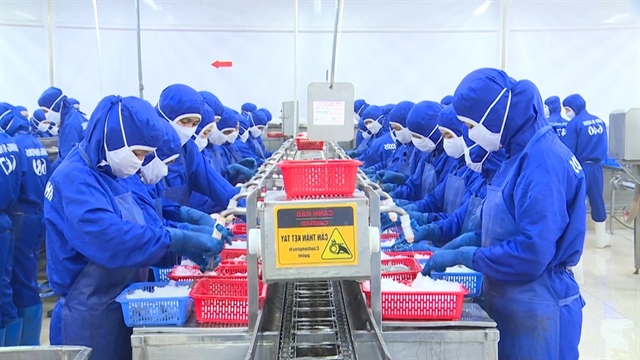
Workers process shrimp at a seafood processing plant in the Mekong Delta. Experts have said anti-dumping tax reviews are expected to affect shrimp exports to the US in the next few months. — Photo dantri.com.vn
HCM CITY — Việt Nam’s seafood exports in 2025 were a record US$11.3 billion, but experts said the industry needs long-term strategies to ensure sustainable growth.
They were speaking at a conference held by the Việt Nam Association of Seafood Exporters and Producers (VASEP) in HCM City on February 17 to review the industry’s performance and set tasks for the new year.
Deputy Minister of Agriculture and Environment Phùng Đức Tiến gave credit to the entire supply chain, appreciating the flexibility and proactiveness shown by businesses in an uncertain environment.
The impressive growth in both volume and value was also thanks to the strong direction from the government and the ministry, he said.
But 2026 would be a year of uncertainty for exports, especially to the US, though Việt Nam has adjusted its strategy and stepped up market restructuring in response to changes in US tariff policies, he said.
He added that many Vietnamese seafood companies have proactively expanded their markets to China, Africa and Europe.
The industry was also diversifying its products and exporting more aquatic products, such as tilapia and seaweed, and promoting high-tech farming to reduce costs and improve competitiveness, he said.
Lê Hằng, deputy secretary general of the VASEP, said that the industry had faced many difficulties since the beginning of 2026, particularly in the US market.
Anti-dumping tax reviews on shrimp, expected in February, could disadvantage businesses, causing shrimp exports to the US to fall sharply in the early months of the year, she said.
The EU’s “yellow card” for the country for illegal, unreported and unregulated fishing had not yet been lifted, she said.
Switching to other seafood species also faced procedural difficulties in the early stages, she added.
These would directly affect exports to the US and impact other markets.
Large imports in 2025 left many foreign markets with increased inventories in 2026, meaning demand and prices are lower now.
Seafood exports this year were forecast to slow down after peaking in 2025 and could struggle to stay above the $11 billion mark.
Nguyễn Kim Hậu, general director of Seaspimex Việt Nam Company, said the US market would be very difficult this year and businesses should move to Europe and other promising markets while also focusing on the domestic market to reduce dependence on the US.
But seafood firms hope that, while 2026 may not be as good as 2025, things will remain stable. — VNS
Source: VNS
Related News

INFRASTRUCTURE / CONSTRUCTION / LOGISTIC / PORT
VIỆT NAM-CAMBODIA TRADE GATHERS PACE TOWARDS $20 BILLION TARGET
Trade between Việt Nam and Cambodia continues to grow, remaining a bright spot and a key pillar of bilateral cooperation as the two countries aim to raise two-way trade to US$20 billion in the coming years. After setting a record of more than $11.3 billion last year, bilateral trade reached about $8.7 billion in the first eight months of this year, up 8.3 per cent year on year.
TECHNOLOGY
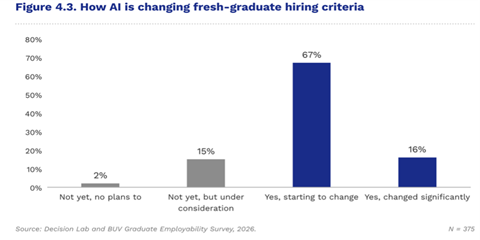
AI BEGINNING TO RESHAPE RECRUITMENT CRITERIA
Digital literacy is the only capability area in which fresh graduates meet employers’ expectations, according to a new report. Yet, it is also the standard rising fastest, as businesses increasingly expect new hires to use AI effectively in the workplace. Some 83 per cent of employers say AI has changed, or is beginning to change, their hiring criteria, while 94 per cent report higher expectations for digital and AI capabilities than they had two to three years ago.

INFRASTRUCTURE / CONSTRUCTION / LOGISTIC / PORT
ĐÀ NẴNG GREEN-LIGHTS US$105 MILLION THAI DEVELOPMENT DEAL
The central city has approved an investment proposal by Thailand’s WHA Group to develop infrastructure for the 400ha WHA Đà Nẵng Industrial Park project on two communes of Thăng Bình and Đồng Dương, with an investment of more than VNĐ2.7 trillion (US$105 million). The city said it approved WHA Industrial Development International's status as an investor in the project, which is expected to take place between 2027 and 2034.

VIETNAM ECONOMY INVESTMENT
MOBILE PHONE EXPORTS RISE 20% TO $51.8 BILLION IN FIRST NINE MONTHS
Exports of mobile phones and components rose 20 per cent year-on-year to nearly US$51.8 billion in the first nine months of 2026, with China, the US and Republic of Korea accounting for more than half of the total. Shipments to the three markets reached a combined $26.18 billion, or 50.6 per cent of total exports of the product group during the period, according to data from the Vietnam Department of Customs under the Ministry of Finance.

VIETNAM ECONOMY INVESTMENT
FRUIT AND VEGETABLE EXPORTS POISED TO HIT $10 BILLION IN 2026
Fruit and vegetable exports are on track to reach nearly US$10 billion in 2026, after rising 19.9 per cent year on year to nearly US$7.4 billion in the first nine months, driven by strong seasonal demand and abundant tropical fruit supplies. The Ministry of Agriculture and Environment said the growth reflected stronger international demand for fresh produce and processed agricultural products.
GARMENT / TEXTILE
TEXTILE EXPORTS FACE DUAL CHALLENGES OF SUSTAINING ORDERS AND BOOSTING EFFICIENCY AMID GROWING COMPETITION
Data shows that the textile and garment sector maintained its growth momentum in the first nine months of this year. The industry's total export turnover reached an estimated US$35.721 billion in the first nine months of this year, up 3.3 per cent year-on-year. Despite posting encouraging export figures, Vietnamese textile and garment enterprises continue to navigate unpredictable market variables.
Events Sponsors






















