Want to be in the loop?
subscribe to
our notification
Business News
VIỆT NAM’S SHRIMP EXPORTS MAINTAIN STEADY GROWTH
Việt Nam's shrimp exports have demonstrated impressive resilience in the first two months of 2025, solidifying their status as the leading export product of the seafood industry. The shrimp export value in the two months reached US$542 million out of a total seafood export value at $1.4 billion, according to the Việt Nam Association of Seafood Exporters and Producers (VASEP).
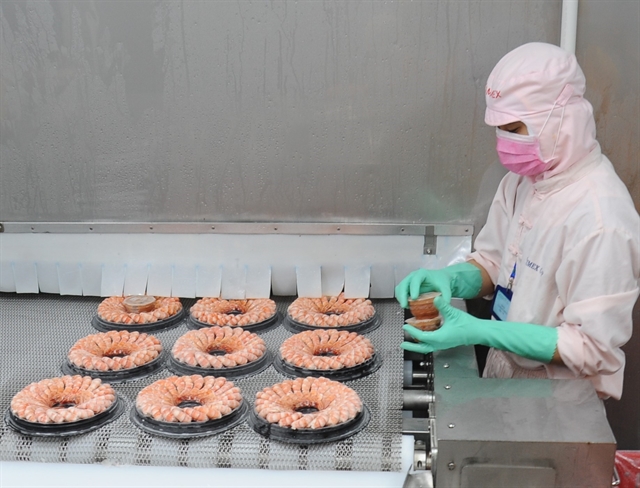
Processed shrimp for export. The shrimp export value in the first two months of 2025 reached US$542 million. VNA/VNS Photo
HÀ NỘI — Việt Nam's shrimp exports have demonstrated impressive resilience in the first two months of 2025, solidifying their status as the leading export product of the seafood industry.
The shrimp export value in the first two months of 2025 reached US$542 million out of a total seafood export value of $1.4 billion, according to the Việt Nam Association of Seafood Exporters and Producers (VASEP).
This continued strong growth is attributed to Việt Nam’s effective utilisation of free trade agreements (FTAs), strategic market expansions and the increasing emphasis on adding value through deep processing.
Việt Nam’s network of FTAs with over 60 countries and economies, has been instrumental in creating a solid foundation for seafood businesses to expand into international markets.
VASEP Secretary General Nguyễn Hoài Nam highlights that Việt Nam seafood is now reaching over 160 markets globally. They include the markets importing Vietnamese shrimp worth billions of US dollars that have established bilateral or multilateral FTAs with Việt Nam.
Among the most significant agreements is the Việt Nam-European Union Free Trade Agreement (EVFTA), which experts believe holds substantial potential for expanding shrimp exports to the EU.
Despite the EU being the world's largest seafood consumer, Việt Nam’s share in this market remains relatively small, presenting significant growth opportunities for the future.
Việt Nam has also entered into two high-profile FTAs with the United Kingdom (UK), the Comprehensive and Progressive Agreement for Trans-Pacific Partnership (CPTPP) and the Việt Nam-UK Free Trade Agreement (UKVFTA).
The UK is the sixth-largest market for Việt Nam shrimp, accounting for 5.5 per cent of the total turnover, with shrimp exports to the UK seeing an 8 per cent growth in January 2025 compared to the previous year.
Additionally, the Comprehensive Economic Partnership Agreement (CEPA) signed with the United Arab Emirates (UAE) in late 2024 is expected to open up new opportunities for Việt Nam’s seafood exports in the Middle East, a region increasingly important to Việt Nam's trading portfolio.
Hồ Quốc Lực, chairman of Sao Ta Food Joint Stock Company, emphasises that through the efforts of businesses and with the support of FTAs, Vietnamese shrimp has established a strong presence in key markets in the world such as Japan, South Korea and the EU.
However, VASEP points out that expanding into new markets also comes with challenges. The seafood industry faces stiff competition from leading shrimp-producing countries such as Ecuador, India, and Thailand.
In addition, stricter regulations related to traceability, quality control, and standards in major markets like the US and EU require continuous adaptation from local firms.
To maintain competitiveness, Vietnamese shrimp exporters must focus on improving product quality, enhancing value-added processing, and ensuring compliance with stringent market requirements.
The Ministry of Industry and Trade also works to remove technical barriers, reduce tariffs, and open up new export avenues for Việt Nam seafood.
Deep processing
According to VASEP, Vietnamese shrimp products, including items like steamed shrimp, breaded shrimp, fried breaded shrimp and shrimp dumplings, become more popular with consumers worldwide.
General director of Minh Phú Seafood Corporation, Lê Văn Quang, points out that Vietnamese enterprises have successfully developed value-added shrimp products that set them apart from competitors including Ecuador and India.
In 2024, deep-processed shrimp accounted for over 40 per cent of Việt Nam's total shrimp export turnover at $4 billion.
Việt Nam is now positioning itself as the second-largest supplier of processed shrimp in the US market, specifically for value-added items like steamed, seasoned and breaded shrimp.
Despite increasing competition from Ecuador and India, Vietnamese shrimp continues to dominate high-end markets, particularly in Japan, South Korea, the EU, the US and Australia, thanks to its processed products.
To sustain growth and expand the shrimp market share in regions like Europe, businesses must focus on strict adherence to quality, environmental standards, and product design.
Việt Nam’s shrimp exporters must also explore new technologies in farming shrimp and enhancing seed quality.
Maintaining these advantages will be critical for ensuring that the shrimp industry continues to thrive in the face of growing global competition. — VNS
Source: VNS
Related News

CHARITY / EXHIBITION / OTHER EVENTS
INVESTMENT OPPORTUNITIES IN CA MAU PROVINCE: 96 PROJECTS AND 20 STRATEGIC PROJECTS
We are pleased to share with you information on investment projects currently seeking investors in Ca Mau Province. Should your esteemed company or association be interested, we kindly invite you to review the project information and complete the registration form via the links provided. The Ho Chi Minh City Investment and Trade Promotion Centre (ITPC) will consolidate the expressions of interest and facilitate connections with the leadership of Ca Mau Province at a meeting tentatively scheduled for 13 November 2026 in Ho Chi Minh City.

MEMBER CORNER / PROMOTIONS
BẰNG KIỀU LIVESHOW - A SYMPHONY OF LOVE UNDER THE GOLDEN GLOW
A masterclass in live music that takes the audience on a soulful journey through immortal love songs, guided by the peerless artistry and emotive storytelling of renowned singer Bằng Kiều. The highlight of the night is his seamless musical chemistry with special guest Triệu Hồng Ngọc, promising passionate and deeply resonant duets inside the magnificent Grand Ballroom.
INFRASTRUCTURE / CONSTRUCTION / LOGISTIC / PORT
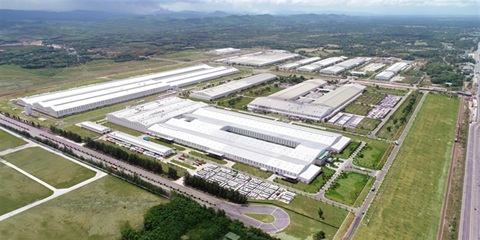
ĐÀ NẴNG GREEN-LIGHTS US$105 MILLION THAI DEVELOPMENT DEAL
The central city has approved an investment proposal by Thailand’s WHA Group to develop infrastructure for the 400ha WHA Đà Nẵng Industrial Park project on two communes of Thăng Bình and Đồng Dương, with an investment of more than VNĐ2.7 trillion (US$105 million). The city said it approved WHA Industrial Development International's status as an investor in the project, which is expected to take place between 2027 and 2034.
VIETNAM ECONOMY INVESTMENT
MOBILE PHONE EXPORTS RISE 20% TO $51.8 BILLION IN FIRST NINE MONTHS
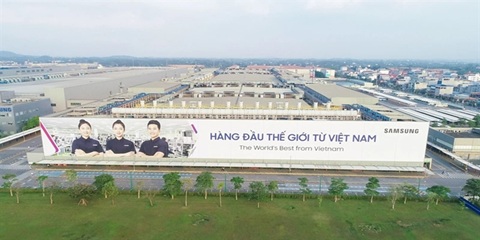
Exports of mobile phones and components rose 20 per cent year-on-year to nearly US$51.8 billion in the first nine months of 2026, with China, the US and Republic of Korea accounting for more than half of the total. Shipments to the three markets reached a combined $26.18 billion, or 50.6 per cent of total exports of the product group during the period, according to data from the Vietnam Department of Customs under the Ministry of Finance.

INFRASTRUCTURE / CONSTRUCTION / LOGISTIC / PORT
VIỆT NAM-CAMBODIA TRADE GATHERS PACE TOWARDS $20 BILLION TARGET
Trade between Việt Nam and Cambodia continues to grow, remaining a bright spot and a key pillar of bilateral cooperation as the two countries aim to raise two-way trade to US$20 billion in the coming years. After setting a record of more than $11.3 billion last year, bilateral trade reached about $8.7 billion in the first eight months of this year, up 8.3 per cent year on year.
VIETNAM ECONOMY INVESTMENT
FRUIT AND VEGETABLE EXPORTS POISED TO HIT $10 BILLION IN 2026
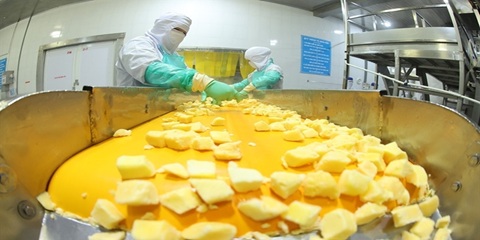
Fruit and vegetable exports are on track to reach nearly US$10 billion in 2026, after rising 19.9 per cent year on year to nearly US$7.4 billion in the first nine months, driven by strong seasonal demand and abundant tropical fruit supplies. The Ministry of Agriculture and Environment said the growth reflected stronger international demand for fresh produce and processed agricultural products.
Events Sponsors






















