Want to be in the loop?
subscribe to
our notification
Business News
VIETNAM MARKET LURES FOREIGN BANKS
Incoming capital
Data from the General Statistics Office (GSO) revealed that in the last two years, new Korean and Japanese investments topped the list of foreign direct investment (FDI) in Vietnam.
Korea registered 505 new investment projects in 2014 and 702 projects in 2015, boasting a combined registered capital of $8.8 billion. In the first eight months of 2016, the nation rolled out some $3.84 billion in registered capital for another 517 new projects in Vietnam.
According to Shinhan Bank Vietnam general director Shin Dong Min, last year’s enactment of the Vietnam-South Korea Free Trade Agreement (VKFTA) has facilitated the flow of Korean businesses into Vietnam.
Vietnam is Korea’s third-largest export market. In the year to the end of July, the value of goods – mostly raw and supporting materials – and services reached $18 billion. This accounts for 6.4 per cent of Korea’s total export turnover. “Vietnam has been acting as a critical manufacturing hub for Korean enterprises,” Shin said.
Japan, meanwhile, has secured second place on the FDI board in terms of new investment projects. It launched roughly 300 projects in both 2014 and 2015, with its registered capital for the two years standing at $1.21 billion and $1.28 billion, respectively. In terms of total foreign investment, the Japanese projects accounted for 7.7 per cent in 2014 and 8.2 per cent in 2015.
During January-August this year, some $552 million invested in 220 new projects was registered by Japanese investors, accounting for 5.6 per cent of total foreign investment.
“Among potential markets, Vietnam emerges as a fast-growing economy with a huge population base. As such, consumer demand is enormous,” said Japanese banking expert Norichika Ikeda in an interview in Hanoi. “So it’s an ideal country that attracts many Japanese investors.”
Many would agree with Ikeda. Masanobu Nakanishi, country head for Vietnam of Sumitomo Mitsui Banking Corporation (SMBC), said, “Vietnam is a burgeoning economy and a key player in leading growth in Southeast Asia. Its attractiveness is boosted by its highly-qualified but low-cost labour, and its relaxed regulations.
“In recent years, free trade agreements and changing regulations have given rise to the influx of foreign companies entering the country. SMBC’s business in Vietnam is, as such, increasing in proportion [to the number] of non-Japanese corporates eager to tap into this vibrant market.”
Financial needs
In step with the growing interest of their investors in the Vietnamese market and increasing FDI inflows in Vietnam, Korean and Japanese financial institutions have taken the initiative to strengthen their commercial presence, to cater to their customers’ financial needs here in Vietnam.
“These investors are bank customers, so when they go overseas, their banks also want to go after them, to continue providing financial services for these businesses in the invested countries,” said banking expert Ikeda.
In addition, according to Ikeda, as competition heats up and the business environment in Japan grows less forgiving, Japanese financial institutions ought to factor in tighter profit margins. Looking to expand elsewhere would be a smart play, rather than solely focusing on their traditional market.
“The market’s significance to SMCB is elevated thanks to the strong bilateral relations between our governments, making Japan one of the top investors in the country,” Nakanishi commented.
In the last decade, the large Japanese banks SMBC, Mizuho Bank, and Mitsubishi UFJ Financial Group (MUFG) upgraded their Vietnamese presence from representative offices to branches. Japan’s Bank of Fukuoka also established a representative office in Ho Chi Minh City in July, to conduct market surveys and investment promotion in Vietnam.
“SMBC firmly believes that Vietnam has high medium-to-long-term growth potential, and the country is an important part of our multi-franchise strategy as we strive to become a key financial player in the Asia region,” said Nakanishi. “We believe in the potential of the country to grow, with its talent and young population, and we remain committed to growing with the country and serving companies operating here.”
Korea’s biggest lender in terms of consolidated assets, Woori Bank, has recently been licensed to operate as a 100 per cent foreign-owned unit in Vietnam. They will join a cadre of six other wholly foreign-owned banks, set to address the financial needs of a mounting number of Korean investors.
In 2015 and 2016, Shinhan Vietnam opened several branch offices in the north of Vietnam – in Haiphong, Thai Nguyen, and Vinh Phuc areas that have drawn investment from large Korean enterprises like Samsung Electronics and LG Electronics.
According to Shinhan Bank Vietnam’s general director, the region’s potential does not stop at the conglomerates like Samsung or LG that chose Haiphong for their plant bases. There are also many other Korean enterprises currently based in other countries, like China, who could well be moving to Vietnam in the time to come.
Betting on the lucrative market
These large-scale Asian banks have enough capacity to serve both their home country clients and Vietnam’s 90-plus million. But so far, these banks have taken cautious steps into the local financial market.
“While our bank will continue to focus on corporate banking services, we will leverage our innovation to help companies in Vietnam leapfrog in the digital space,” said SMBC’s Nakanishi. “For example, we announced last November a memorandum of understanding with Hitachi and Vietnam Post to offer prepaid services, including applications such as online shopping and cash transfers via the mobile phone.”
According to Nakanishi, the retail banking space is highly challenging, and a foreign bank must have scale and local know-how in order to succeed in the market. With its 15 per cent stake investment in Eximbank, the lender looks to extend its services to local companies. “We will continue to strengthen our alliances and explore opportunities that match with our expertise when making decisions on furthering our investments in this space and delivering quality services to clients,” Nakanishi said.
The other Japanese entries to Vietnam’s financial world have also been following the strategic partnership template. MUFG injected some $743 million into Vietnam’s largest bank in terms of registered capital, Vietinbank, for a 19.73 per cent stake, while Mizuho Bank spent $567 million on a 15 per cent stake in Vietcombank.
Taku Ishikawa, general director of Mizuho’s Hanoi branch, said the bank will leverage its strong customer base in Japan to “expand its business in Vietnam, to support its customers when investing in Vietnam”. The bank’s collaboration with Vietcombank as a strategic partner is “a good opportunity for us to enhance our services to customers in Vietnam”, he noted.
General director Shin said Shinhan Bank Vietnam so far has 18 units operating across the nation, and not all of these branches focus on Korean corporate clients. “We’ve been working hard to balance our Korean clients and Vietnamese ones, in both our corporate and retail segments.”
Shin shared that by the end of 2012, the lender’s outstanding loans to individuals came to some $7 million, but at present, the figure has reached up to $177 million. By the end of the year, Shinhan Bank Vietnam might achieve roughly $200 million in total outstanding loans to individuals.
“What it means it that in merely four years, our outstanding loans to individuals has climbed by 30-fold,” said Shin. “With the enormous potential retail market, we are focusing all resources and efforts to increase our revenue in this segment.”
Source: VIR
Related News
VIETNAM ECONOMY INVESTMENT
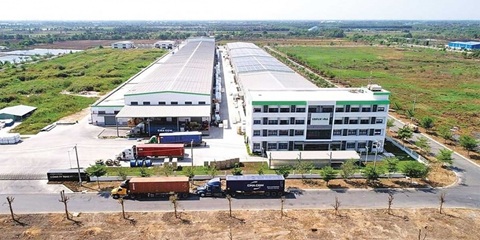
FOREIGN INVESTORS SEEKING A SYNCHRONISED MANUFACTURING ECOSYSTEM
Instead of focusing only on land costs and incentives as usual, foreign investors are seeking a synchronised manufacturing ecosystem, from stable power supply and logistics to shared infrastructure and the convenience of completing residence procedures for experts to serve their long-term investment in the country.
INFRASTRUCTURE / CONSTRUCTION / LOGISTIC / PORT
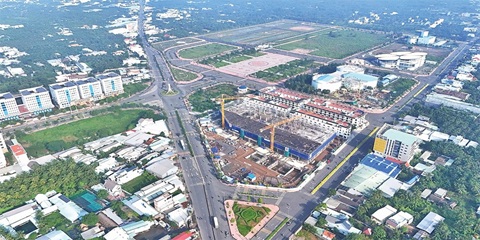
DONG THAP PROVINCE STEPS UP INDUSTRIAL EXPANSION AND INFRASTRUCTURE CONNECTIVITY
Accelerating public investment, strengthening inter-regional connectivity, and expanding industrial land are helping Dong Thap efficiently bolster competitiveness and drive economic growth. Following the 2025 merger of the former Dong Thap and Tien Giang provinces, the expanded Dong Thap province in the Mekong Delta faces mounting pressure to accelerate infrastructure development and strengthen connectivity among local economic zones, urban areas, industrial parks (IPs), and production centres.
PROPERTY / INDUSTRIAL ZONE
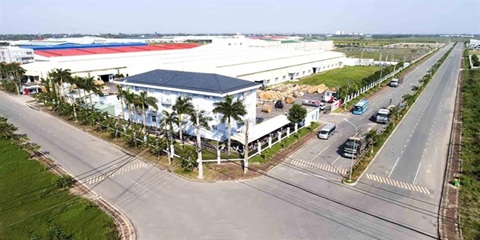
HCM CITY ATTRACTS US$5.7 BILLION INTO EXPORT PROCESSING AND INDUSTRIAL ZONES
HCM City attracted US$5.7 billion in domestic and foreign investment into its export processing and industrial zones during the first nine months of 2026. The figure exceeded the city's full-year target by 31 per cent, highlighting strong momentum in high-quality industrial investment under Resolution No.10-NQ/TW. Total investment reached 131 per cent of the 2026 target of $4.25 billion and represented a 29 per cent increase compared with the same period in 2025, according to the city's Export Processing and Industrial Zones Authority (HEPZA).

BANKING / FINANCE / INSURANCE / TAX
REMITTANCES TO HCM CITY RISE NEARLY 40% IN Q3
Remittances to HCM City reached more than US$2.83 billion in the third quarter of this year, up 39.5 per cent from the previous quarter and 3.6 per cent year-on-year. This was the first quarter showing positive annual growth this year, helping narrow the decline in remittance inflows over the first nine months. According to the State Bank of Vietnam (SBV)’s Regional Branch 2, remittances transferred to HCM City through credit institutions and economic organisations totalled $2.835 billion in Q3, an increase of more than $802 million from the previous quarter.
VIETNAM ECONOMY INVESTMENT
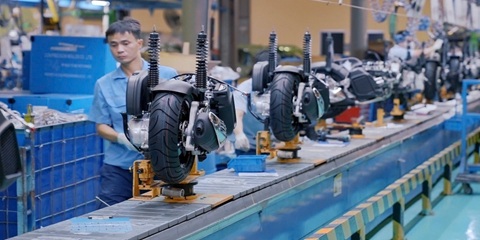
LOCALITIES REPORT BREAKTHROUGH RESULTS IN FDI IN FIRST NINE MONTHS
In Ho Chi Minh City, total registered capital reached $17.2 billion in the first nine months, up 4.2 times from the same period last year. The figure included more than $9.35 billion in newly registered capital and over $4.9 billion in additional capital for existing projects. Foreign investors also registered more than $2.9 billion through capital contributions and share purchases.
TECHNOLOGY
TECH SECTOR GROWTH OPENS UP OPPORTUNITIES FOR VIỆT NAM TO GO GLOBAL
The growth of the electronics, semiconductor and high-tech sectors worldwide is opening up a variety of opportunities for Vietnamese enterprises to integrate more deeply into the global supply chain. However, to become suppliers for these corporations, domestic enterprises must meet rigorous standards regarding quality, technology, productivity and order fulfilment capabilities.
Events Sponsors






















