Want to be in the loop?
subscribe to
our notification
Business News
VIETNAM ENTERS TOP 15 GLOBAL TRADERS AS IMPORT-EXPORT TURNOVER TOPS US$920 BILLION
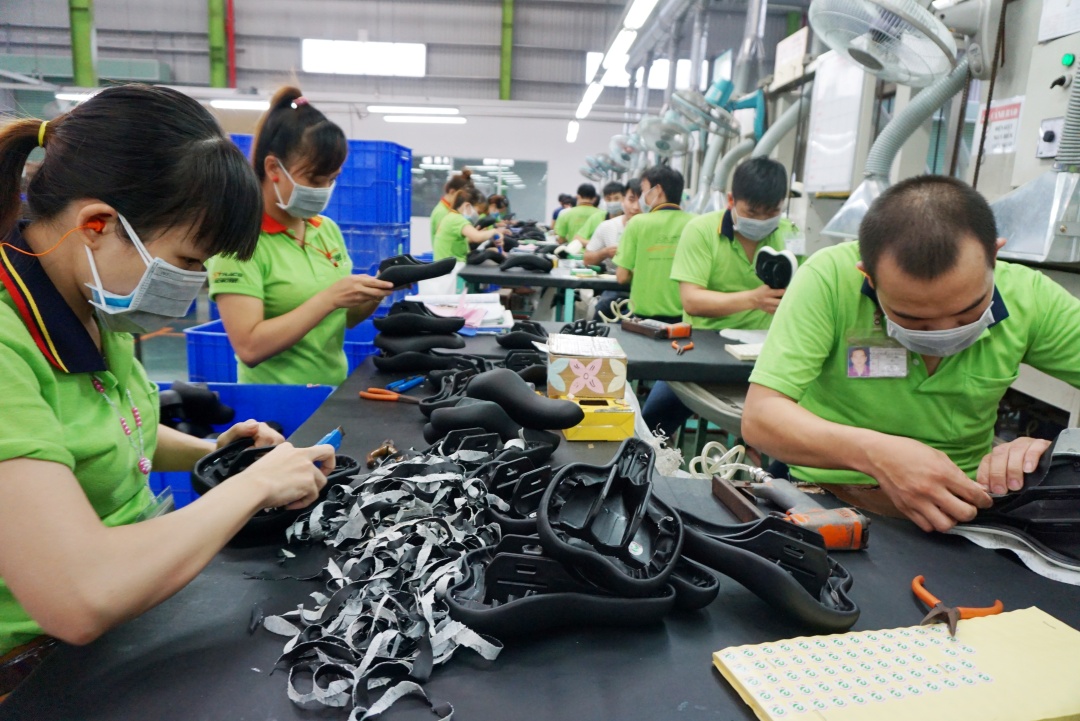
Workers inside a factory in Vietnam – PHOTO: DAO LOAN
HCMC – Vietnam’s total import-export turnover reached a record high of more than US$920 billion last year, up 16.9% year-on-year, lifting the country into the world’s top 15 trading economies, Nguyen Anh Son, director general of the Agency of Foreign Trade under the Ministry of Industry and Trade, said.
The achievement highlighted the crucial role of external trade in driving economic growth and underscored Vietnam’s deepening integration into global value chains, Son said in an interview with Tuoi Tre newspaper.
Despite persistent global uncertainties, including supply chain disruptions and uneven demand recovery in major markets, Vietnam’s key export sectors showed strong resilience. Processed and manufactured goods remained the mainstay, accounting for about 85% of total trade value, with electronics, machinery, textiles, footwear and wood products recording solid growth.
Agriculture, forestry and fisheries also posted gains, with exports of rice, coffee, fruit and seafood rising in both value and quality. These products have increasingly met stricter requirements on food safety, traceability and sustainability, reflecting efforts to move up the value chain.
To counter rising trade protectionism, including reciprocal tariffs, the Ministry of Industry and Trade has stepped up efforts to diversify export markets and supply chains. Alongside traditional partners, Vietnam has expanded exports to markets covered by free trade agreements such as the European Union, the U.K., Canada and Mexico, as well as CPTPP and RCEP members, while seeking growth in emerging markets in the Middle East, Africa, South Asia and Latin America.
The ministry has also focused on helping businesses comply with rules of origin, technical standards and new requirements related to the environment, labor and sustainable development, while strengthening early warning systems against trade defence measures and cutting administrative procedures to lower costs.
Foreign-invested enterprises continue to account for a large share of Vietnam’s trade, particularly in manufacturing and global supply chains. However, Son said the Government’s priority was to strengthen domestic firms so they can participate more deeply and effectively in these supply chains, through developing supporting industries and increasing localisation rates.
Global trade is expected to face further pressure from tighter standards and sanctions, which could raise compliance costs and extend market entry timelines, especially for small and medium-sized enterprises. At the same time, ongoing restructuring of global supply chains could create opportunities for Vietnam if it adapts quickly, Son said.
Looking ahead to 2026, the ministry plans to focus on improving export quality, diversifying markets and supply chains, promoting Vietnamese brands abroad and enhancing the competitiveness of domestic enterprises.
Domestic companies are playing a growing role, with export turnover reaching about US$103.6 billion in the first 11 months of 2025, providing a foundation for more balanced and sustainable trade growth, Son said.
Source: The Saigon Times
Related News

INFRASTRUCTURE / CONSTRUCTION / LOGISTIC / PORT
VIỆT NAM-CAMBODIA TRADE GATHERS PACE TOWARDS $20 BILLION TARGET
Trade between Việt Nam and Cambodia continues to grow, remaining a bright spot and a key pillar of bilateral cooperation as the two countries aim to raise two-way trade to US$20 billion in the coming years. After setting a record of more than $11.3 billion last year, bilateral trade reached about $8.7 billion in the first eight months of this year, up 8.3 per cent year on year.
TECHNOLOGY
AI BEGINNING TO RESHAPE RECRUITMENT CRITERIA
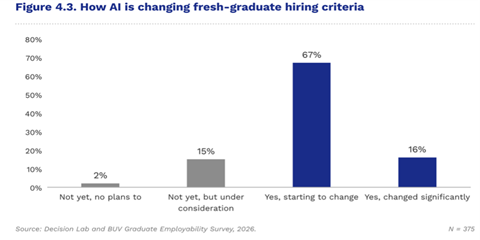
Digital literacy is the only capability area in which fresh graduates meet employers’ expectations, according to a new report. Yet, it is also the standard rising fastest, as businesses increasingly expect new hires to use AI effectively in the workplace. Some 83 per cent of employers say AI has changed, or is beginning to change, their hiring criteria, while 94 per cent report higher expectations for digital and AI capabilities than they had two to three years ago.

INFRASTRUCTURE / CONSTRUCTION / LOGISTIC / PORT
ĐÀ NẴNG GREEN-LIGHTS US$105 MILLION THAI DEVELOPMENT DEAL
The central city has approved an investment proposal by Thailand’s WHA Group to develop infrastructure for the 400ha WHA Đà Nẵng Industrial Park project on two communes of Thăng Bình and Đồng Dương, with an investment of more than VNĐ2.7 trillion (US$105 million). The city said it approved WHA Industrial Development International's status as an investor in the project, which is expected to take place between 2027 and 2034.

VIETNAM ECONOMY INVESTMENT
MOBILE PHONE EXPORTS RISE 20% TO $51.8 BILLION IN FIRST NINE MONTHS
Exports of mobile phones and components rose 20 per cent year-on-year to nearly US$51.8 billion in the first nine months of 2026, with China, the US and Republic of Korea accounting for more than half of the total. Shipments to the three markets reached a combined $26.18 billion, or 50.6 per cent of total exports of the product group during the period, according to data from the Vietnam Department of Customs under the Ministry of Finance.

VIETNAM ECONOMY INVESTMENT
FRUIT AND VEGETABLE EXPORTS POISED TO HIT $10 BILLION IN 2026
Fruit and vegetable exports are on track to reach nearly US$10 billion in 2026, after rising 19.9 per cent year on year to nearly US$7.4 billion in the first nine months, driven by strong seasonal demand and abundant tropical fruit supplies. The Ministry of Agriculture and Environment said the growth reflected stronger international demand for fresh produce and processed agricultural products.
GARMENT / TEXTILE
TEXTILE EXPORTS FACE DUAL CHALLENGES OF SUSTAINING ORDERS AND BOOSTING EFFICIENCY AMID GROWING COMPETITION
Data shows that the textile and garment sector maintained its growth momentum in the first nine months of this year. The industry's total export turnover reached an estimated US$35.721 billion in the first nine months of this year, up 3.3 per cent year-on-year. Despite posting encouraging export figures, Vietnamese textile and garment enterprises continue to navigate unpredictable market variables.
Events Sponsors






















