Want to be in the loop?
subscribe to
our notification
Business News
VIETNAM’S ECONOMY CONTINUES TO PERFORM WELL IN JAN-APR
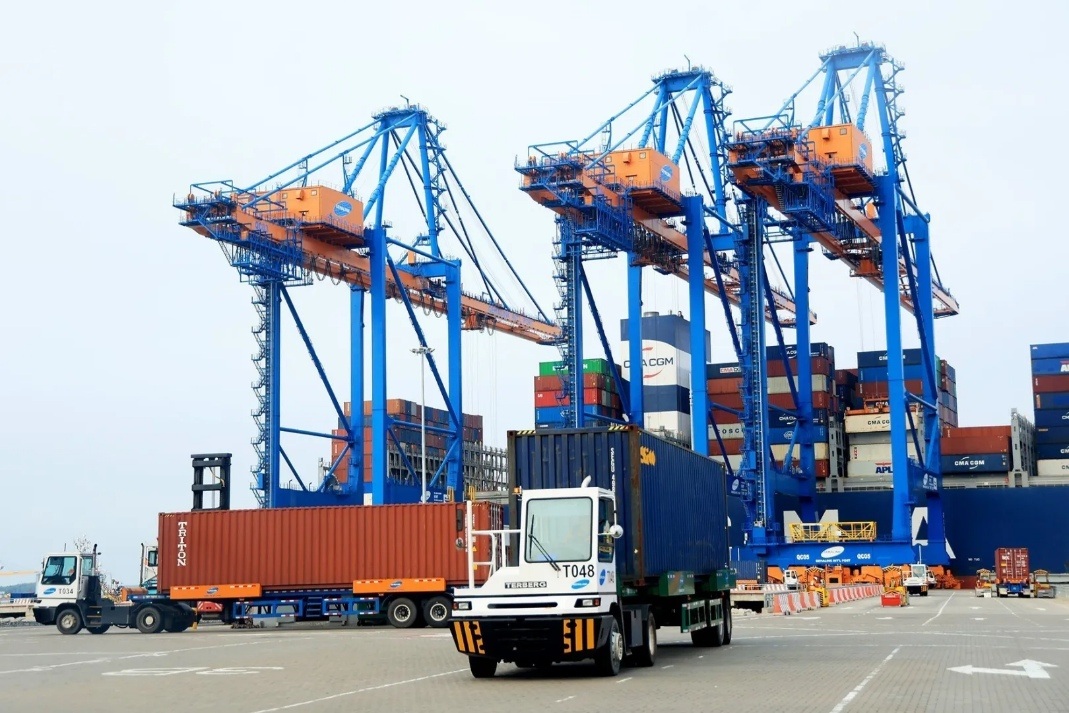
Shipping containers are handled at at port - PHOTO: VNA
HCMC – Vietnam’s economy in the first four months of 2026 showed solid gains in industrial production, consumption and investment, but structural bottlenecks in the business sector and pressures on the trade balance persisted.
Industrial production remained a central pillar of growth, according to the National Statistics Office under the Ministry of Finance.
The Index of Industrial Production (IIP) rose 9.2% year-on-year during the four-month period, with manufacturing and processing expanding 9.9% and accounting for 7.8 percentage points of the overall increase.
Growth was recorded across all 34 localities with industrial activity. Employment in industrial enterprises also rose 3.6%, signaling stronger production demand.
The agricultural sector showed a less positive trend. The area under winter-spring rice fell by 36,800 hectares, while summer autumn planting reached only 50.9% of the level recorded a year earlier.
Several traditional crops such as maize, peanuts and sweet potatoes continued to shrink due to low returns. Buffalo and cattle farming declined, reflecting long production cycles and weak profitability, while poultry and pork maintained a recovery trend.
Fisheries were a relative bright spot, with output rising 3.1%, mainly driven by a 5.2% increase in aquaculture.
Investment remained a key growth driver. Public investment reached VND187.1 trillion, equivalent to 19.7% of the annual plan and up 10.4% versus the year-ago period.
Notably, registered foreign direct investment (FDI) rose sharply to US$18.24 billion, up 32%, while disbursed FDI totaled US$7.4 billion, an increase of 9.8%.
Meanwhile, overseas investment by Vietnamese firms surged to more than double year-on-year. The expansion of both inflows and outflows highlights increasingly dynamic two-way capital movements and deeper integration of Vietnamese businesses into the global economy.
The business sector showed signs of recovery, but remained fragile.
The total number of newly-established and reactivated enterprises exceeded 119,400, up 32.8%. However, the number of firms exiting the market remained high at 108,900, an increase of 12.8%.
On average, about 27,200 businesses withdrew each month, nearly matching the number of new entrants. This suggests the business environment continues to pose significant risks, particularly for small- and medium-sized enterprises.
Trade reached US$344.17 billion in the period, up 24.2% from a year earlier. Exports grew 19.7%, but faster import growth of 28.7% shifted the trade balance to a US$7.11 billion deficit. The foreign-invested sector continued to dominate, contributing about 80% of export value, while domestic firms accounted for the remaining 20% and posted a sizable deficit.
Domestic consumption maintained solid momentum, with total retail sales and service revenue reaching VND2.546 quadrillion, up 11.1% year-on-year. The real growth rate points to a clear recovery in domestic demand. At the same time, international arrivals rose 14.6% to 8.8 million, the highest level in recent years, supporting the services and tourism sectors.
On prices, the average consumer price index (CPI) in the first four months rose 3.99%, remaining within the Government’s target range. However, gold prices surged 75.13% from a year earlier, reflecting sharp volatility in asset markets. The U.S. dollar index increased modestly by 2.29%, suggesting limited exchange rate pressure.
State budget performance remained strong. Total revenue reached VND1,114 trillion, equivalent to 44% of the annual estimate and up 15.2% year-on-year, while spending totaled VND668.2 trillion, rising 11.6%. Higher revenue relative to expenditure provided additional fiscal space to support public investment and social welfare.
On the social front, the labor market showed signs of stability, with 96% of households reporting income as stable or higher. The Government also provided 15,300 tons of rice to support people during periods of hardship. However, several risks remain. Dengue fever cases approached 45,000, traffic accidents resulted in more than 3,200 deaths, and natural disasters caused nearly VND497 billion in damages, up 3.7 times from a year earlier. Environmental violations exceeded 6,400 cases, rising sharply by 30.9%.
Overall, the economy is recovering, driven mainly by industry, consumption and foreign investment. However, the growth structure remains heavily reliant on the foreign invested sector, while domestic enterprises continue to face weaknesses. The return to a trade deficit is a development to watch, particularly as imports of production inputs account for as much as 94.2%.
For the months ahead, the challenge is not only to sustain growth but also to improve its quality, strengthen the resilience of domestic businesses and manage macroeconomic risks amid a recovery that remains uneven.
Source: The Saigon Times
Related News

INFRASTRUCTURE / CONSTRUCTION / LOGISTIC / PORT
VIỆT NAM-CAMBODIA TRADE GATHERS PACE TOWARDS $20 BILLION TARGET
Trade between Việt Nam and Cambodia continues to grow, remaining a bright spot and a key pillar of bilateral cooperation as the two countries aim to raise two-way trade to US$20 billion in the coming years. After setting a record of more than $11.3 billion last year, bilateral trade reached about $8.7 billion in the first eight months of this year, up 8.3 per cent year on year.
TECHNOLOGY
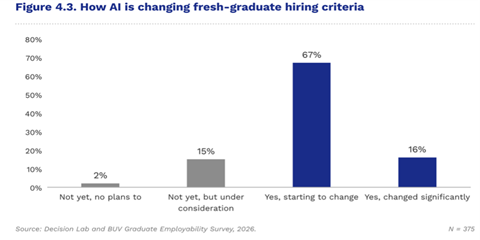
AI BEGINNING TO RESHAPE RECRUITMENT CRITERIA
Digital literacy is the only capability area in which fresh graduates meet employers’ expectations, according to a new report. Yet, it is also the standard rising fastest, as businesses increasingly expect new hires to use AI effectively in the workplace. Some 83 per cent of employers say AI has changed, or is beginning to change, their hiring criteria, while 94 per cent report higher expectations for digital and AI capabilities than they had two to three years ago.

INFRASTRUCTURE / CONSTRUCTION / LOGISTIC / PORT
ĐÀ NẴNG GREEN-LIGHTS US$105 MILLION THAI DEVELOPMENT DEAL
The central city has approved an investment proposal by Thailand’s WHA Group to develop infrastructure for the 400ha WHA Đà Nẵng Industrial Park project on two communes of Thăng Bình and Đồng Dương, with an investment of more than VNĐ2.7 trillion (US$105 million). The city said it approved WHA Industrial Development International's status as an investor in the project, which is expected to take place between 2027 and 2034.

VIETNAM ECONOMY INVESTMENT
MOBILE PHONE EXPORTS RISE 20% TO $51.8 BILLION IN FIRST NINE MONTHS
Exports of mobile phones and components rose 20 per cent year-on-year to nearly US$51.8 billion in the first nine months of 2026, with China, the US and Republic of Korea accounting for more than half of the total. Shipments to the three markets reached a combined $26.18 billion, or 50.6 per cent of total exports of the product group during the period, according to data from the Vietnam Department of Customs under the Ministry of Finance.

VIETNAM ECONOMY INVESTMENT
FRUIT AND VEGETABLE EXPORTS POISED TO HIT $10 BILLION IN 2026
Fruit and vegetable exports are on track to reach nearly US$10 billion in 2026, after rising 19.9 per cent year on year to nearly US$7.4 billion in the first nine months, driven by strong seasonal demand and abundant tropical fruit supplies. The Ministry of Agriculture and Environment said the growth reflected stronger international demand for fresh produce and processed agricultural products.
GARMENT / TEXTILE
TEXTILE EXPORTS FACE DUAL CHALLENGES OF SUSTAINING ORDERS AND BOOSTING EFFICIENCY AMID GROWING COMPETITION
Data shows that the textile and garment sector maintained its growth momentum in the first nine months of this year. The industry's total export turnover reached an estimated US$35.721 billion in the first nine months of this year, up 3.3 per cent year-on-year. Despite posting encouraging export figures, Vietnamese textile and garment enterprises continue to navigate unpredictable market variables.
Events Sponsors






















