Want to be in the loop?
subscribe to
our notification
Business News
VIETNAM’S ECONOMY PROJECTED TO GROW BY 6% IN 2024
The Asian Development Bank (ADB) has adjusted its growth forecast for Vietnam in 2023 to 5.2%, down from the previous estimate of 5.8% in September. However, the projection for 2024 remains unchanged at 6%, as stated in the Asian Development Outlook (ADO) released in December 2023.
The ADB highlighted that the deceleration is attributed to subdued industrial and service growth, stemming from weakened external demand, resulting in a sluggish recovery in jobs and domestic consumption.
The report acknowledged Vietnam's prudent and proactive monetary policies, complemented by controls on gasoline, electricity, food, healthcare, and education prices, as key measures to curb inflation. The ADB maintained its inflation forecasts at 3.8% for 2023 and 4.0% for 2024.
According to the World Bank (WB), industrial production continued to improve but prospects remained subdued. Monthly seasonally adjusted (SA) Industrial Production Index (IIP) has been positive since April 2023. The industrial production index grew by 2.7% (m/m, SA) in November, compared to 2.8% (m/m, SA) in October. IIP grew 5.8% year on year (y/y) in November and October, just above half of the pre-COVID-19 level (9.9% average during 2018-19). The improvement is due to the increased production of key exports and products such as textile and garment, furniture, electronics and electric equipment. Manufacturing production for domestic consumption such as food and beverages also expanded by 2% (m/m, SA) and 5.2%, respectively. These expansions mirror relatively resilient domestic consumption and continued recovery in external demand. However, prospects remain subdued with Vietnam’s PMI staying in contractionary territory in November (47.3 - lowest since May 2023). S&P Global PMI indicated that new orders fell in November, indicating still fragile demand conditions.
Also, according to the WB, merchandise exports and imports continued to improve in response to recovering external demand, increasing by 6.7% (y/y) and 5.1% (y/y), respectively. The increase in exports in November was due to key agriculture products (rice, coffee, fruits and vegetable), electronics (20.2% y/y), machinery (5% y/y), shoes and leather products (10.9% y/y) and furniture (23.6% y/y). The growth in imports is closely linked to the recovery of exports, given that imported inputs for production of exports account for 94% of total imports. Despite these improvements, monthly exports contracted by 1.4% (m/m, SA) in November, compared with an expansion of 1.42% (m/m, SA) in October, indicating a fragile recovery. Cumulative exports and imports for the 11-month period in 2023 were still below the same period in 2022, falling by 5.9% (y/y) and 10.7% (y/y), respectively.
Cumulative FDI commitment for the 11 months of 2023 continued to increase, reaching US$28.8 billion, 14.8% higher than the same period in 2022, despite global uncertainties, reflecting investors’ confidence in Vietnam’s economic prospects. However, this is still about 10% lower than the pre-COVID level (2019). Manufacturing accounts for more than 60% of newly registered and additional capital contribution commitments. On the other hand, real estate accounts for just 3.5% of registered capital during the first 11 months of 2023 compared with 16.7% in the same period of 2022, reflecting the sluggish domestic real estate market. As of the end of November, FDI disbursement was US$20.3 billion, 2.9% higher than a year ago.
The consumer price index (CPI) was 3.5% (y/y) in November 2023, compared to 3.6% (y/y) in October, well below the policy target set for 2023 (4.5%). The main drivers of CPI inflation remain food and housing, contributing 1.1 and 0.9 percentage points to November CPI. The recent resurgence of transport costs - which has been affected by the new tick up of domestic oil and gas prices from August to October - started to fall from November. In the meantime, core inflation continued to decelerate, registering 3.4% (y/y) in October 2023, as the second-round effects of the March 2022 oil price shock continued to fade.
Notably, credit growth picked up slightly in November, growing at 10.3% (y/y) compared with 9.3% (y/y) in October. This is, however, still well below the credit growth target set by the State Bank of Vietnam (SBV) (14.5%) and pre-COVID levels. According to the WB, the slow credit growth is due to the continued weakness in private investment and investors’ confidence, partly associated with the sluggish real estate market, which constituted about 21.6% of credit outstanding in 2022. In light of the sluggish credit market, the SBV decided in the last week of November to reallocate credit growth headroom among individual commercial banks based on their performance year-to-date.
The WB said, as the economy still faces headwinds, authorities could consider extending the implementation of the economic support program (2022-2023) into next year to allow its planned investments to be fully implemented, supporting aggregate demand. Amid economic slowdown, financial sector vulnerabilities call for continued vigilance while efforts to restore confidence and promote a healthy development of the real estate markets will be key to supporting economic stability in the short term and economic growth in the long term.
Source: VCCI
Related News

MEMBER CORNER / PROMOTIONS
KNIC ENGAGES WITH GOVERNMENT AND HIGH-TECH BUSINESS COMMUNITIES IN CHINA
From Beijing to Shandong, KN Holdings and KN Industrial City are continuing to expand their engagement with government authorities, trade promotion organizations, and high-tech business communities in China. In Beijing, the delegation met with the Center for International Economic and Technological Cooperation under the Ministry of Industry and Information Technology (MIIT), exchanging perspectives on industrial and technology cooperation between the two markets.

VIETNAM ECONOMY INVESTMENT
VIETNAM’S TRADE TOPS $825 BILLION BY MID-SEPTEMBER
Figures released on September 21 showed goods trade reached nearly $55 billion in the first 15 days of September alone, bringing cumulative turnover since the beginning of the year to more than $825 billion. The strong growth reflects robust trade flows, with demand for consumer goods and production inputs remaining high.

TECHNOLOGY
VIỆT NAM'S BUSINESSES MOVE TOWARDS AI AGENTS
Việt Nam’s AI landscape is entering a new phase as businesses move beyond generative AI (GenAI) tools designed to assist human users towards autonomous AI, agentic AI and AI agents that can take action with limited supervision, experts have said. The shift comes as Việt Nam seeks to accelerate science and technology, innovation and digital transformation under Politburo Resolution 57-NQ/TW, issued on December 22, 2024.
GARMENT / TEXTILE
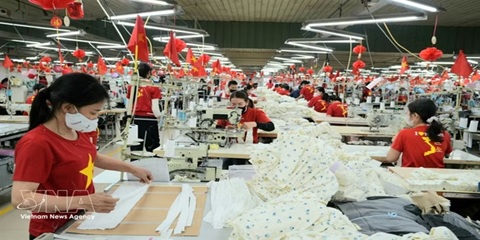
VIỆT NAM TARGETS $48 BILLION IN TEXTILE-GARMENT EXPORTS
Việt Nam’s textile and garment industry is facing both opportunities and challenges amid complex and unpredictable developments in the global market, prompting businesses to improve growth quality, optimise production costs and enhance adaptability in pursuit of an export turnover of about $48 billion this year. The target is considered an important milestone that requires concerted efforts from management agencies and the business community.
INFRASTRUCTURE / CONSTRUCTION / LOGISTIC / PORT
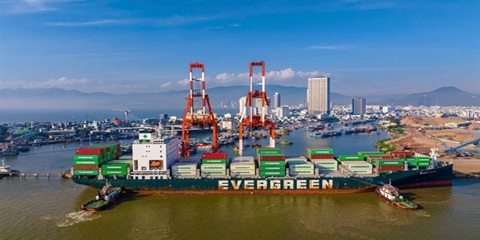
CUTTING LOGISTICS COSTS KEY TO BOOSTING EXPORTS
Reducing costs has become an increasingly urgent priority for import-export activities, particularly logistics costs, a conference in Hà Nội was told on Tuesday. According to Deputy General Director of the Ministry of Industry and Trade's Agency for Foreign Trade, Trần Thanh Hải, import-export activities has remained a bright spot for the economy in recent years, playing an important role and helping drive macroeconomic growth.
LEGAL UPDATE / POLICY
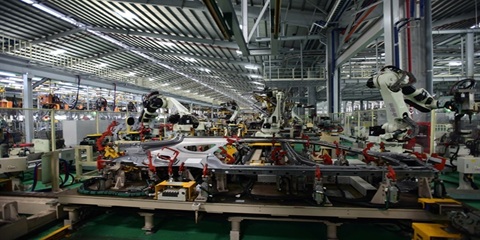
FLEXIBLE FISCAL POLICY HELPS DRIVE ECONOMIC GROWTH
Việt Nam’s fiscal policy has been implemented in a targeted expansionary manner since early 2026, helping maintain macroeconomic stability and supporting the country’s goal of achieving double-digit economic growth. According to the Ministry of Finance, State budget revenue in the first eight months of 2026 was estimated at VNĐ2.02 quadrillion (US$77.7 billion), equivalent to 80 per cent of the annual estimate and up 16 per cent year-on-year.
Events Sponsors






















