Want to be in the loop?
subscribe to
our notification
Business News
VIETNAM’S H1 ECONOMIC GROWTH QUITE IMPRESSIVE: ADB COUNTRY DIRECTOR
Country Director of the Asian Development Bank (ADB) for Vietnam Shantanu Chakraborty has expressed his impression of the Southeast Asian nation’s economic growth of 6.4 per cent in the first half of this year.
The growth was mainly driven by strong trade recovery, where export grew by 14.5 per cent and import by 17 per cent over last year, he told the Vietnam News Agency. However, he said, the domestic segment remained sluggish.
According to Chakraborty, apart from trade, rosy signs were also seen in production and foreign direct investment (FDI), with the Purchasing Managers' Index (PMI) in June standing at 54.7, providing an optimistic outlook on the manufacturing activity in the country.
Meanwhile, the bank’s report also shows increases in both registered capital and disbursement in the first six months.
Nguyen Ba Hung, ADB Chief Economist in Vietnam, said despite greater challenges predicted for the remaining months, the bank still maintains its optimistic view of 6 per cent for 2024, and 6.2 per cent for 2025.
Chakraborty held that this is “healthy growth” given the geopolitics and even internal and external challenges.
Vietnam can maintain its growth momentum in 2024 through sustained trade recovery in export-led manufacturing and positive inflows of FDI and remittances, while making more efforts for growth restoration in services, stable agriculture production, and domestic consumption recovery.
He said the country’s inflation is also expected to remain benign at 4.0 per cent in both 2024 and 2025, despite persistent pressure from geopolitical tensions and disruptions in global supply chains, lauding the State Bank of Vietnam (SBV) for its efforts in monetary policy management.
“We think the SBV did a very good job in terms of maintaining its monetary policy during a challenging time, maintaining a prudent monetary policy, balancing the need for growth, with the need to continue inflation. That's why we saw subdued inflation last year and yet a 5.05 per cent growth in GDP, which was one of the highest in the region,” he said.
Chakraborty noted that the window room to really play around with the monetary policy has now shrunk quite a bit, prompting the need to shift towards the fiscal policy to boost investment and public demand, with the two arms “fully synchronised”.
Regarding trade policies, Hung said one of the factors helping Vietnam attract foreign investors lies with free trade agreements that allow businesses based in the country to access more markets worldwide, thus serving investment and export models.
He suggested domestic firms enhance its engagement in supply chains of their FDI counterparts, which still remains poor, in order to better tap capital flows and serve development needs.
Chakraborty also warned that though the Vietnamese economy is expected to post a solid growth this year, there are several external risks that could slow down the momentum, including softened global demand caused by slow economic recovery among its trade partners and continued geopolitical tensions, both of which would hinder the recovery of Vietnam’s export-led growth, and the lower pace of the normalisation of interest rates in the US and other advanced economies, which would continue to put pressure on the exchange rate.
“Growth in 2024 also depends on effective implementation of the Government’s fiscal measures and public investment,” he said, stressing that policy measures would need to combine short-term growth support measures to strengthen domestic demand with long-term structural remedies to promote sustainable development.
Vietnam should strengthen its public investment to boost demand and employment, and other industries like construction, logistics, and transportation.
“That is the way to really come out without excessive dependence on monetary policy,” he explained.
Besides, reforms will help Vietnam maintain its competitive edge in the context that many countries in the region are coming up with world-class infrastructure and various incentives to attract especially high tech industries like AI and semiconductors, he said.
Source: VIR
Related News
CHARITY / EXHIBITION / OTHER EVENTS
INVESTMENT OPPORTUNITIES IN CA MAU PROVINCE: 96 PROJECTS AND 20 STRATEGIC PROJECTS
We are pleased to share with you information on investment projects currently seeking investors in Ca Mau Province. Should your esteemed company or association be interested, we kindly invite you to review the project information and complete the registration form via the links provided. The Ho Chi Minh City Investment and Trade Promotion Centre (ITPC) will consolidate the expressions of interest and facilitate connections with the leadership of Ca Mau Province at a meeting tentatively scheduled for 13 November 2026 in Ho Chi Minh City.

MEMBER CORNER / PROMOTIONS
BẰNG KIỀU LIVESHOW - A SYMPHONY OF LOVE UNDER THE GOLDEN GLOW
A masterclass in live music that takes the audience on a soulful journey through immortal love songs, guided by the peerless artistry and emotive storytelling of renowned singer Bằng Kiều. The highlight of the night is his seamless musical chemistry with special guest Triệu Hồng Ngọc, promising passionate and deeply resonant duets inside the magnificent Grand Ballroom.
INFRASTRUCTURE / CONSTRUCTION / LOGISTIC / PORT
ĐÀ NẴNG GREEN-LIGHTS US$105 MILLION THAI DEVELOPMENT DEAL
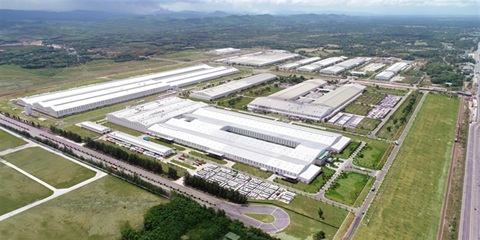
The central city has approved an investment proposal by Thailand’s WHA Group to develop infrastructure for the 400ha WHA Đà Nẵng Industrial Park project on two communes of Thăng Bình and Đồng Dương, with an investment of more than VNĐ2.7 trillion (US$105 million). The city said it approved WHA Industrial Development International's status as an investor in the project, which is expected to take place between 2027 and 2034.
VIETNAM ECONOMY INVESTMENT
MOBILE PHONE EXPORTS RISE 20% TO $51.8 BILLION IN FIRST NINE MONTHS
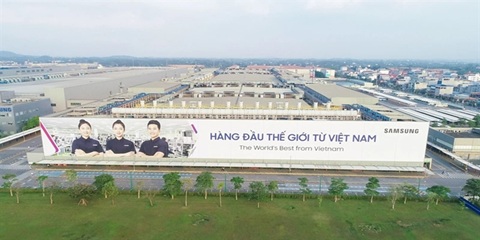
Exports of mobile phones and components rose 20 per cent year-on-year to nearly US$51.8 billion in the first nine months of 2026, with China, the US and Republic of Korea accounting for more than half of the total. Shipments to the three markets reached a combined $26.18 billion, or 50.6 per cent of total exports of the product group during the period, according to data from the Vietnam Department of Customs under the Ministry of Finance.
INFRASTRUCTURE / CONSTRUCTION / LOGISTIC / PORT
VIỆT NAM-CAMBODIA TRADE GATHERS PACE TOWARDS $20 BILLION TARGET
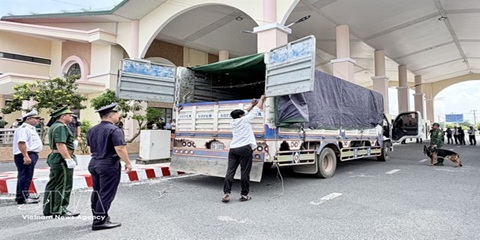
Trade between Việt Nam and Cambodia continues to grow, remaining a bright spot and a key pillar of bilateral cooperation as the two countries aim to raise two-way trade to US$20 billion in the coming years. After setting a record of more than $11.3 billion last year, bilateral trade reached about $8.7 billion in the first eight months of this year, up 8.3 per cent year on year.
VIETNAM ECONOMY INVESTMENT
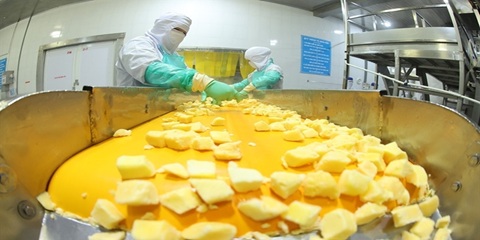
FRUIT AND VEGETABLE EXPORTS POISED TO HIT $10 BILLION IN 2026
Fruit and vegetable exports are on track to reach nearly US$10 billion in 2026, after rising 19.9 per cent year on year to nearly US$7.4 billion in the first nine months, driven by strong seasonal demand and abundant tropical fruit supplies. The Ministry of Agriculture and Environment said the growth reflected stronger international demand for fresh produce and processed agricultural products.
Events Sponsors






















