Want to be in the loop?
subscribe to
our notification
Business News
VIETNAM’S SHRIMP EXPORTS IN FIRST 7 MONTHS: ACCELERATING IN ASIA, FACING HEAVY PRESSURE FROM THE US
In July 2025, Vietnam’s shrimp exports reached USD 410 million, up 9% compared to the same period in 2024. Cumulatively, shrimp exports in the first seven months of the year totaled USD 2.5 billion, an increase of 24% year-on-year.
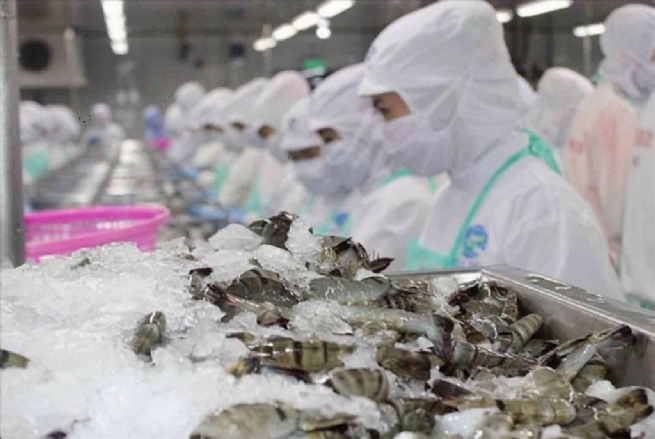
Vietnam’s shrimp exports to the US – the second largest market after China – are under heavy pressure from taxation policies, causing orders from exporters to stagnate. Compared to rivals such as Ecuador (import tariff only 15%) or Indonesia and the Philippines (19%), Vietnam is gradually losing competitiveness with a 20% countervailing duty. The industry is entering a difficult phase as preliminary results of POR19, announced by the US Department of Commerce in June, showed sharply higher anti-dumping duties for many major exporters. If these rates are not adjusted in the final results due in December, Vietnamese shrimp may risk losing access to the US market.
China & Hong Kong continue to lead with USD 710 million (up 78%), accounting for 29% of total shrimp exports. In July alone, exports reached USD 115 million, up 63% year-on-year. Strong recovery in domestic consumption and import demand, particularly for lobster products, along with geographical advantages and low logistics costs, helped Vietnam compete more effectively with rivals.
CPTPP bloc recorded USD 699 million in seven months, up 36%, accounting for 28% of total value. Japan – the largest market within the bloc – reached USD 320 million (up 15%). In July alone, exports to Japan slipped slightly by 1.4% year-on-year as the weak yen continued to weigh on purchasing power. However, Japanese buyers still favor value-added and ready-to-eat products, which helps maintain stable orders.
EU market reached USD 309 million (up 17%), with Germany and France posting strong growth of 28% and 17% respectively. In July, exports to the EU reached USD 57 million, up 21% from the same period last year. The bloc benefits from EVFTA, stable demand as inflation eases, and a preference for value-added processed products.
South Korea imported USD 203 million (up 13%), accounting for 8% of total shrimp exports. This is a stable market thanks to demand for processed shrimp and convenience products for the HORECA channel, with consumption holding steady amid relatively stable domestic economic conditions.
US market: In July 2025, exports reached only USD 63 million, down 29% year-on-year. Cumulatively for 7 months, exports reached USD 404 million, up only 3%. After strong growth in May–June from “tax-avoiding” orders, exports to the US slowed as the 20% countervailing duty on Vietnamese shrimp began to bite, coupled with the risks of high anti-dumping and countervailing duties. Narrower profit margins have forced exporters to reconsider pricing strategies and order structures.
White leg shrimp remains dominant in Vietnam’s export structure.
In the first seven months, white leg shrimp exports reached USD 1.6 billion, accounting for 63% of total shrimp export value, up 8% year-on-year. Black tiger shrimp exports reached USD 260 million (up 5%), accounting for 10%. Other shrimp exports totaled USD 657 million, soaring 117%, driven by frozen shrimp orders from Asian markets.
Outlook: For the full year, shrimp exports could reach USD 3.6–3.8 billion if exporters continue to capitalize on Asian markets, the EU, CPTPP members, and expand value-added products to Japan. However, growth momentum may slow in the second half of the year if the US continues to cut imports from Vietnam due to countervailing duties and trade defense measures. Meanwhile, rivals such as Ecuador, Indonesia, and the Philippines are maintaining lower import tariffs, creating stronger competitive pressure. To sustain growth, Vietnamese exporters need to diversify markets, increase the share of processed products, comply with stringent certification requirements, and develop pricing strategies that align with international policy shifts.
Source: VCCI
Related News

CHARITY / EXHIBITION / OTHER EVENTS
INVESTMENT OPPORTUNITIES IN CA MAU PROVINCE: 96 PROJECTS AND 20 STRATEGIC PROJECTS
We are pleased to share with you information on investment projects currently seeking investors in Ca Mau Province. Should your esteemed company or association be interested, we kindly invite you to review the project information and complete the registration form via the links provided. The Ho Chi Minh City Investment and Trade Promotion Centre (ITPC) will consolidate the expressions of interest and facilitate connections with the leadership of Ca Mau Province at a meeting tentatively scheduled for 13 November 2026 in Ho Chi Minh City.

MEMBER CORNER / PROMOTIONS
BẰNG KIỀU LIVESHOW - A SYMPHONY OF LOVE UNDER THE GOLDEN GLOW
A masterclass in live music that takes the audience on a soulful journey through immortal love songs, guided by the peerless artistry and emotive storytelling of renowned singer Bằng Kiều. The highlight of the night is his seamless musical chemistry with special guest Triệu Hồng Ngọc, promising passionate and deeply resonant duets inside the magnificent Grand Ballroom.

INFRASTRUCTURE / CONSTRUCTION / LOGISTIC / PORT
ĐÀ NẴNG GREEN-LIGHTS US$105 MILLION THAI DEVELOPMENT DEAL
The central city has approved an investment proposal by Thailand’s WHA Group to develop infrastructure for the 400ha WHA Đà Nẵng Industrial Park project on two communes of Thăng Bình and Đồng Dương, with an investment of more than VNĐ2.7 trillion (US$105 million). The city said it approved WHA Industrial Development International's status as an investor in the project, which is expected to take place between 2027 and 2034.

VIETNAM ECONOMY INVESTMENT
MOBILE PHONE EXPORTS RISE 20% TO $51.8 BILLION IN FIRST NINE MONTHS
Exports of mobile phones and components rose 20 per cent year-on-year to nearly US$51.8 billion in the first nine months of 2026, with China, the US and Republic of Korea accounting for more than half of the total. Shipments to the three markets reached a combined $26.18 billion, or 50.6 per cent of total exports of the product group during the period, according to data from the Vietnam Department of Customs under the Ministry of Finance.

INFRASTRUCTURE / CONSTRUCTION / LOGISTIC / PORT
VIỆT NAM-CAMBODIA TRADE GATHERS PACE TOWARDS $20 BILLION TARGET
Trade between Việt Nam and Cambodia continues to grow, remaining a bright spot and a key pillar of bilateral cooperation as the two countries aim to raise two-way trade to US$20 billion in the coming years. After setting a record of more than $11.3 billion last year, bilateral trade reached about $8.7 billion in the first eight months of this year, up 8.3 per cent year on year.

VIETNAM ECONOMY INVESTMENT
FRUIT AND VEGETABLE EXPORTS POISED TO HIT $10 BILLION IN 2026
Fruit and vegetable exports are on track to reach nearly US$10 billion in 2026, after rising 19.9 per cent year on year to nearly US$7.4 billion in the first nine months, driven by strong seasonal demand and abundant tropical fruit supplies. The Ministry of Agriculture and Environment said the growth reflected stronger international demand for fresh produce and processed agricultural products.
Events Sponsors






















