Want to be in the loop?
subscribe to
our notification
Business News
VIETNAM SEMICONDUCTOR INDUSTRY ADVANCES IN VALUE CHAIN
Vietnam's semiconductor industry is gradually getting more involved in high value-added stages of the global supply chain. This is marked by the impending inauguration of Viettel's first chip manufacturing plant and the clearer presence of major global tech corporations in the country.
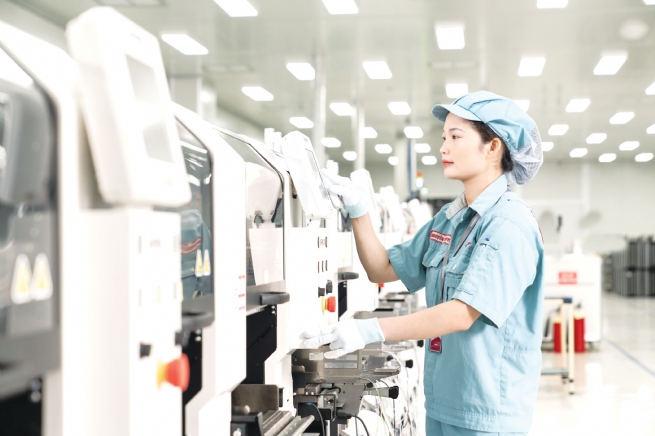
High-quality human resources are crucial to the development of Vietnam’s semiconductor industry
According to a report from the U.S. Semiconductor Industry Association (SIA), semiconductor revenue expanded about 20% year on year in 2024 and projected to grow by 12% to nearly US$700 billion in 2025. The growth is primarily driven by the explosive demand from artificial intelligence, data centers, electric vehicles, and 5G devices.
In recent years, the Vietnamese government has issued numerous strategic policies and guidelines and has created favorable conditions for investment in semiconductor development.
Notable examples include Resolutions 57 and 68 of the Politburo, Resolutions 193 and 198 of the National Assembly, the Law on Digital Technology Industry, the Law on Science, Technology and Innovation, the announcement of a list of 11 strategic technology sectors, including semiconductors, and Program 1017 on semiconductor human resource development.
At the second meeting of the National Steering Committee for Semiconductor Industry Development, Deputy Minister of Finance Nguyen Duc Tam reported that Vietnam is starting to participate in higher value-added stages such as the manufacturing of semiconductor equipment, materials, and components, as well as chip packaging and testing.
Notably, Vietnam is preparing for the inauguration of Viettel’s first chip manufacturing plant. The country is gradually gaining global recognition as a promising destination for the semiconductor industry and has been selected to host exhibitions in the world’s largest semiconductor exhibition series organized by the Global Semiconductor Alliance.
The strategic decisions by two tech giants, Nvidia and Qualcomm, to choose Vietnam as a hub for AI and semiconductor research, development and manufacturing are regarded as major milestones in Vietnam’s deeper integration into the global semiconductor value chain.
This has led to a major relocation of high-value supply chains to Vietnam and represented a leap forward in the country's position on the global semiconductor and technology map.
Reporting on the implementation of the Program on semiconductor human resource development to 2030, with a vision to 2050 (Program 1017), Deputy Minister Tam stated that nine of the 34 tasks have been completed, and 25 are progressing on schedule.
In terms of the current workforce, there are about 7,000 engineers working at chip design companies and around 6,000 engineers and 10,000 technicians working at chip packaging, testing, and semiconductor material and equipment manufacturing companies.
The semiconductor innovation network has brought together more than 100 Vietnamese experts from around the world.
In human resource training and development, 320 lecturers have participated in in-depth training courses, and approximately 6,300 undergraduate students are studying semiconductors. More than 12,000 students are enrolled in related fields that can be converted into semiconductor competencies after supplemental training.
Roughly 600 master's students and nearly 120 PhD candidates are currently undergoing semiconductor training while over 1,600 learners have completed short-term training courses.

Viettel is possessing many advantages in participating in the semiconductor industry
In terms of training system, 166 universities offer semiconductor-related programs, and about 10 small-scale semiconductor labs have been built for training purposes. The ‘Triple Helix’ model in semiconductor training is being vigorously implemented. The Ministry of Finance also brought Vietnam's first Semiconductor Incubation and Development Center into operation.
To diversify resources for semiconductor workforce development, the Ministry of Finance has secured 1,000 chip design and semiconductor technology licenses, worth tens of millions of USD, from global corporations such as Cadence, Siemens, ARM, and Lam Research to support training in over 30 universities. Japan, Taiwan (China), and European countries have also agreed to provide around 1,000 scholarships annually.
International cooperation has been prioritized and actively promoted. Government leaders consistently provide close direction, spend much time on meeting and working with many leaders and experts in the semiconductor field, integrate semiconductor cooperation into international agendas and foreign affairs.
Vietnamese universities and businesses have also taken strong action. Several major firms like Coherent, Marvell, Viettel, FPT, and Phenikaa have actively participated in semiconductor training at universities.
To further develop the semiconductor industry in the coming time, the Ministry of Finance proposed selectively attracting FDI fund, establishing 100 chip design firms, a small-scale chip fabrication plant, and 10 packaging, testing, and semiconductor facilities. It also plans to provide in-depth semiconductor training for 1,300 lecturers and build four national shared semiconductor laboratories, along with other labs at the institutional level to support implementation.
Source: VCCI
Related News

MEMBER CORNER / PROMOTIONS
BẰNG KIỀU LIVESHOW - A SYMPHONY OF LOVE UNDER THE GOLDEN GLOW
A masterclass in live music that takes the audience on a soulful journey through immortal love songs, guided by the peerless artistry and emotive storytelling of renowned singer Bằng Kiều. The highlight of the night is his seamless musical chemistry with special guest Triệu Hồng Ngọc, promising passionate and deeply resonant duets inside the magnificent Grand Ballroom.

INFRASTRUCTURE / CONSTRUCTION / LOGISTIC / PORT
ĐÀ NẴNG GREEN-LIGHTS US$105 MILLION THAI DEVELOPMENT DEAL
The central city has approved an investment proposal by Thailand’s WHA Group to develop infrastructure for the 400ha WHA Đà Nẵng Industrial Park project on two communes of Thăng Bình and Đồng Dương, with an investment of more than VNĐ2.7 trillion (US$105 million). The city said it approved WHA Industrial Development International's status as an investor in the project, which is expected to take place between 2027 and 2034.

VIETNAM ECONOMY INVESTMENT
MOBILE PHONE EXPORTS RISE 20% TO $51.8 BILLION IN FIRST NINE MONTHS
Exports of mobile phones and components rose 20 per cent year-on-year to nearly US$51.8 billion in the first nine months of 2026, with China, the US and Republic of Korea accounting for more than half of the total. Shipments to the three markets reached a combined $26.18 billion, or 50.6 per cent of total exports of the product group during the period, according to data from the Vietnam Department of Customs under the Ministry of Finance.

INFRASTRUCTURE / CONSTRUCTION / LOGISTIC / PORT
VIỆT NAM-CAMBODIA TRADE GATHERS PACE TOWARDS $20 BILLION TARGET
Trade between Việt Nam and Cambodia continues to grow, remaining a bright spot and a key pillar of bilateral cooperation as the two countries aim to raise two-way trade to US$20 billion in the coming years. After setting a record of more than $11.3 billion last year, bilateral trade reached about $8.7 billion in the first eight months of this year, up 8.3 per cent year on year.

VIETNAM ECONOMY INVESTMENT
FRUIT AND VEGETABLE EXPORTS POISED TO HIT $10 BILLION IN 2026
Fruit and vegetable exports are on track to reach nearly US$10 billion in 2026, after rising 19.9 per cent year on year to nearly US$7.4 billion in the first nine months, driven by strong seasonal demand and abundant tropical fruit supplies. The Ministry of Agriculture and Environment said the growth reflected stronger international demand for fresh produce and processed agricultural products.
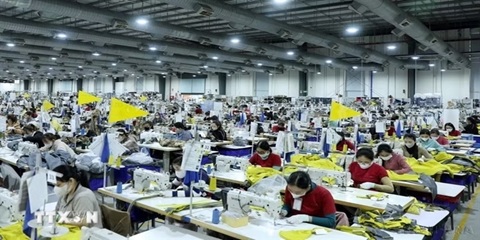
GARMENT / TEXTILE
TEXTILE EXPORTS FACE DUAL CHALLENGES OF SUSTAINING ORDERS AND BOOSTING EFFICIENCY AMID GROWING COMPETITION
Data shows that the textile and garment sector maintained its growth momentum in the first nine months of this year. The industry's total export turnover reached an estimated US$35.721 billion in the first nine months of this year, up 3.3 per cent year-on-year. Despite posting encouraging export figures, Vietnamese textile and garment enterprises continue to navigate unpredictable market variables.
Events Sponsors






















